







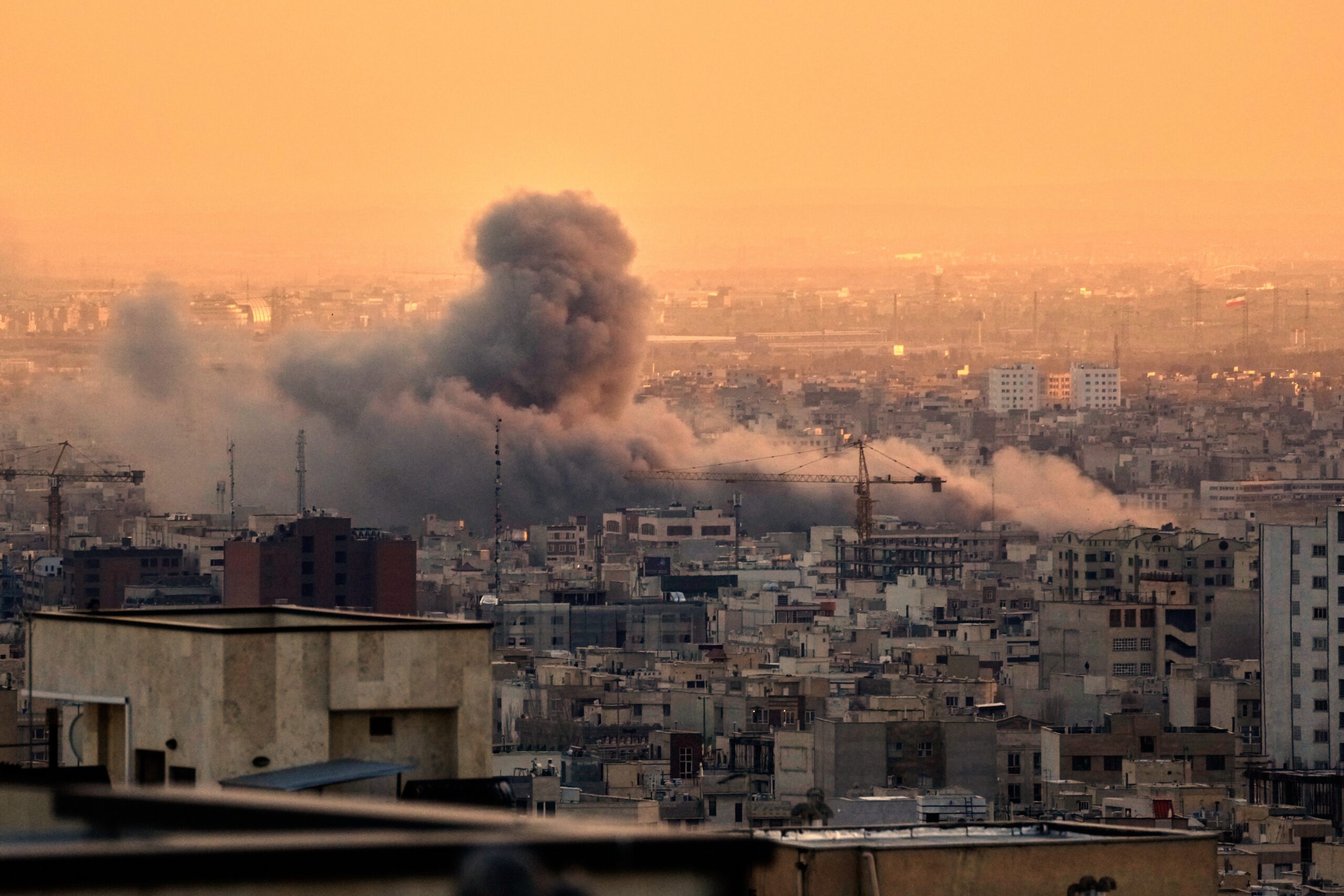

Tensions remain high and bloodshed is still flowing despite a temporary halt in the United States and Israeli war on the Islamic Republic of Iran. At Final Call presstime, negotiations were reportedly underway between the U.S. and Iran for the war raging since late February.
A fragile “ceasefire” brokered by the Islamic Republic of Pakistan was reportedly agreed to nearly 40 days into the conflict that had spiraled into a global economic crisis and a multifront war with related firefights in Iraq, Lebanon, Syria, and counterattacks from Yemen by the Ansar Allah (Houthis) resistance group, in support of Iran.
Pakistani Prime Minister Shehbaz Sharif announced the two-week so-called ceasefire on April 7, with talks days later in Islamabad to advance a final agreement.
The talks in Islamabad included U.S. representatives led by Vice President JD Vance—joined by Washington’s regional envoy Steve Witkoff and President Donald Trump’s advisor and son-in-law Jared Kushner.
The Iranian delegation was headed by Parliament Speaker Mohammad-Bagher Qalibaf and included Foreign Minister Abbas Araghchi, Supreme National Defense Council Secretary Ali-Akbar Ahmadian, Central Bank Governor Abdolnasser Hemmati, and several members of parliament representing the security.
Days prior, on April 7, Mr. Sharif posted on X.com, “With the greatest humility, I am pleased to announce that the Islamic Republic of Iran and the United States of America, along with their allies, have agreed to an immediate ceasefire everywhere including Lebanon and elsewhere, EFFECTIVE IMMEDIATELY.”
He added, “We earnestly hope that the ‘Islamabad Talks’ succeed in achieving sustainable peace and wish to share more good news in (the) coming days!”
However, before the proverbial ink had sufficiently dried on the so-called ceasefire, allegations were reported that the U.S. and Israel had breached the terms.
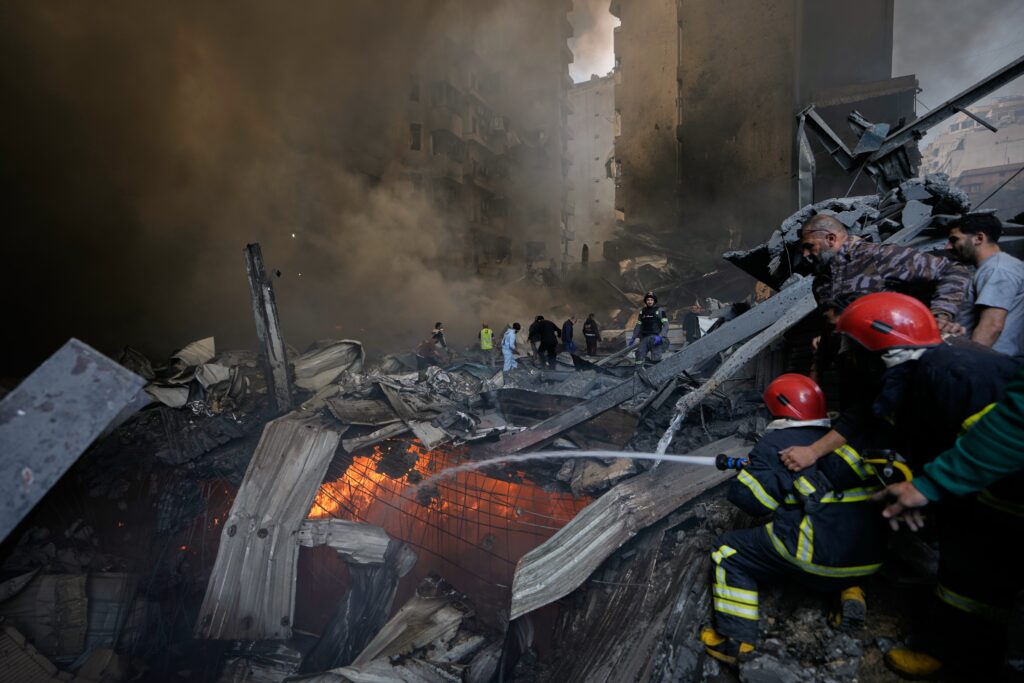
What media reports described as a massacre and then nonstop carnage beginning the very day the so-called ceasefire took effect, Israel struck more than 100 commercial and residential locations across Lebanon, including in the capital, Beirut, killing hundreds of people and injuring more than a thousand by presstime.
International calls for Israel to end the attacks in lieu of giving the Islamabad talks a chance were rebuffed. Israel argued that implementing a ceasefire in Lebanon was not part of the Pakistan-brokered deal.
However, the claim contradicts the agreement and statements by Pakistan’s Prime Minister Sharif, who explicitly included Lebanon in Iran’s 10-point proposal that Washington agreed to and that President Donald Trump publicly lauded on his Truth Social platform.
Observers and analysts argue that Washington must rein in Tel Aviv’s continued attacks in Lebanon to avoid undermining the Islamabad negotiations. However, neither the U.S. nor Israel have historically been a trustworthy broker for peace or keeping their word.
Middle East analyst Mouin Rabbani told The Final Call that developments in Lebanon will be a key indicator of Washington’s commitment to preventing a resumption of full-scale war.
“The key issue to look for in the coming days is Lebanon,” said Mr. Rabbani. “If Israeli attacks in Lebanon cease, then you know that the U.S. has turned the screws on Israel and is serious about not restarting this war,” he added.
On the Israeli violation, Iranian President Masoud Pezeshkian strongly reviled the continued onslaught on Lebanon as a move that endangered the Islamabad talks.
“Renewed aggression by the Zionist regime against Lebanon blatantly violates the initial ceasefire,” President Pezeshkian said on April 9 on X.com. “Such actions signal deception and non-compliance, rendering negotiations meaningless,” he continued. “Our hands remain on the trigger. Iran will never forsake its Lebanese brothers and sisters,” warned the Iranian president.
The Iranian government issued a statement on April 8, outlining three key clauses that the U.S. violated, which it said fit a pattern of duplicity by Washington. In less than a year, the U.S. had entered talks with Iran and then militarily attacked in the midst of negotiations—the most recent being the Feb. 28 joint attack with Israel on the Islamic Republic.
“The deep historical distrust we hold toward the United States stems from its repeated violations of all forms of commitments,” said the statement. “A pattern that has regrettably been repeated once again,” said an official statement one day after the so-called ceasefire was announced.
“As the president of the United States has clearly stated in his Truth (Social network) the Islamic Republic of Iran’s 10-point proposal is a ‘workable basis on which to negotiate.’ And the main framework for these talks.”
However, three clauses of the proposal were violated, said the Iranian statement. The first violation was against the clause for a ceasefire in Lebanon, referring to Israel’s continued bombing. Tehran also accused Washington of breaching the agreement by flying drones into Iranian airspace and also denying Iran’s right to enrichment—the sixth clause of the proposal.
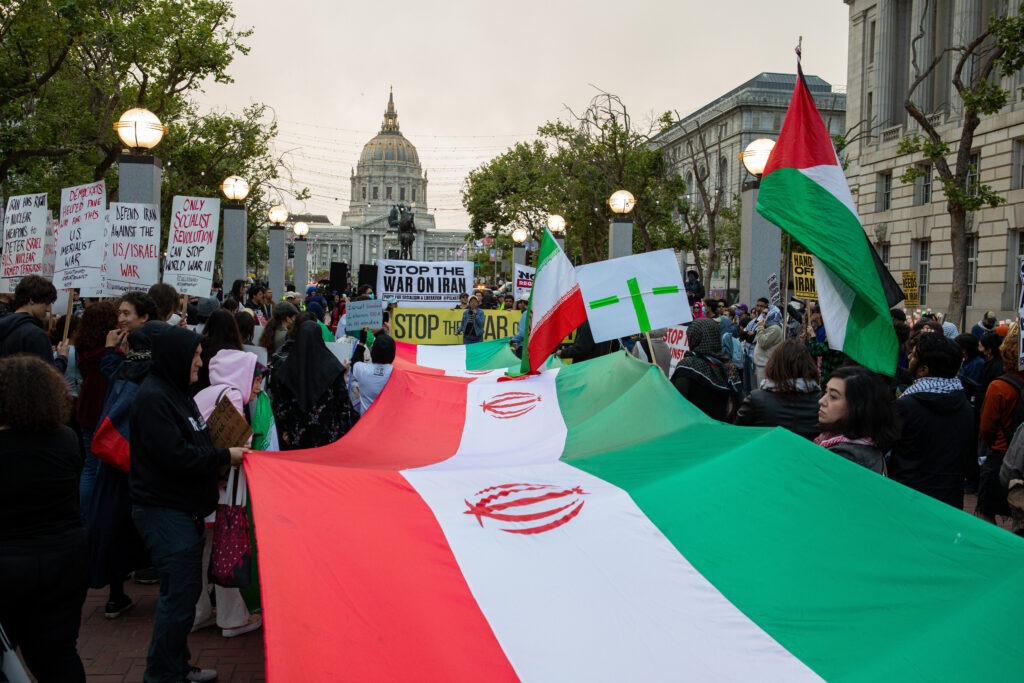
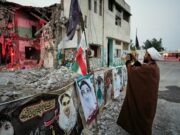
Photo: Dan Hernadez/San Francisco Chronicle via AP
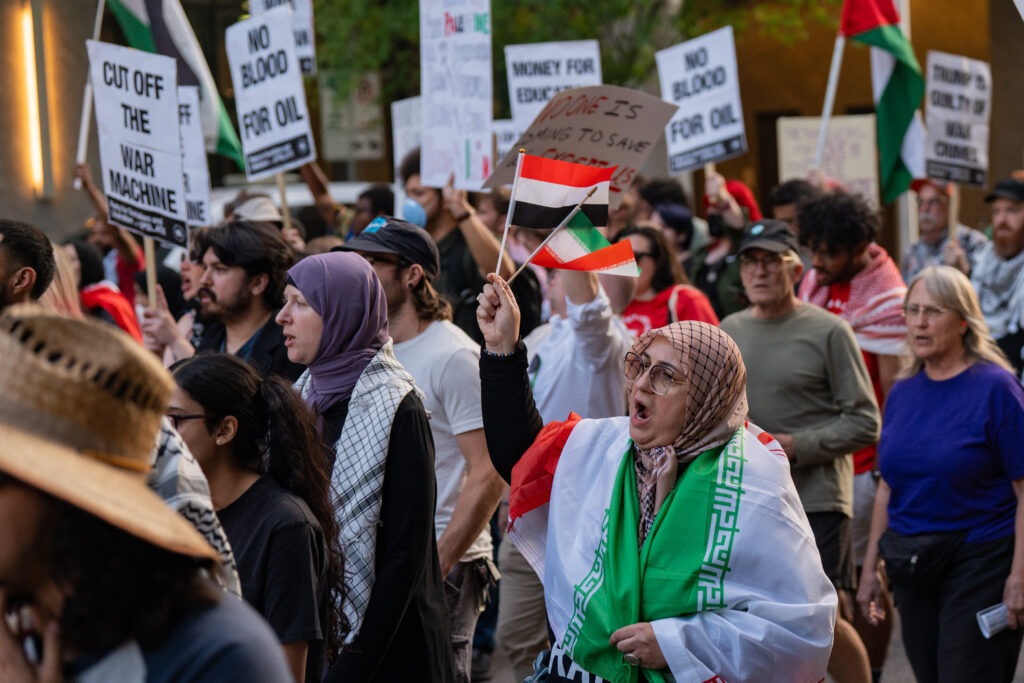
Photo: Mikala Compton/Austin American-Statesman via AP
“Now the ‘very workable basis on which to negotiate’[quoting Pres. Trump’s post] has been openly and clearly violated, even before the negotiations began,” said the statement posted online by Mr. Ghalibaf. In addition, the statement said, in such a situation, a bilateral ceasefire or negotiations is unreasonable.
Mr. Rabbani said the available information points squarely to Washington as the initiators of the ceasefire push, having turned to Pakistan to broker the arrangement, with Islamabad subsequently drawing Iran into the process through its contacts with China.
“So on the face of it, it looks like the Americans needed this agreement more than the Iranians, who regardless of what you or I may think, the Iranians, felt that they were in the comparatively stronger position,” said Mr. Rabbani.
He said the development raises pressing questions about U.S. intent—whether the so-called ceasefire was designed as a tactical pause to regroup for further escalation, or an acknowledgment that its objectives were slipping out of reach as economic and strategic costs mounted.
“My own view is that the Americans have basically called it a day. And even if they’re going to be further bombings … I think the return to a full-scale war is extremely unlikely,” reasoned Mr. Rabbani.
On the negotiations, Mr. Rabbani cautioned that the divide between the parties remains wide, casting serious doubt on the prospects for a formal agreement and suggesting that talks may instead serve as a mechanism to manage tensions rather than resolve them.
“Now you have these negotiations, and the first thing I would say is that the parties are simply too far apart to reach an agreement, and it may well be that they just decide to continue the talks on the basis of an informal understanding that there won’t be a return to full scale hostilities,” he opined.
He pointed to two critical flashpoints that could determine the trajectory of the crisis. The first is the dynamic between Israel and Iran, particularly if continued Israeli attacks compel Tehran to choose between military response and preserving negotiations. The second is the Strait of Hormuz, which he described as a central pressure point with global implications.
“This is not something the Iranians are going to give up on, because they consider any American commitments to be worthless, even American commitments on sanctions relief, they consider to be worthless,” he said.
Mr. Rabbani added that Iran sees its control over the Strait of Hormuz not just as leverage, but as a decisive instrument of pressure—one it is unlikely to surrender given its deep distrust of U.S. assurances.
The ball is in the U.S. court, and the world is watching whether it will act on its commitments.
“The Iran–U.S. Ceasefire terms are clear and explicit: the U.S. must choose—ceasefire or continued war via Israel. It cannot have both,” said Mr. Araghchi, via X.com on April 8.
The Honorable Minister Louis Farrakhan, the National Representative of the Most Honorable Elijah Muhammad and the Nation of Islam, along with his teacher, has long warned the United States about the consequences of flexing its might on the world stage.
“Their lands and seas are filled with deadly weapons of war; their islands of the sea are afloat with corruption by all the nations of earth, for they are proud and boastful and [are now hated and] despised according to their wishes,” said Minister Farrakhan, in Part 15 of his 2013, 58-week lecture series, “The Time and What Must Be Done.”
“They command the sea with their powerful navies, parking them off the shores of other nations—as they are doing now in Asia; as they’ve done in the Gulf of Sirte, or Sidra, in The Mediterranean, and as they are doing in other parts of the world,” he continued.
“They secure air bases on their soils to place their deadly bomb-carrying planes within easy striking distances of those whom they fear to be their enemies. Is this not the easy way to make more enemies?” said Minister Farrakhan.
In counterattacks to the U.S. and Israel’s war on Iran, the Islamic Republic has responded. Several U.S. bases and installations have been rendered temporarily unusable or severely degraded, with cumulative damage running into the hundreds of millions of dollars and forcing America to disperse forces, rely on improvised facilities, and adjust its regional posture under sustained pressure.
Iranian missile and drone strikes inflicted widespread damage on American military bases across the region. Installations from Iraq and Kuwait to the Gulf monarchies and beyond were hard hit. For example.
Camp Arifjan, the Ali Al-Salem Air Base, and Bubiyan Island in Kuwait, and sites in Iraq like Ain al-Asad Air Base and Erbil, absorbed repeated hits that damaged infrastructure, struck equipment, and in some cases forced the relocation of American troops.
Iran struck high-value command and airpower hubs, including Al-Udeid Air Base in Qatar—headquarters of the U.S. Central Command—and naval facilities in Bahrain, where strikes damaged support infrastructure and nearby housing used by U.S. staff.
In Saudi Arabia, Prince Sultan Air Base suffered some of the most visible losses, including the destruction of a high-value surveillance aircraft, as reported by Defense Express, underscoring the vulnerability of even well-defended sites.
The airbase, since the beginning of America and Israel’s attacks, has been constantly under counterattack by Iranian drones and ballistic missiles, resulting in serious losses. Other facilities in the United Arab Emirates and as far as RAF Akrotiri in Cyprus were also struck, demonstrating Iran’s expanding range.
The Most Honorable Elijah Muhammad, the Eternal Leader of the Nation of Islam, wrote that America has arrived at a time of reaping and sowing, as written in the scriptures: “…As thou hast done, it shall be done unto thee…” [Obadiah, Chapter 1, verses 13–15].
“America has done the worst work of deceiving other peoples and making false friendships with them. Now her turn has come. No one wants to trust her for friendship, for she has deceived many nations,” He wrote in Chapter 25 of his book, “The Fall of America.”
By Final Call presstime, the Islamabad talks collapsed after 21 hours of negotiation. The discussions marked the first major high-level engagement between Tehran and Washington since the 2015 multinational nuclear negotiations, and the highest-level face-to-face talks since the 1979 Islamic Revolution.
However, no agreement was reached on core issues, including Iran’s nuclear program, decades-long sanctions relief, and control of the Strait of Hormuz.
Iran downplayed expectations and blamed the U.S. for making what it called unreasonable demands, reported Al Jazeera.
“The success of this diplomatic process depends on the seriousness and good faith of the opposing side, refraining from excessive demands and unlawful requests, and the acceptance of Iran’s legitimate rights and interests,” Iranian Ministry of Foreign Affairs spokesman Esmaeil Baghaei wrote on X.com.
He added that the two sides discussed a range of issues, including the “Strait of Hormuz, the nuclear issue, war reparations, the lifting of sanctions, and the complete end of the war against Iran,” he said.
Mr. Baghaei emphasized that the lack of a deal should not be seen as a failure of the broader process, saying, “No one had such an expectation.”
Central to the disagreement was Washington’s demand that Iran not pursue a nuclear weapon or the “tools” to achieve one—an accusation Iran has long denied, citing a religious decree issued by the late Supreme Leader Ayatollah Ali Khamenei.
The Final Call will continue to monitor this story as it develops.
