





Radio veteran Bob Law passes away, leaving lasting Black media legacy
by Nayaba Arinde
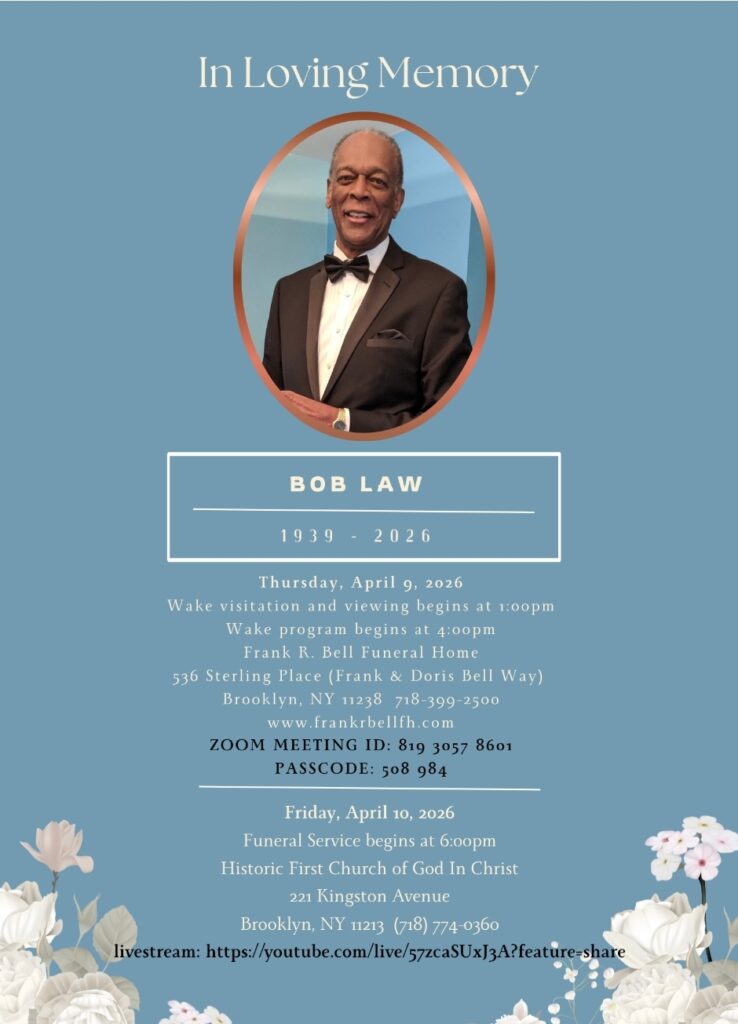
NEW YORK—The New York tri-state area was stunned by the recent passing of radio veteran Bob Law, a respected Black talk radio pioneer, activist, educator, and avid health practitioner.
Standing at 6 feet, 9 inches tall, he was beloved for his popular “Night Talk” call-in show on WWRL 1600 AM, which in 1981 became the first live nationally syndicated broadcast Black radio talk show. Then later he went on to WBAI 99.5 FM, with his “From The Streets.”
Despite suffering a stroke, Mr. Law continued his mission of forceful advocacy and community building. He passed away March 30.
“Bob Law was a transformative icon in Black radio and other media for decades,” Dr. Benjamin F. Chavis, Jr., president and CEO of the National Newspaper Publishers Association, told The Final Call. NNPA is a trade association consisting of over 200 Black-owned newspapers and media companies across the U.S.
“The NNPA pauses to pay tribute to the outstanding contributions and legacy of Bob Law in the struggle for the liberation of African people in America and throughout the world,” said Dr. Chavis.
The National Association of Black Journalists (NABJ) also released a statement on Mr. Law. “His legacy reminds us of the power of journalism to inform, uplift, and hold systems accountable. We honor his contributions and extend our condolences to his loved ones and all who were impacted by his work,” the statement read in part.
Mr. Law was born on April 6, 1939, and raised in Bedford-Stuyvesant, Brooklyn, and a resident of Westbury for over 40 years.
“Brooklyn remained the center of his heart though, which is why both of his businesses, Namaskar Health and Wellness and Bob Law’s Seafood Cafe were located there,” his daughter Abina Law Napier told The Final Call.
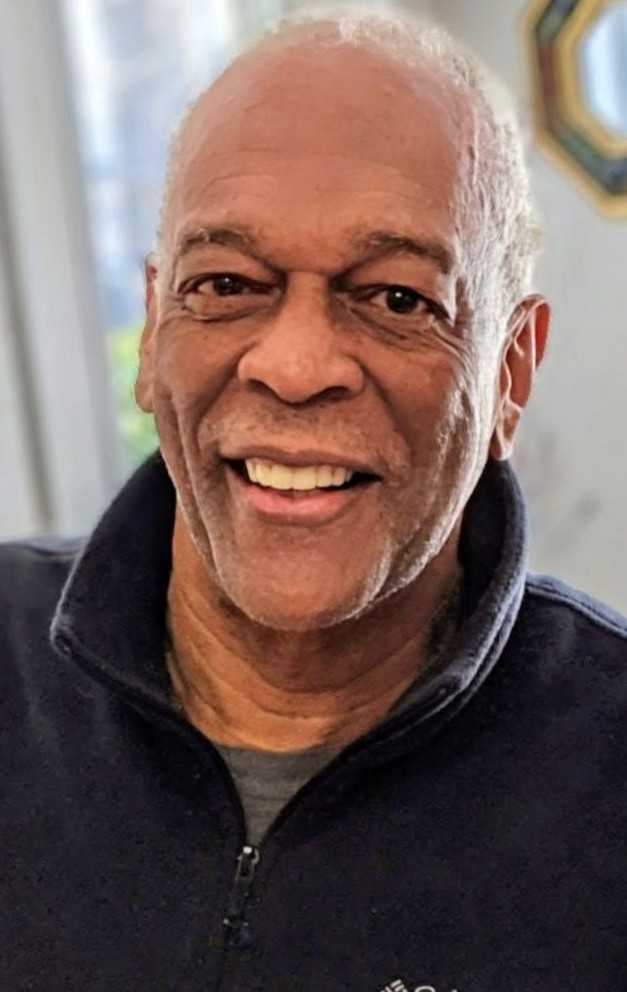
In a statement, the family said that Mr. Law, 86, “legendary radio broadcaster, community activist, author and entrepreneur … died peacefully.”
“Bob Law was devoted to his faith, his family, and his community. He touched the lives of many through his words and actions. At WWRL radio station … he used his platform to not only highlight the challenges and injustices the Black community encountered, but to effect change through action.” The statement continued, “Bob demanded institutional change in the face of institutional biases. Later becoming Program Director during the glory days of Black radio, he brought together the dream team of radio personalities including Hank Spann, Bobby Jay, Gerry Bledsoe, Jeff Troy and Gary Byrd.
“As the host and executive producer of “Night Talk,” Mr. Law brought his audience into the movement, his family noted. “Listeners heard not just his voice and thought, but those of Black leadership and Black excellence, from the arts to the streets; across the nation and around the globe.”
Mr. Law founded several community organizations, including the National Respect Yourself Youth Organization. He was the New York State Coordinator for the Million Man March and the Millions More Movement called and convened by the Honorable Minister Louis Farrakhan.
Mr. Law was also the creator and producer of “Say It Loud,” a feature-length documentary film on the state of modern Black radio. For almost 14 years, Bob Law and his late wife, Muntu, ran Namaskar, a health food store in Brooklyn, along with Bob Law’s Seafood Cafe.
Bob Law’s family acknowledged the outpouring of love and tributes. “We know that he was embraced by the world … he taught us grace, tenacity and empathy, and to be fierce in our love for each other, and our people. We are forever blessed to have been loved by him. His light will always shine brightly through his legacy.”
Nation of Islam Student Eastern Regional Minister Arthur Muhammad of New York’s Mosque No. 7 told The Final Call, “As a child of hip hop at one time, I only listened to hip hop radio, but as I was growing into consciousness, I turned the dial to WLIB for Imhotep Gary Byrd, and WWRL for Bob Law for Night Talk. And these two brothers, along with the Honorable Minister Louis Farrakhan, shaped my Black consciousness. The way they spoke of Black liberation efforts abroad and at home, nurtured my appreciation for Black struggle no matter where it existed. Bob Law, as an organizer, as a defender of truth, is inextricably tied to our freedom.”
Award-winning radio broadcaster Imhotep Gary Byrd spoke on his longtime friend. “My brother Bob Law used his microphone as a megaphone to raise our consciousness through communications. He taught us the power of media and shaped our understanding to use media and not to be abused by the media.”
Mr. Law joined the Brooklyn chapter of the Congress of Racial Equality (CORE), in 1962, as a student at Pratt Institute. He then became a field secretary and student organizer with the Student Nonviolent Coordinating Committee (SNCC). He worked alongside Kwame Ture, formerly known as Stokely Carmichael, and Imam Jamil Al Amin, also known as H. Rap Brown.
“Sometimes words are not enough to describe a man who was a giant in stature and in intellect,” said Nation of Islam Student Eastern Regional Protocol Director Daleel Jabir Muhammad. “A man bold enough to speak truth to power. Though Bob Law was known for his wise and insightful commentary on his late-night radio show ‘Night Talk,’ Black people in the metropolitan New York area loved him for his activism, bold and uncompromising stand in the streets at rallies, and in leading new directions in political awareness,” said Brother Daleel Jabir Muhammad.
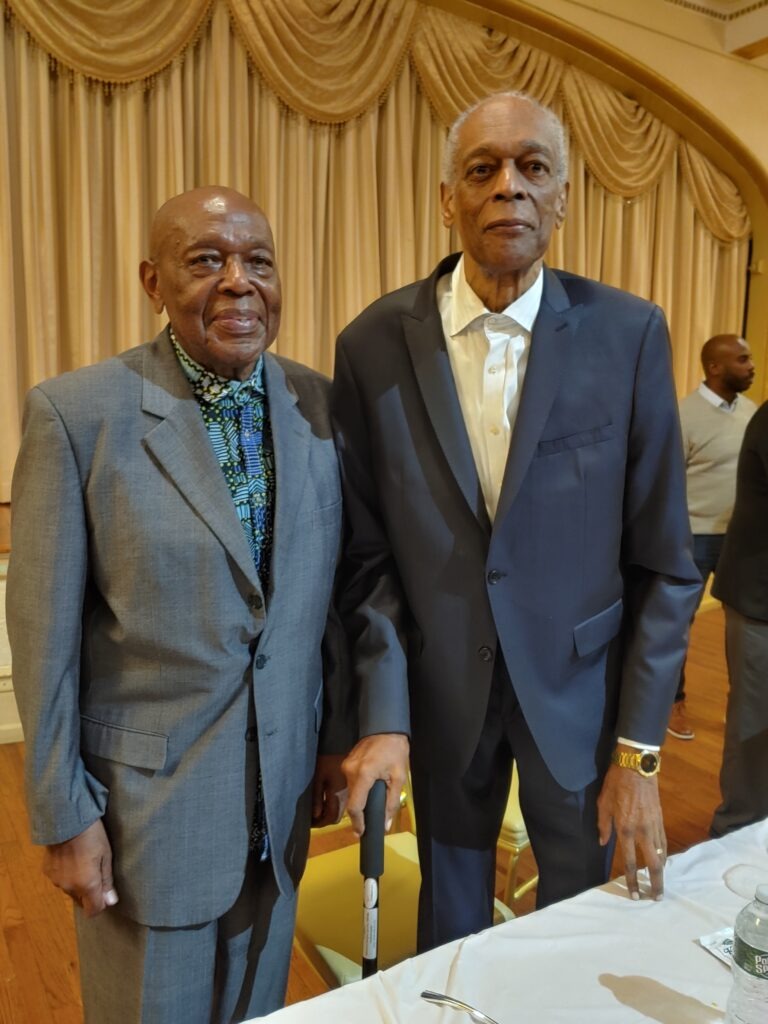
“He stood tall with many outspoken grassroots activists on the front line in the cause of Black solidarity and Black liberation. His unwavering support for the Honorable Minister Louis Farrakhan, which established their friendship and an unbreakable bond of brotherhood from the late 1960s and 70s up until his untimely recent passing, will truly be remembered. I admired Bob Law for being an outspoken proponent for lifting Black folks up from being degraded and marginalized in society to being recognized for who we really are and our greatness in unity,” he added.
Calling him a “radio giant,” BET’s former main news anchor Ed Gordon posted on social media, “Bob was a legend in radio and a pillar in New York media. His political show, ‘Night Talk,’ was eventually syndicated nationally. The program was a powerful ‘must appear’ for politicians, especially in the 80s. It was the first live nationally broadcast Black radio talk show in the country.”
Mr. Gordon added, “‘Night Talk’ is often cited as the catalyst for the late Rev. Jesse Jackson’s 1984 presidential campaign, as Jackson was a frequent guest on the program. RIP, Bob.”
“The passing of Bob Law marks the transition of not just a man—but a movement, a messenger, and a mighty voice that spoke unapologetically for Black people, Black truth, and Black empowerment,” Bro. Fatiyn Muhammad, WBLS executive producer and radio host told The Final Call. “Bob Law was more than a radio host—he was a pillar in Black Talk Radio, a fearless truth-teller, and a community soldier who understood that the microphone was not just a tool for conversation … but a weapon for liberation. As the longtime host of ‘Night Talk’ on WWRL Radio, Bob Law created a platform that became essential listening in the Black community. ‘Night Talk’ wasn’t just a show—it was a classroom, a battleground, and a sanctuary.”
Tackling issues like systemic racism, economic injustice, political awareness, community accountability, Bro. Fatiyn Muhammad said Mr. Law, “spoke with clarity, conviction, and courage—educating generations of listeners who tuned in not just to hear … but to learn, grow, and be activated.”
He also called Mr. Law, “A movement builder” whose “influence extended far beyond the airwaves.”
“He was instrumental in the historic Million Man March in October 1995 called by the Honorable Minister Louis Farrakhan, helping to amplify its message of unity, accountability, and empowerment for Black men across this nation,” said Bro. Fatiyn Muhammad.
“His legacy lives in: The minds he awakened … the movements he helped shape. And the broadcasters—like myself—who followed in his footsteps. He represented a generation of media that understood responsibility … that understood that Black radio is not just entertainment—it is information, empowerment, and survival.”
“For Law, radio was never simply about talk—it was about action, community, and the unfinished work of Black liberation,” said Professor Sam Anderson, the Brooklyn-based retired Black history professor.
Mr. Law fought vigorously to end mayoral control of the New York City school system, and to implement a form of community control of public education, and a Black culturally responsive curriculum and direct parental involvement in public schools.
“Bob Law, the influential radio broadcaster … leaves behind a legacy that spanned more than five decades at the intersection of media, activism, and Black community empowerment,” said Prof. Anderson. He quoted Bob Law saying, “‘The Civil Rights Movement got me my job.’ His entry into broadcasting came through activism itself. In the early 1970s, Law and other community organizers approached New York radio stations with concerns about the glorification of drug culture in films like ‘Superfly’ and the music accompanying them. That outreach brought him to WWRL.”
With “its refusal to function as mere entertainment,” the ‘Night Talk’ phenomenon had Mr. Law’s influence expand dramatically in 1981 when the National Black Network launched ‘Night Talk with Bob Law,’ the first nationally syndicated, Black-oriented live telephone talk show. Prof. Anderson recalled, “For listeners across the country, Law’s voice became a nightly touchstone—a space where issues affecting Black America were discussed with seriousness, urgency, and a commitment to action … . The program helped launch the ‘Run Jesse Run’ campaign that propelled Jesse Jackson’s 1984 presidential bid, with Jackson appearing on the show weekly to discuss the effort.”
With his “I respect you” signature greeting from his “Respect Yourself Campaign,” Mr. Law was fully locked into his heartfelt initiative to counter negative influences on Black youth. A champion of proactive Black radio, Prof. Anderson said that Mr. Law “considered the 1970s and 1980s the ‘glory days’ of the medium, when personalities like Frankie Crocker, Vaugh Harper, Gary Byrd, and Hank Spann commanded the airwaves with creativity and cultural authority.”
“But as consolidation and White consultants increasingly dictated programming, Law watched what he loved being transformed. His 2015 documentary, ‘Saying It Loud: Radio Giving Voice to Black America,’ chronicled this history and mourned the loss of Black radio’s independence and political edge,” Prof. Anderson explained.
Dr. Malauna Karenga, author, activist and creator of the Pan-African, cultural celebration Kwanzaa, said that Bob Law, “Stressed the central role of Black radio and other media in cultivating, deepening and expanding the consciousness of our people. This consciousness was ethical, political, and economic and fostered mutual respect, informed voting and spending, and informed understanding and action around critical issues of our time.”
Dawad Philip is the former editor of the Daily Challenge. “Bob Law was a strong brother with deep principles, vision and courage. Like Gil Noble, Gary Byrd and others, Law used media to give us powerful political presence when it mattered. He made our lives meaningful and for this we celebrate his legacy,” he said.
Bob Law was preceded in death by his wife, Muntu Law, who passed away last year, and is survived by his two daughters, Aisha Patrice Law Abdullah and Abina Law Napier, and his younger sister Carol Peppers. He has three grandchildren and two great-grandchildren.
Nayaba Arinde is a freelance Editor-at-Large and award-winning reporter and activist. Follow her on Instagram @NayabaArinde1