



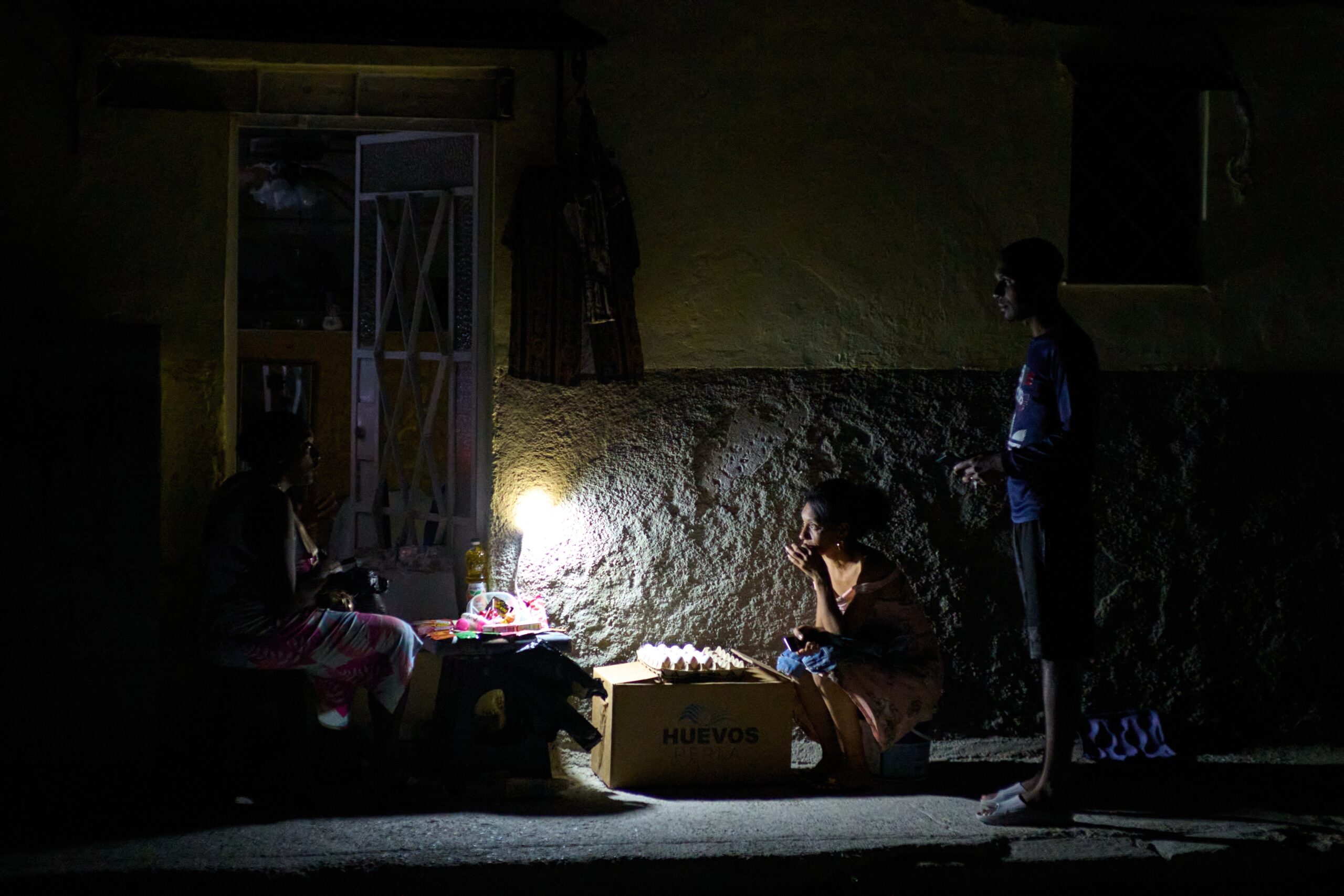

WASHINGTON—In the middle of the night, when electricity flickers back on for a few precious hours across the darkened streets of Havana, Cubans rise from their beds to cook and charge whatever devices they can before the power vanishes again. Electricity has become hit-or-miss some days, with more misses than hits.
President Donald Trump does not seem concerned with the hardships facing Cubans, recently telling reporters, “It may be a friendly takeover. It may not be a friendly takeover. It wouldn’t matter because they are down to, as they say, fumes.” Despite U.S. threats of a takeover of the island nation, Cuba continues to stand resolute.
The 2026 Cuban crisis is an oil shortage and economic catastrophe caused by an American fuel blockade—the United States’ first effective blockade of Cuba since the Cuban Missile Crisis of 1962.
On January 29, President Trump signed Executive Order 14380, declaring Cuba “an unusual and extraordinary threat” to U.S. national security, imposing tariffs on any country supplying the island with oil.
The Trump administration has increased pressure on Cuba since the January 3 arrest of Venezuelan President Nicolás Maduro, a long-time friend of Cuba’s government.
Lack of oil because of the unjust U.S. embargo and current blockade was the factor leading to the failure of Cuba’s electrical grid which impacted the island nation’s 10-11 million citizens. After a 29-hour blackout, power to the grid was restored March 17.
Helen Cairo lives in Cuba. She is a mother, a patient, a neighbor—and she wanted the world to know what her days actually look like.
“Life here is very hard. We have blackouts of 12 hours. I cook my food using electricity. Sometimes I go to bed just with a piece of bread. That’s reality day by day. I have to hurry up to cook—never mind if the electricity comes on at sunrise; you have to wake up to cook.
There isn’t a program for blackouts. They put it away at any time of the day. Water is difficult to have because most houses use electric motors,” she told The Final Call .
Then there is the medical reality. “I have hypertension—my medicines are not available at the drugstore. And my son is asthmatic. His sprays for his treatment are not available either.”
A mother. A son. Medicine that does not exist on the shelf. This is what Washington has created.
The bitter irony of this moment cannot be overstated. Cuba has been a friend to many nations of the world. Cuba’s medical brigade sent doctors to Haiti after the devastating 2010 earthquake, to West Africa during Ebola, to dozens of nations during COVID-19—all while under crushing U.S. sanctions.
In Jamaica alone, over 30 years, Cuban collaborators treated more than 8.1 million patients, performed 74,000 surgeries, attended 7,170 births, and saved more than 90,000 lives, according to a March 6 statement from the Ministry of Foreign Affairs of the Republic of Cuba.
Now, under U.S. pressure threatening visa restrictions and trade consequences, some of the same nations that Cuba helped are being pressured by the U.S. to abandon Cuba during its time of need. Jamaica, Honduras, Guatemala, and the Bahamas have moved to end or restructure their medical agreements with Cuba.
Antigua and Barbuda abruptly terminated its partnership and began recruiting from Ghana instead. Cuba ended its medical brigade program in Guyana after nearly five decades of service.
Actress Sheryl Lee Ralph, a Jamaican American, asked the Jamaica Observer, when the media outlet posted a link to its X account that the government had ended its partnership with Cuba, “Will America now send the doctors so badly needed in Jamaica?” The answer is no.
Luci Murphy, is a D.C. activist who has lived in Cuba and visits frequently. She was direct when The Final Call asked why the nations Cuba sacrificed for have gone silent.
“The real leaders of the people get assassinated by the United States and Israel. What’s left are puppets that just follow along with whatever the U.S. wants. I’m surprised about Angola. Cuba gave so much to them when they needed doctors and soldiers. There’s been no response—and Angola is one of the world’s largest oil producers,” she said in part.
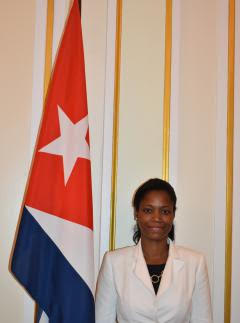
Despite the siege, Cuba is neither passive nor broken. Sulia Páez, First Secretary at the Cuban Embassy in Washington, told The Final Call that the island has been preparing for exactly this kind of assault.
“The intensification of the United States’ maximum pressure policy has not come as a surprise to us,” she said. “We have an organized country, capable of responding to the most urgent needs and maintaining peace, stability, and the provision of essential services. We have been preparing for this, despite our significant limitations.”
Ms. Páez described concrete steps underway—solar installations, new oil production, and the deployment of electric vehicles for hemodialysis patients—as part of Cuba’s National Energy Strategy.
“These vehicles will allow us to make hemodialysis independent of dependence on fossil fuels,” she said. “They will also be used for other health services.”
On international solidarity, Ms. Páez pushed back against the narrative of total abandonment. “Cuba is not alone. We are receiving donations from several countries, among them Mexico, which has already sent three shipments of food, medicines, and hygiene products.
Many organizations in the United States—solidarity organizations, faith community organizations, and Cubans living in the United States—are also contributing.”
Mexican President Claudia Sheinbaum has pledged that despite threats from the Trump administration of tariffs, her country will send aid to Cuba.
“Mexico will always promote peace and diplomatic dialogue, and particularly in the face of this injustice that has been inflicted on the Cuban people for many years, the blockade that has caused various problems,” President Sheinbaum said at her daily press conference on March 13, reported the China-based outlet Xinhua.
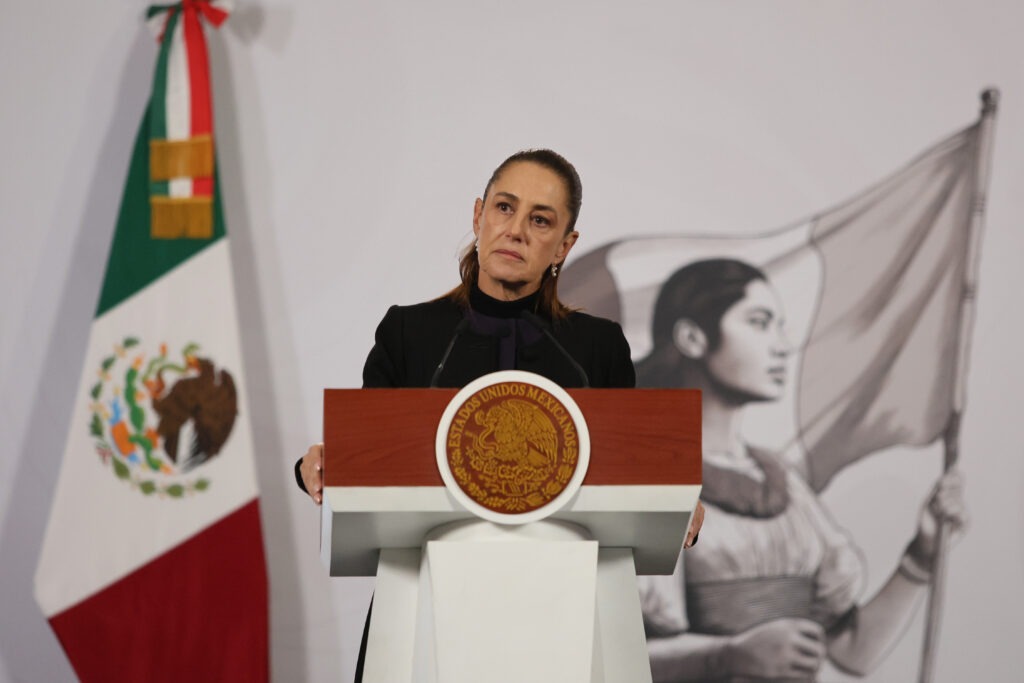
Photo: AP Photo/Ginnette Riquelme
Vietnam is also providing help. One area is cooperation in rice production. Nguyen Van Quang, president of Agri-VMA recently met with Cuba’s President Miguel Díaz-Canel Bermúdez to discuss collaboration in rice cultivation.
“Cuba is going through a difficult time, but we are fully prepared to continue supporting it so that it can overcome these challenges,” said Mr. Van Quang, reported Granma, Cuba’s state-run media outlet.
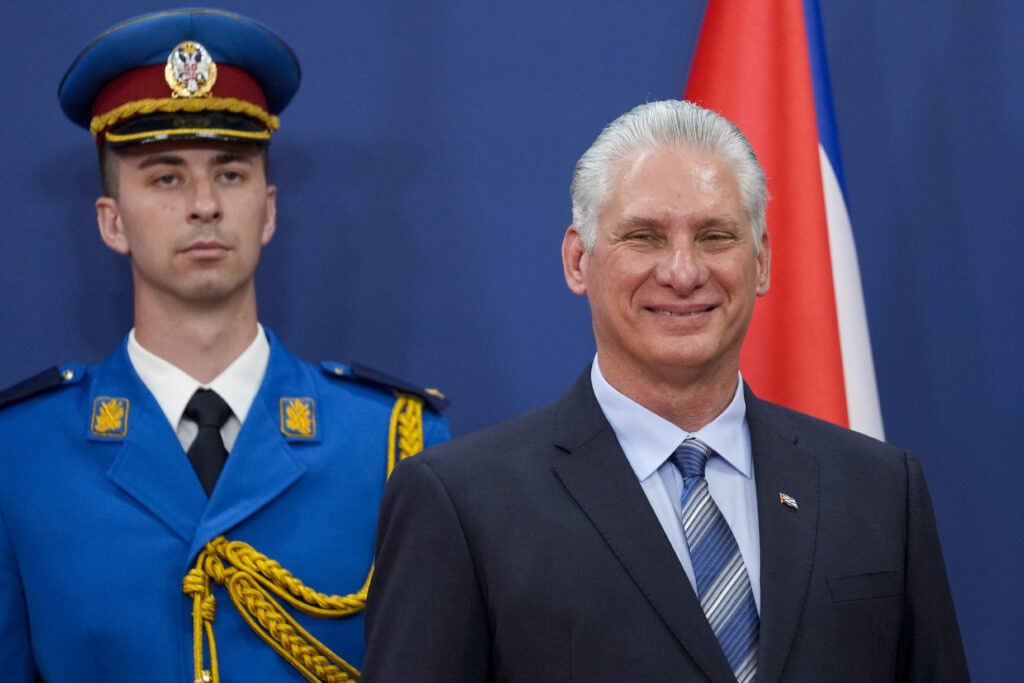
President Díaz-Canel Bermúdez said his people will continue to stand strong. “In the face of the worst-case scenario, Cuba has one certainty: any external aggressor will encounter an insurmountable resistance,” he posted on X, reported Granma.
“The U.S. publicly threatens Cuba, almost daily, with the forceful overthrow of the constitutional order. And it uses an outrageous pretext: the severe limitations of the weakened economy that they have attacked and attempted to isolate for more than six decades,” he added. The Cuban president did note that his country has been in talks with the Trump administration.
Regarding the diplomatic talks now confirmed between Havana and Washington, Ms. Páez was clear-eyed about both the purpose and the limits.
“The direct talks with the United States aim to find, through dialogue, solutions to the differences that exist between the two countries, on the basis of reciprocal equality, respect for both political systems, and respect for the sovereignty and the right to self-determination of both peoples, in accordance with international law.”
She was equally firm about what is not on the table. “Any understanding with the United States is intended to address bilateral issues. The conversations do not concern Cuba’s internal affairs, our constitutional order, or the political, economic, social, and socialist model that the Cuban people have chosen.”
Her message to the American people was simple: “Cuba is not a threat to the United States. Cuba is a peaceful country. We only wish to relate to the United States as we do with the rest of the world—always on the basis of respect for equality, sovereignty, and the self-determination of states.”
The Pan African Unity Dialogue is an initiative of the Institute of the Black World 21st Century. The group has issued an urgent call to the Congressional Black Caucus, Black civil rights organizations and faith leaders nationwide to publicly oppose the U.S. threats and attempt at regime change in Cuba.
“Senator Graham’s statement that ‘Cuba’s next’ is reckless warmongering,” said Dr. Ron Daniels of the Institute of the Black World 21st Century, referring to South Carolina Senator Lindsay Graham, a Republican. “Black leaders should press the Trump administration to return to the path of normalizing relations with Cuba—not destroy it,” said Dr. Daniels in a March 10 press release.
The history demands no less. Cuba declared itself an Afro-Hispanic nation after overthrowing U.S.-backed dictator Fulgencio Batista. The U.S. vehemently opposed Comandante Fidel Castro who came to power in 1959. Comandante Castro met Nation of Islam Minister Malcoldm X in Harlem in 1960.
Nelson Mandela’s first visit outside Africa after 27 years of unjust imprisonment was to Cuba, to personally thank the island for defeating apartheid forces at the Battle of Cuito Cuanavale. Cuba trained thousands of Black doctors, sheltered Black liberation fighters, and never sent a bill.
Cuba showed up when the world needed it. The question is will the world show up for Cuba? Sulia Paez insists her country is not alone.
Final Call staff contributed to this report.
