








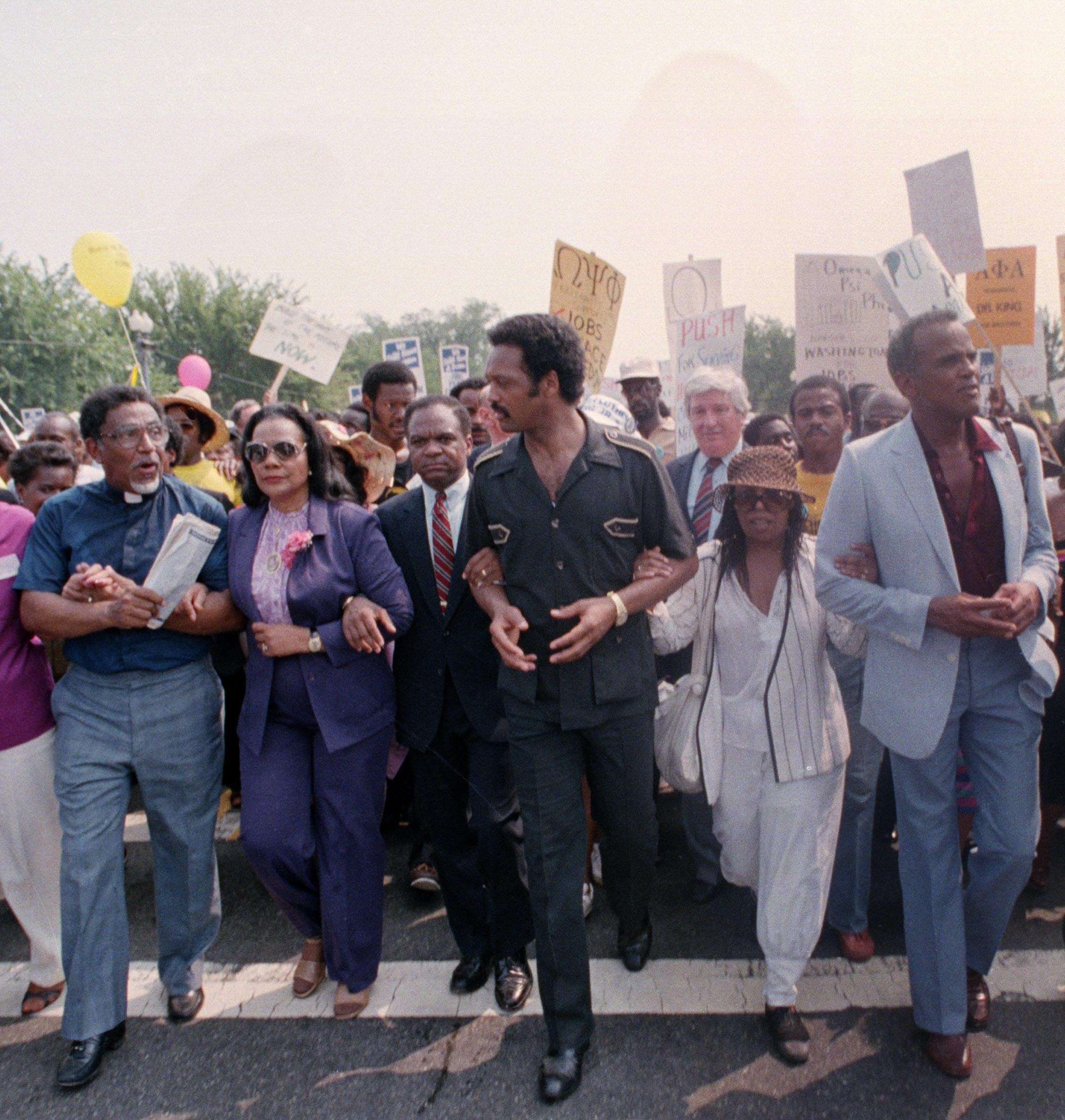

The world mourns the loss of Reverend Jesse Louis Jackson Sr., whose roots in the stifling segregation of Greenville, South Carolina, blossomed into being a foremost moral voice who fought to change the trajectory of a troubled nation in the 20th and 21st centuries. The human and civil rights icon and founder of the Rainbow PUSH Coalition passed away peacefully on February 17, surrounded by his family after a long illness. He was 84.
As an untiring change agent, Rev. Jackson elevated the voices of the voiceless and left an enduring stamp on history. His contribution and commitment to justice, equality, and human rights helped shape a global movement for freedom and dignity.
“Our father was a servant leader—not only to our family, but to the oppressed, the voiceless, and the overlooked around the world,” said the Jackson family, in a statement.
“We shared him with the world, and in return, the world became part of our extended family. His unwavering belief in justice, equality, and love uplifted millions, and we ask you to honor his memory by continuing the fight for the values he lived by,” read the statement.
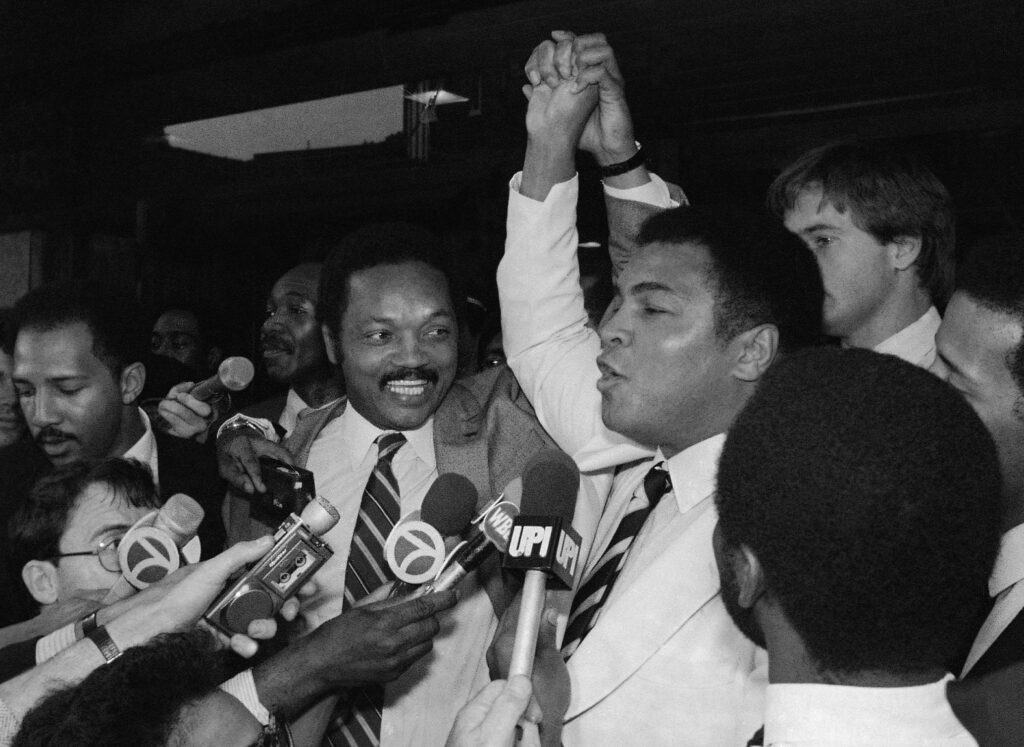
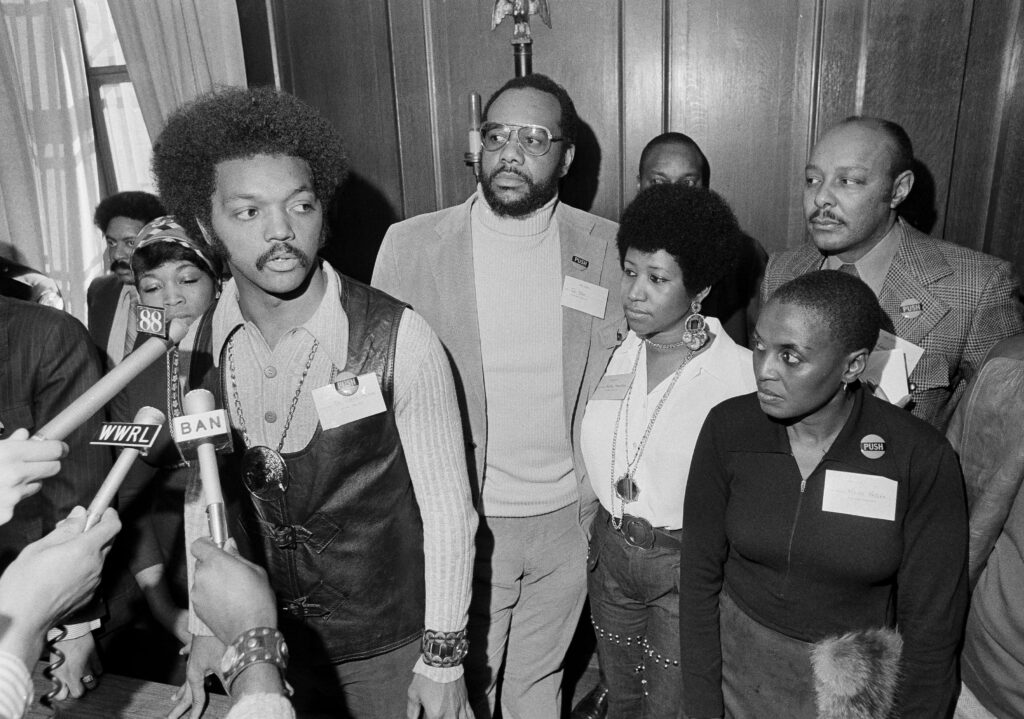
His life was one of visionary service
Rev. Jackson gave a lifetime serving the cause of freedom, justice and equality from the United States to Africa, the Caribbean, Latin America, the Middle East and Europe. As his life is being remembered, he is being hailed on the canvas of history as a visionary whose service added value to it. Tributes were issued by world leaders and other prominent figures influenced by Rev. Jackson.
The Chairperson of the African Union Commission, Mahmoud Ali Youssouf, mourned the passing of Rev. Jackson and described him as a towering figure whose life’s work resonated profoundly with Africa’s historic and ongoing struggles for justice, dignity, equality, and liberation. “Rev. Jesse Jackson’s life reflected the inseparable bond between Africa and its diaspora,” he stated. “His unwavering commitment to justice and human dignity strengthened the Pan-African vision and advanced the shared quest for decolonization, equality, and reparation,” said Mr. Youssouf, in a statement.
“On behalf of all South Africans, I extend my condolences to the Jackson family, the Rainbow PUSH Coalition and the many organizations within the American Civil Rights Movement,” said South African President Cyril Ramaphosa in an official statement. “Rev. Jesse Jackson’s irrepressible campaigns against apartheid and his support for the liberation struggle was a towering contribution to the global anti-apartheid cause,” said President Ramaphosa.
In 2013, Rev. Jackson was awarded South Africa’s National Order of the Companions of O.R. Tambo in Silver for his dedication to challenging societies and governments to recognize that all people are born equal and entitled to life, liberty, prosperity and human rights. The award honored his contribution to the fight against apartheid.
“Reverend Jackson was a great friend of Nigeria and Africa,” said a statement by Nigerian President Bola Tinubu. As an advocate for good governance across Africa, “He also helped link African leaders with the Congressional Black Caucus to promote Africa’s interests in Washington,” said President Tinubu.
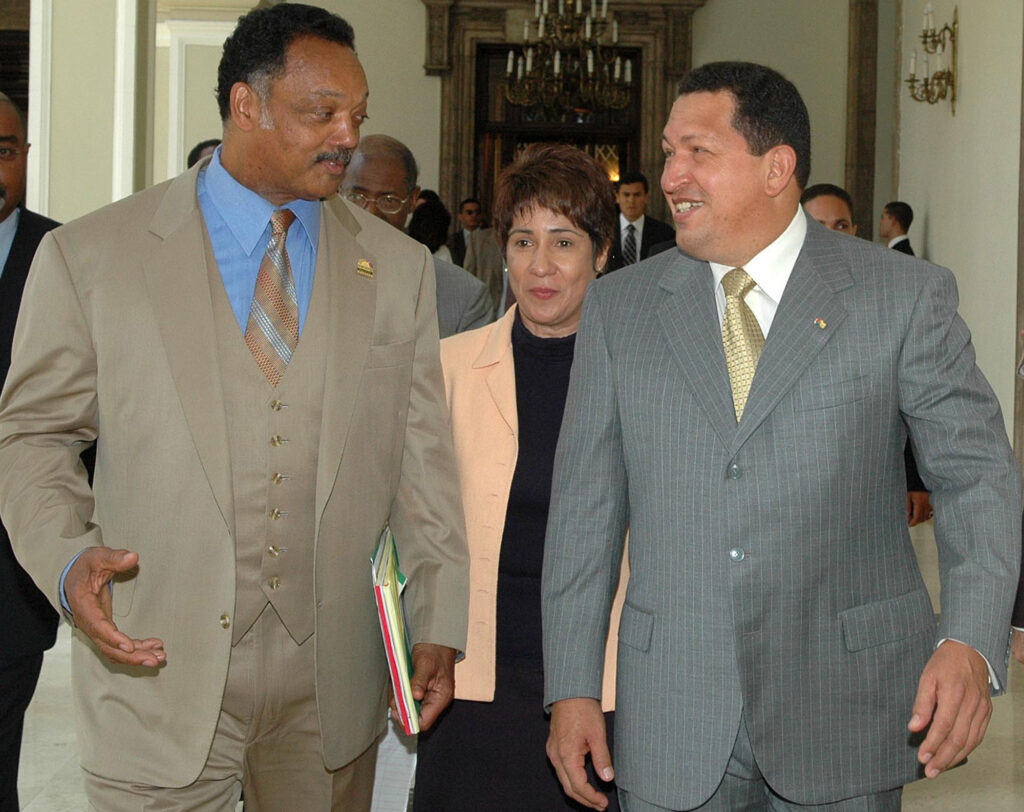
In a statement reported by TeleSar, Venezuela’s acting President Delcy Rodriguez noted his life was a testament of service to the forgotten. She also recalled Rev. Jackson’s principled “fraternal relationship” with the late Venezuelan President Hugo Chavez, notwithstanding Washington’s antagonistic posture toward Caracas. He held talks with President Chavez in 2005 to cool tensions between the U.S. and Venezuela after the ultra-conservative Christian broadcaster Pat Robertson called for Mr. Chavez’ assassination. In addition, Rev. Jackson also supported a progressive Venezuelan initiative to supply heating fuel directly to vulnerable U.S. communities through CITGO, which at the time was a subsidiary of the state owned Petroleos de Venezuela. Through the presidency of Nicolas Maduro, he maintained a principled position on the Latin American country.
Dr. Erieka Bennett, Ambassador of The Diaspora African Forum (DAF) Embassy in Accra, Ghana and a personal friend of Rev. Jackson and his family, extended her deepest condolences in a statement. “His spirit and legacy has impacted the world and will live on forever,” she said.
Rev. Jackson was a founding board member of the DAF embassy housed on the grounds of the W.E.B. DeBois Center in Accra. The embassy services the diaspora community of the Sixth Region of the African Union. “His tremendous commitment to empowering marginalized communities and promoting unity among people of African descent has left an indelible mark,” said Ms. Bennett.
A vanguard on global issues
Rev. Jackson’s international stature unfolded over several decades, beginning in the 1970s. Dr. Wilmer Leon, political scientist and host of Inside the Issues on SiriusXM, told The Final Call that Rev. Jackson’s global work began amid a time when decolonialization movements in Africa were still engaging anti-colonialism and anti-neocolonialism struggles.
In that context many people in Africa were looking to the global Black struggle as a guidepost for their own. “And he was seen internationally as being a leading figure in that regard,” said Dr. Leon.
During the height of the anti-apartheid struggle, Rev. Jackson traveled to South Africa, Zambia, and Kenya, aligning himself with liberation movements, while pressing for sanctions against apartheid. During the latter 1990s he served as President Bill Clinton’s Special Envoy for the Promotion of Democracy in Africa. However, he also continued independent initiatives worldwide.
Rev. Jackson was in the “vanguard” of international issues, said Dr. Gerald Horne, the John J. and Rebecca Moores Chair of History and African American Studies at the University of Houston.
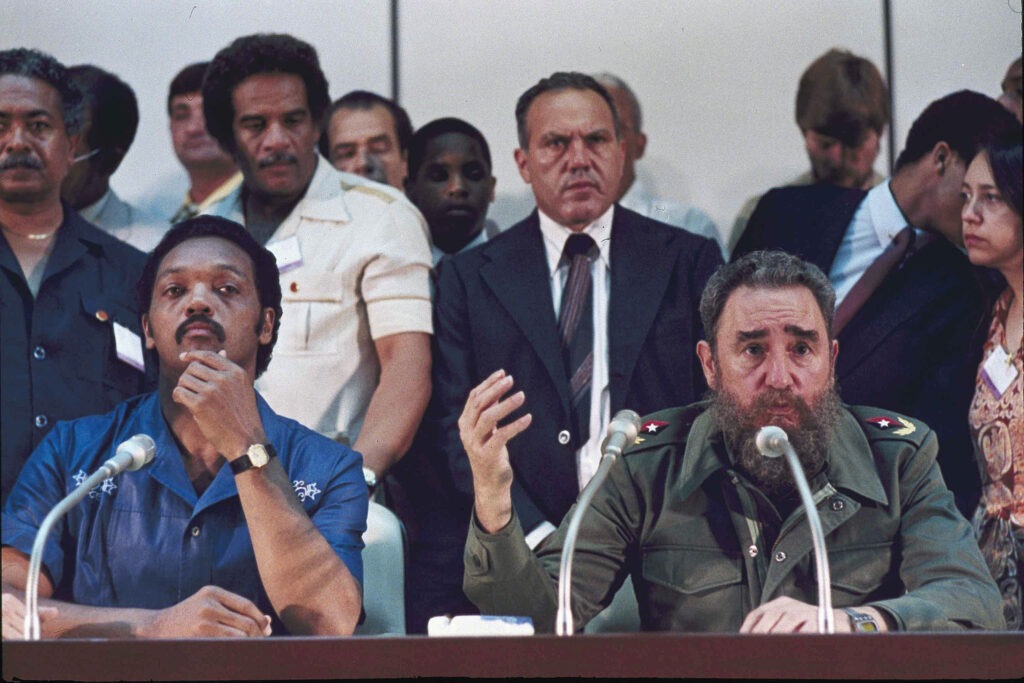
The civil rights leader was also ahead of many U.S. political figures in advocating improved relations with Cuba, challenging the hardline posture that defined much of U.S. policy. He demonstrated his effectiveness in 1984, during the height of the Cold War, when he traveled to Cuba and held direct talks with President Fidel Castro, securing the release of 26 Cuban political prisoners and 22 Americans. Although U.S.-Cuba relations were extremely strained, he engaged talks as a private citizen and religious leader, not an official envoy.
“I think it’s fair to say that his domestic efforts were extended to the global level, as Reverend Jackson once put it … ‘My constituency is the desperate, the damned, the disinherited, the disrespected and the despised,’” said Dr. Horne. “He was speaking of the domestic scene, but he could just as well have been speaking about the international scene,” added Dr. Horne.
His global stature expanded significantly in 1984, when he led an interfaith delegation to Damascus, Syria, and secured the release of a captured U.S. Navy pilot following talks with President Hafez al-Assad.
“Most people don’t know that negotiating to free captive people in different parts of the world became a signature part of his work,” said Leonard F. Muhammad, longtime aide to the Honorable Minister Louis Farrakhan, and a member of the Nation of Islam Shura Executive Council.
The effort to release Lt. Robert Goodman—whose aircraft was shot down by Syria’s military is an example. “The thing we need to remember is that Lieutenant Goodman was an enemy combatant. He wasn’t over there sightseeing and flying over Syria as a tourist,” said Mr. Muhammad. “He was there to do harm to Syria and the Syrian people based on military decisions of the U.S. government,” he added.
Notwithstanding those realities, to secure Lt. Goodman’s release Rev. Jackson organized an interfaith delegation of Christians and Muslims, that included Minister Farrakhan.
“With Reverend Jackson and Minister Farrakhan in Syria, it represented a tremendous number of American citizens—both Christian and Muslim,” reasoned Mr. Muhammad.
With such broad moral and grassroots support represented by the interfaith make-up of the delegation made the appeal more consequential, increasing the likelihood of a favorable outcome, he explained.
Moral imperative moved Rev. Jackson
Rev. Jackson was known to advocate finding the “higher ground” and saying, “while it may be politically difficult, it’s the morally right thing to do.”
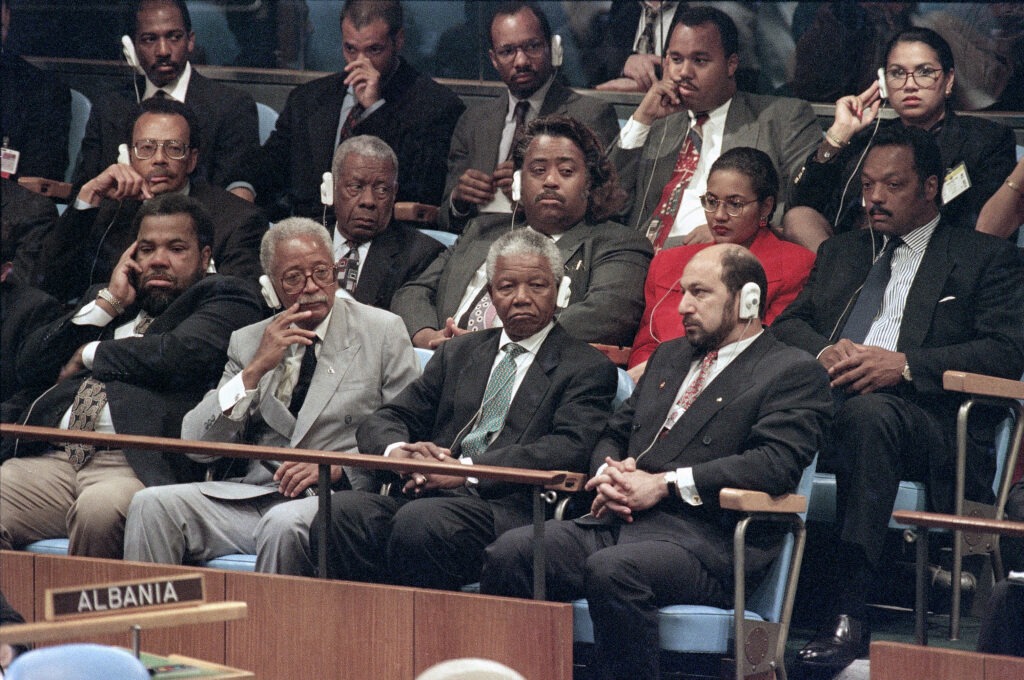
As people reflect on Rev. Jackson’s legacy, many say his contributions were rooted in the moral imperatives of his faith. Jesse Jackson’s solidarity with leaders like Chavez and South Africa’s Nelson Mandela was significant. Such alignment also exposed the U.S. government’s aversion to Black leaders with international profiles.
Dr. Cornell West, a scholar and 2024 independent presidential candidate, argued that the status quo resists solidarity among oppressed peoples, as it threatens the existing power dynamics. “There’s a tendency for all great Black freedom fighters in the United States to be cast simply as a civil rights activist, rather than an international figure,” Dr. West told The Final Call.
He contends that solidarity with oppressed peoples globally has always posed a threat. As a result, there is a tendency to confine towering freedom fighters to the narrow label of civil rights leaders, “when they’re far, far, far beyond that,” said Dr. West.
In a reflection, Dr. Harry Singleton, director of Faith-Based Education and Engagement at the International African American Museum in Charleston, South Carolina, underscored Rev. Jackson’s dual role as a prophetic voice and political activist and a generational bridge from the civil rights era and Rev. Dr. Martin Luther King Jr. “For those of us who were not around in the 1960s during Dr King’s career, Jesse Jackson served as that bridge from Dr King over to those of us in the 1970s and beyond,” said Dr. Singleton.
He said Rev. Jackson was a “civil rights activist extraordinaire” for “our generation” who challenged the forces of injustice in the spirit of Dr. King, Ralph Abernathy, and Hosea Williams—all contemporaries.
Often it is overlooked that these leaders were ordained ministers whose commitment to God was inseparable from their public struggle for people’s rights. “That aspect of Jesse Jackson’s life cannot be overstated,” said Dr. Singleton, himself a minister influenced by Rev. Jackson.
As founder of Rainbow PUSH Coalition, Rev. Jackson saw his global efforts as a progression of Dr. King’s mandate. “I feel good about that season,” he told a Thai television interviewer in 2003, referring to his presidential runs. “While doing that, I was able to further Dr King’s mission of trying to be a peacemaker,” said Rev. Jackson.
“We believe we’ve continued our work, but not just in the form of running for president. We’ve never stopped fighting for peace in the world,” he said.