






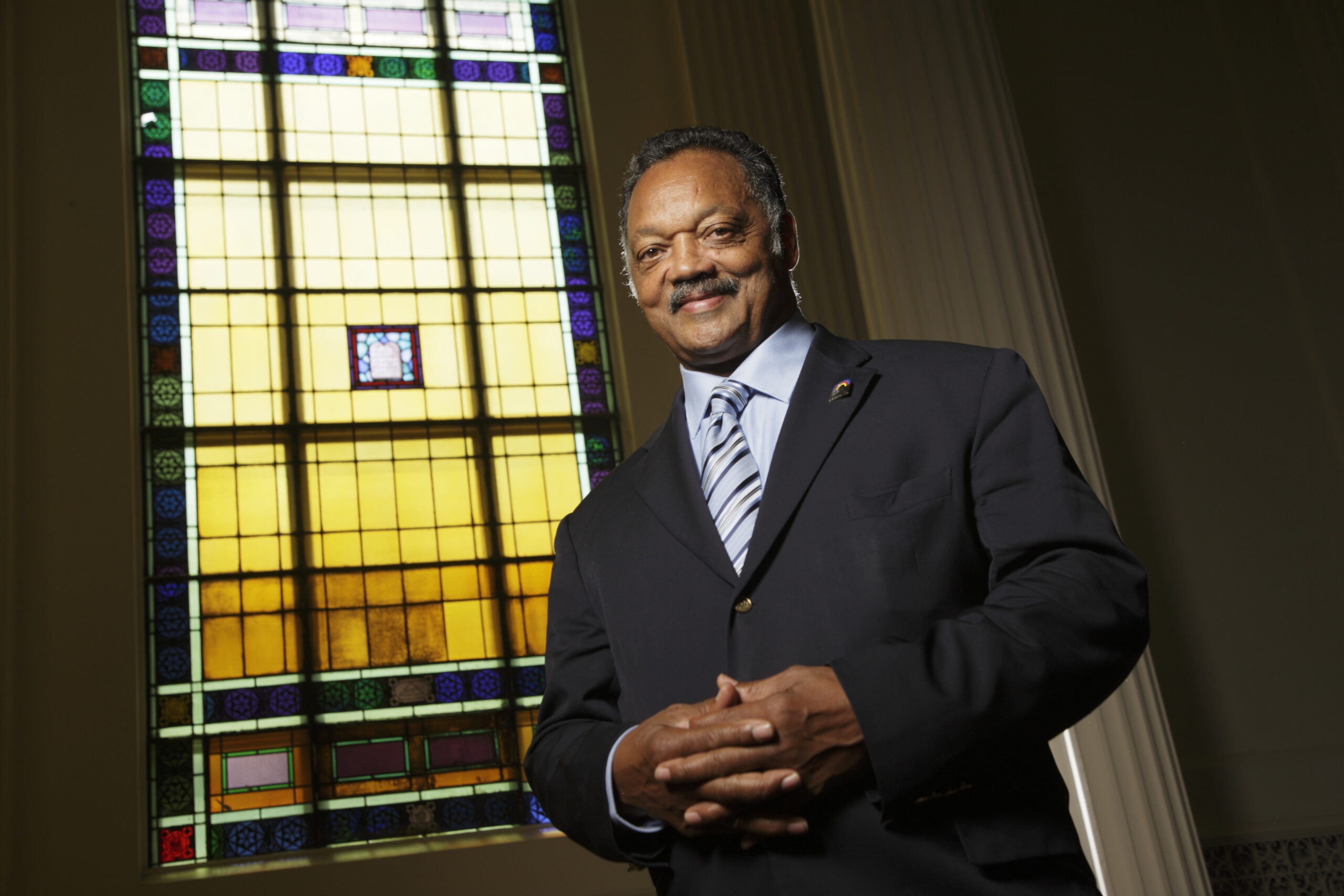

A protégé of Dr. Martin Luther King Jr., the Rev. Jesse L. Jackson Sr. was present at most, if not all, of the major marches and demonstrations Dr. King led and was dispatched often as an emissary for the noted civil rights icon.
Rev. Jackson, an energetic and creative student of religion with a talent for organizing people, had traveled to Selma, Ala., in the mid-1960s to help in the Voting Rights Movement after viewing an attack on activists by police and a White mob while crossing the Edmund Pettus Bridge, now known as “Bloody Sunday.” It was shortly thereafter that he met Dr. King.
While devoted to Dr. King’s principles, Rev. Jackson was already on the road of activism prior to his personal relationship with his mentor. He was part of the “Greenville Eight,” a group of students in Greenville, S.C., who in 1960 participated in a sit-in at a Whites-only public library that led to the desegregation of the city’s public libraries.
His talents for moving people showed, and Dr. King asked the aspiring preacher to accept an assignment. Rev. Jackson joined Dr. King’s Southern Christian Leadership Conference (SCLC) movement and was sent to Chicago to organize and act as national director of Operation Breadbasket; a direct-action organization focused on supporting Black-owned businesses and boycotting and picketing businesses that did not employ Black people.
Rev. Jackson was present April 3, 1968, at Dr. King’s historic “Mountain Top” speech, an address Dr. King gave in Memphis, Tenn., to support Black sanitation workers on strike. Iconic symbols of that demonstration were strikers carrying “I am a man” signs. During the speech, Dr. King spoke eerily about the possibility of his death.
“… I would like to live a long life. Longevity has its place. But I’m not concerned about that now. … I’ve looked over and I’ve seen the Promised Land. I may not get there with you, but I want you to know tonight that we as a people will get to the Promised Land,” he famously said.
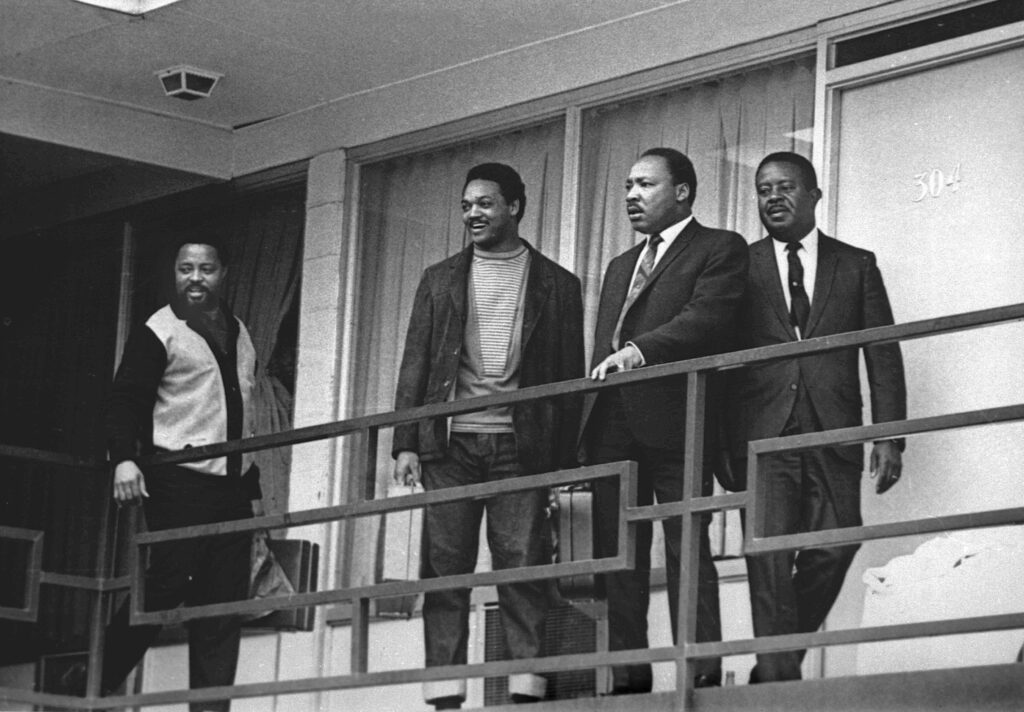
The next day, Rev. Jackson, Rev. Ralph Abernathy and Memphis Rev. Samuel “Billy” Kyles were on the balcony of the Lorraine Motel (now a national civil rights museum) when an assassin’s bullet took Dr. King’s life. Other activists, including Rev. Jackson, were in the parking lot below. In an interview years later, Rev. Jackson said after hearing the shot, he ran toward the steps and said there is a picture of Pastor and close confident of Dr. King, Andrew Young and himself pointing in the direction the gunshot came from.
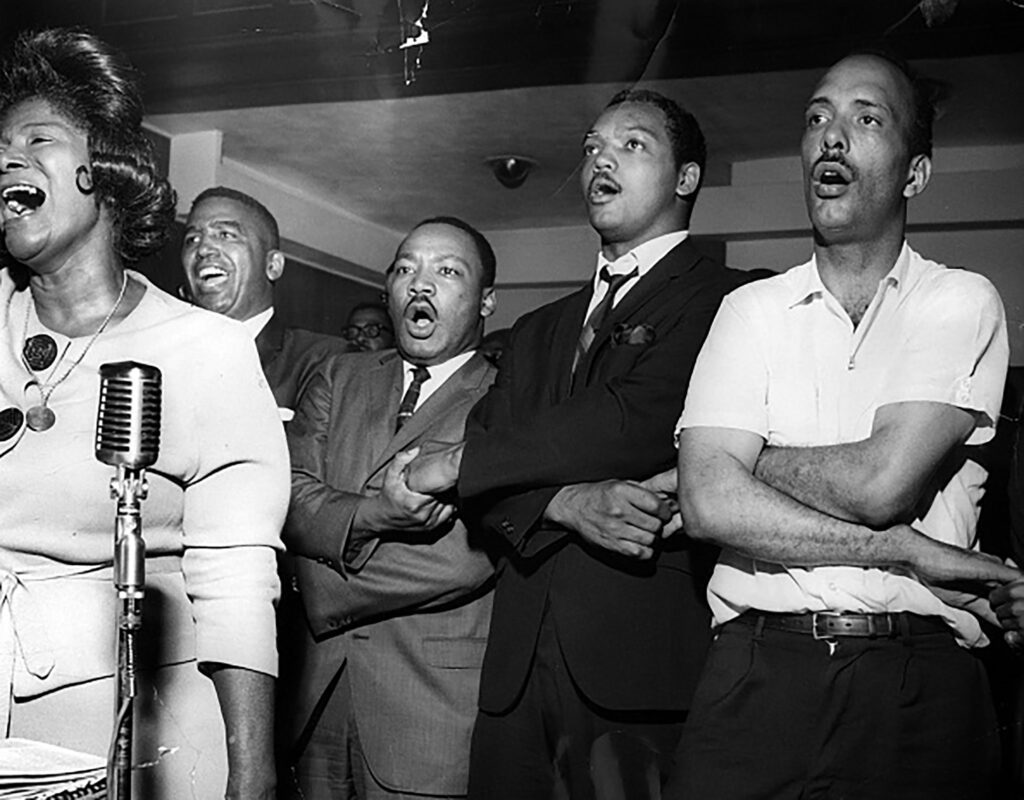
Several years after the 1968 assassination of Dr. King and Rev. Jackson’s departure from SCLC, he founded Operation PUSH (People United to Serve Humanity) which focused on many of the same goals. The organization is now referred to as the Rainbow PUSH Coalition, underscoring its diverse membership and level of support.
In an interview on Life Stories from May 17, 2017, Rev. Jackson reflected on first meeting Dr. King and others in the Civil Rights Movement. He explained that he along with several classmates, had been arrested in July 1960 trying to use a public library and little did he know, Dr. King was aware of a young Jesse Jackson and his activism.
“Little did I know, he was aware of that and then in ’63 in Greensboro, North Carolina at North Carolina A&T, we were involved in a major sit-in movement there. So, when I first met him physically, I was coming to Atlanta to speak at Morehouse as a member of the Omega Psi Phi Fraternity, and he was coming to the airport with his group on the way to get his Nobel Prize. It was just a thrill to see him. He saw me, he called my name, ‘Jesse.’ It threw me off,” Rev. Jackson reflected. He explained that Dr. King’s acknowledgement of him showed how sensitive and aware he was of their struggle as young activists in the movement.
In a 2008 speech, Rev. Jackson reflected on the economic philosophy of Dr. King and the Civil Rights Movement: “It must lead to more futures and fewer young funerals. It must embrace Dr. King’s last dream, a poor people’s campaign, where all could come together with a job, income, education, and health care. A bridge that leads us from racial battleground to economic common ground. It leads us to healing,” he said.
Rev. Jackson wrote an op-ed published in the Black-owned, Washington Informer, in 2020, where he again reflected on the impact of his mentor, Dr. King.
“Dr. King’s commitment provides a wonderful example for all of us, but particularly for the young. He did not order an army; he inspired people to act and to volunteer. He amassed no fortune. He did not hold high office. Yet, by the wisdom of his teaching, the justice of his cause, the intensity of his commitment, he helped transform America, leading it out of the shame of segregation and toward a more perfect union.”
Through his friendship and work alongside Dr. King, Rev. Jackson learned much, picked up the mantle from his mentor and continued the important fight for justice on behalf of Black and oppressed people. And like his mentor, Rev. Jackson fought, worked and sacrificed till the end.
James G. Muhammad is former editor-in-chief and current Contributing Editor to The Final Call.
