





Saif al-Islam Gadhafi was the second-eldest son of the late Libyan leader Colonel Muammar Gadhafi. His name means, “Sword of Islam” and the Libyan people were proud he was living up to his name.
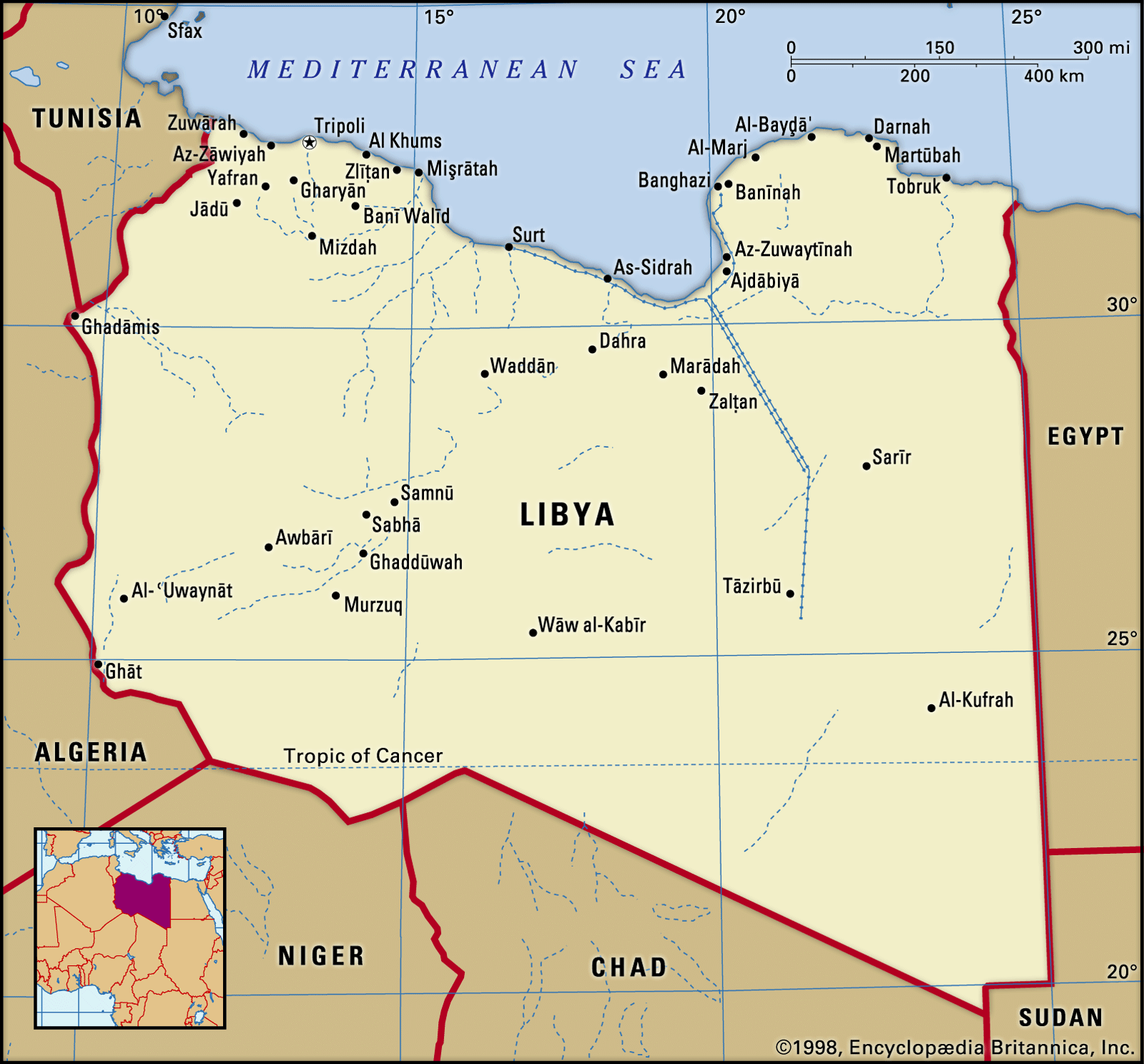
The younger Gadhafi’s office announced he was assassinated in Libya’s northwest city of Zintan on Feb. 3, in what it described as a “treacherous and cowardly” operation.
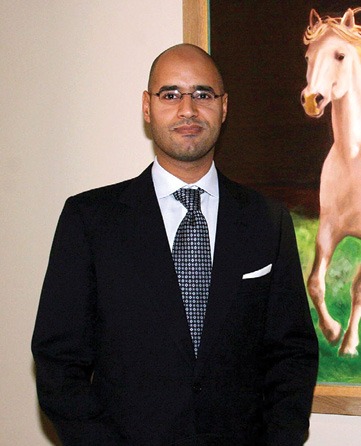
According to the statement, four individuals stormed his house, disabled security cameras, and killed him in a direct confrontation, reported the Libya News Agency.
His office urged Libyan authorities, the international community, and human rights organizations to “assume their legal and moral responsibilities” and launch an independent, transparent local and international investigation to uncover the truth behind the move and those involved.
In addition, international and regional bodies, including the United Nations and the African Union, urged a swift, transparent, and thorough investigation into the incident, the Libyan Observer reported.
Libya’s Attorney General has launched a formal probe into the killing. However, by presstime, no arrests or definitive conclusions had been announced publicly, and details about the investigation’s progress remained limited.
Analysts and observers said his death needs to be contextualized within the broader framework of Western imperialism, such as the United States aiming to fragment and undermine the African continent and other areas of the Global South.
“The only forces that benefit from his assassination are those external forces in alignment with the internal forces in Libya that are not committed to the reconsolidation of the project under Muammar Gadhafi.
Which was a reflection of the independence and integrity of Libyans, but also African people as a whole,” said Ajamu Baraka, director of Black Alliance for Peace North South Project For People(s) Centered Human Rights.
Libyan insurgents backed by the U.S., France, Britain, Italy and NATO forces deposed Muammar Gadhafi, who headed Libya since the al-Fateh Revolution brought him to power in September 1969.
Since the 2011 intervention and overthrow, Libya has been in a state of chaos, instability, division, factional warfare, and has been considered a failed state. Many of the Gadhafi-era leaders were killed, exiled or incarcerated. Before the Western intervention, Saif al-Islam Ghadhafi was widely touted as the successor of his father.
Born in Tripoli in 1972, Saif al-Islam Gadhafi was the most politically active of Muammar Gadhafi’s children. Though he never held public office, he was widely regarded as Libya’s second-most-powerful figure from 2000 onward, according to the India-based Weekly.
As Western governments politically isolated Libya’s revolutionary government, Saif al-Islam Gadhafi was often cast as a potential reformer and Libya’s acceptable face abroad.
Educated at the London School of Economics, where he earned a Ph.D. in 2008, he publicly advocated civil society, constitutional reform, and human rights, and played a key role in Libya’s rapprochement with the West, including negotiations to abandon its nuclear weapons program.
But that posture shifted with Western-backed efforts to destabilize Libya and depose Muammar Gadhafi, when Saif al-Islam emerged as one of the staunchest defenders of his father and the Libyan state.
In 2014, Libya split into rival governments, one in the East and an “internationally accepted” government in the West, based in Tripoli, now headed by Prime Minister Abdul Hamid Dbeibeh.
Although absent a stable, unified government, Saif al-Islam Gadhafi aspired to lead Libya and run in presidential elections that have been in a state of flux and recurring postponement.
In the lead-up to Libya’s long-delayed 2021 presidential process, some polls showed Saif al-Islam as a leading and highly popular candidate, reflecting significant public support.
The election never happened due to legal and political infighting, and his candidacy was repeatedly disputed, disqualified, and reinstated amid the turmoil. Some observers say that, in the current climate of Libyan affairs, he was strong enough to pull the fractured oil-rich nation together.
A national election is targeted for early to mid-2026, but its actual occurrence depends on political agreement and legal clarity, Xinhua News reported.
Moussa Ibrahim, former government and Muammar Gadhafi’s last official spokesperson, posted on X that Saif al-Islam’s killing robbed the nation of a hope. “He wanted a united, sovereign Libya, safe for all its people. They assassinated hope and a future, and planted hatred and resentment,” said Mr. Ibrahim.
The former spokesman referred to those allegedly involved in the assassination and ongoing turmoil as agents of foreign powers and gangs of “treachery and betrayal.”
“The objective is more bloodshed, deeper division in Libya, and the destruction of every project for national unity, in service of foreign interests in the country,” he stated in the Feb. 3 posting.
When news broke about Saif al-Islam Gadhafi’s death, social media was lit with mourning and praise for the 53-year-old leader, with many calling him a “noble and truthful son of Libya.”
Some posted video clips of a defiant “no compromise” Saif al-Islam, railing against the insurgents who collaborated with Western powers to topple his father and the Great Socialist People’s Libyan Arab Jamahiriya and vowing to “fight to the last bullet” in defense. More than a decade later, foreign intervention left Libya shattered. The post intervention collapse of Libya was widely predicted.
With the overthrow and killing of Muammar Gadhafi, the Honorable Minister Louis Farrakhan, the National Representative of the Most Honorable Elijah Muhammad of the Nation of Islam, said those forces responsible have “let the dogs of destruction out,” predicting the years of chaos that followed in Libya and across Africa.
For the foreign interests in Libya and Africa, a Gadhafi comeback meant a major setback for the exploiters who determined that they would maintain sole control over Africa.
A past article emailed to this writer by activist Gerald A. Perreira explains it. Muammar Gadhafi and the Libyan Jamahiriya were major obstacles to their plan, Mr. Perreira stated.
“Qadhafi (Gadhafi) had the ability to provide financial assistance to African countries, and his vision of African unity was fast gaining momentum, Qadhafi (Gadhafi) and Libya’s prosperity and capability to lead the charge towards African liberation had to be eliminated. No one was more aware of their nefarious agenda than the Brother-Leader himself,” Mr. Perreira continued.
“His (Gadhafi’s) last message to the peoples of Africa stated: ‘The fight, if it is not won in Libya, will be coming to you. Prepare for it. Prepare traps for the invaders. You must defend your corners. … Do not let them use you. Be united. Build your defenses for they are coming if they manage to pass Libya.’”
Perhaps Saif al-Islam Gadhafi represented a return to such a Libya and Africa, so, as with his father, they determined he had to go. “Those forces that are anti-African, anti-people forces felt compelled to move, to act, to do what they normally do, which is to destroy and comrade Gadhafi was martyred,” said Mr. Baraka.
Minister Farrakhan warned of the aftermath of the killing of Colonel Muammar Gadhafi and what would be the result in the region in part eight of his 58-week lecture series, “The Time and What Must Be Done,” delivered in 2013.
“But to The No. 1 Beast, America: Through ‘AFRICOM’ you have sent your wicked mischief-makers into Africa. And after you killed my brother Gadhafi, what did you do?
Well, just as I heard somebody say once, ‘Who let the dogs out?’ America, when you killed my brother, you ‘let the dogs loose.’ Everything that you have done that you thought would be ‘in your favor’ is now coming against you;
All of your ‘mischief-making,’ all of your ‘putting one brother against another,’ ‘one kingdom against another,’ ‘one nation against another,’ ‘one people against another’: Keep on going, because it’s coming back home to you!” Minister Farrakhan said.
