



“The month of Ramadan is that in which the Qur’an was revealed, a guide to men and clear proofs of the guidance and the Criterion. So whoever of you is present in the month, he shall fast therein, and whoever is sick or on a journey, (he shall fast) a (like) number of other days.
Allah desires ease for you, and He desires not hardship for you, and (He desires) that you should complete the number and that you should exalt the greatness of Allah for having guided you and that you may give thanks.”—Holy Qur’an, 2:185
Once again, nearly two billion Muslims will observe Ramadan through fasting in a world plagued by conflict, hardship, and mass killings. This year, the ninth month of the lunar calendar is expected to commence on the evening of February 17, contingent upon the sighting of the new crescent moon, with fasting set to begin on February 18. If the moon is not visible, Ramadan will start on February 19.
Throughout the month of Ramadan, Muslims abstain from eating, drinking, and engaging in marital intimacy from dawn to dusk for 30 days. This Sacred Month commemorates the time when the Angel Jabril appeared to the Prophet Muhammad, may peace be upon him, and conveyed the divine words of Allah (God) that would eventually form the Holy Qur’an, the Islamic scripture.
The Honorable Minister Louis Farrakhan, National Representative of the Most Honorable Elijah Muhammad, Eternal Leader of the Nation of Islam, described the significance of the Holy Month during a 2010 message, “Blessed Ramadan,” delivered on what was then called “The Final Call Prayer Line.”
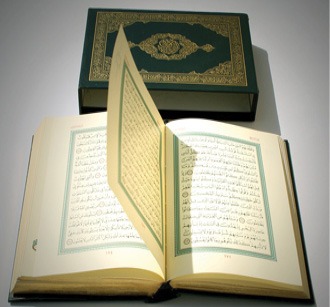
“During this month of Ramadan, each day we are to read one-thirtieth (1/30) of the Qur’an so that by the end of Ramadan, we shall have completed the reading of the whole of the Holy Qur’an.
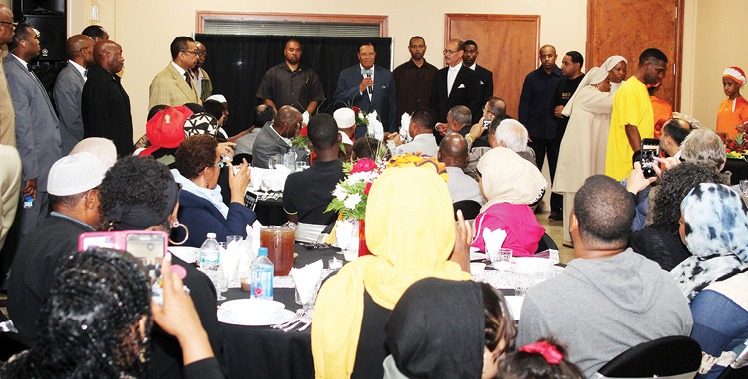
This is a very special month of prayer and fasting and sacrifice that is prescribed by Allah to give us the discipline necessary by forsaking the things that are natural: food, water, and, sexual relations with our spouses during the daylight hours,” Minister Farrakhan said.
“Surely, if we can master hunger, and thirst, and the drive for sexual co-habitation throughout the hot days of summer, then it will be easier for us to leave off lying and stealing, gambling, the use of drugs, or anything that is unnatural that takes us away from the pure service and worship of Allah,” he added.
New Jersey’s Imam Qasim Amin Nathari told The Final Call, “Another year, another Ramadan; another opportunity. Every Ramadan brings another reminder of the Mercy and Forgiveness that Allah extends to us as Muslims. For certain, we are always in need of it.”
“As I reflect on our current situation, particularly in America, we are more in need of Ramadan than ever. Individually and collectively, the Muslim Ummah (community) needs a reset.
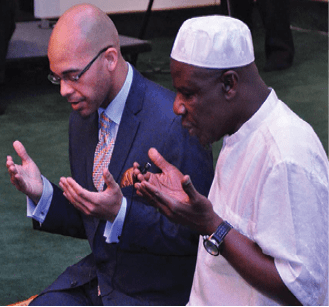
And there is no better time than now, this Ramadan, to rely on Allah to bring us closer to Him, through our fasting, prayers, reading and reflecting on the Qur’an, giving charity, and increased acts of good. May Allah grant us all a Blessed and successful month,” Imam Nathari added.
Several significant events in the history of Islam also occurred during the Month of Ramadan.
The Battle of Badr, also known as the Battle of Separation, was a crucial conflict in the early history of Islam. This confrontation took place on 17 Ramadan 2 AH (After Hijrah) March 17, 624 CE (Common Era), pitting a formidable Quraysh force of over 1,000 soldiers against a mere 313 Muslims.
The unexpected triumph of the Muslims in this engagement marked a pivotal moment for their fledgling community, demonstrating the Might of Allah (God) and reinforcing their faith.
“In that particular year, during the migration of Prophet Muhammad, peace and blessings of Allah be upon him, this was the first year that fasting and charity were made obligatory upon the community,” explained Islamic scholar Ieasha Prime in a lecture.
“What’s significant about the battle of Badr being fought during Ramadan is that the believers were fighting while they were fasting. It means that in the intense heat during this month, this was something that they were enduring.”
Ramadan starts approximately 11 days earlier each year as the lunar calendar follows the moon’s phases. The moon’s sighting marks the official start of Ramadan. Muslims believe the Qur’an began to be revealed to the Prophet Muhammad, peace be upon him, in A.D. 610.
That revelation from the Angel Jabril occurred on Laylat al-Qadr, the “Night of Power,” during the last 10 days of Ramadan. Muslims commemorate Allah’s (God’s) revelation this month by praying and reciting the Qur’an. They also strive to be better Muslims by refraining from gossiping, lying, fighting, or arguing.
Fasting from before sunrise until nightfall is obligatory for Muslims, except for the sick, pregnant, nursing mothers, travelers, elderly, or menstruating women. Missed fasting days can be made up throughout the year, either all at once or one day at a time.
The fast is not meant to be a hardship. Some Muslims may eat a pre-dawn meal called suhoor before the first prayer, fajr. The evening meal to break the fast, called iftar, is eaten after the sunset prayer, Maghrib. The fast is often broken with dates and water, as did Prophet Muhammad, peace and blessings be upon him, or any simple foods.
This year marks a rare convergence of sacred observances, as Ramadan and the Christian season of Lent begin on the same day. Ash Wednesday, which marks the beginning of Lent for Christians, falls on February 18, the same day Muslims might begin their fast.
This synchronicity creates an unusual, shared season of devotion, prayer, and spiritual reflection across faith traditions. Both observances emphasize fasting, prayer, charity, and self-discipline as means of drawing closer to God.
Ramadan will also be extra special for the Nation of Islam as it falls during Saviours’ Day weekend, which will be convened in Detroit, Feb. 19-22.
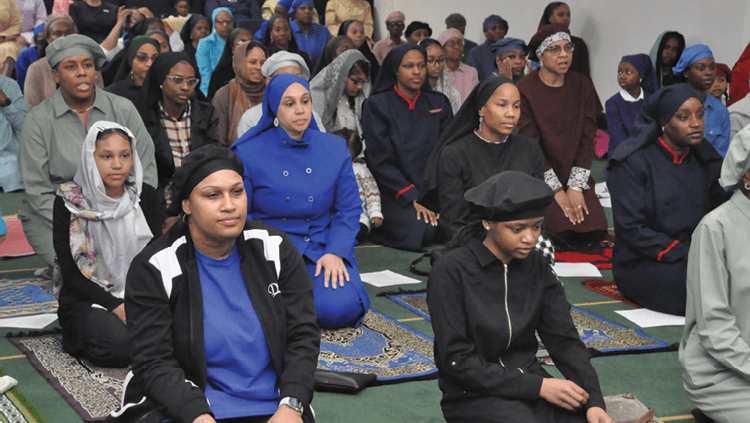
Photos: Abdul K. Muhammad
Saviours’ Day commemorates the Birth Anniversary of Allah (God) in the Person of Master Fard Muhammad, The Great Mahdi and teacher of the Most Honorable Elijah Muhammad. Master Fard Muhammad was born in the Holy City of Mecca, Arabia, on February 26, 1877.
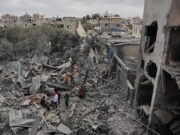
While many around the world are focused on the suffering in Palestine, Sudan, the Congo, and often their own backyards, Muslims are also focused on looking beyond the daily struggles to attain inner peace and engage in charitable acts in their communities.
“The Holy Month of Ramadan is a most important time for the righteous of all diverse backgrounds, schools of thought, and cultures because this month of fasting, in commemoration of the revelation of the Holy Qur’an. Therefore, the month first spiritually roots the Believer in the Divine Word of Allah (God) as a nourishment to the mind, heart, and spirit.
We collectively strive every Ramadan each year to elevate ourselves through its universal moral injunctions and spiritual guidance,” Nation of Islam Student National Imam Sultan Muhammad told The Final Call, in a previous interview.
“We are rooted in our shared struggle to overcome the carnal realities of self that are represented in our abstention from wrongdoing, food, drink, and intimate relations during the daylight with our husbands and wives.
As we collectively abstain from these natural universal hungers, the shared reality of our struggle for balance to overcome excess by cultivating righteous virtues.
We deepen our relationship with Allah (God) and one another in all aspects of life to free ourselves from the tyranny of the evils of ‘self’ and others for the advancement of unlimited progress, peace, joy and contentment of mind to establish a new reality through self-purification,”
Said Imam Sultan Muhammad, a great-grandson of the Most Honorable Elijah Muhammad and member of the Nation of Islam Shura Executive Council.
A long-standing Ramadan tradition has also evolved into a global morning podcast for Muslims, “Ramadan: The Ummah Reflects.” The podcast has been recognized by FeedSpot as the sixth-best Ramadan podcast out of 15, selected from thousands based on web traffic.
Social media following, and content freshness. The top three spots are occupied by “The Fiqh of Fasting Ramadan,” “1444H Prep for Ramadan,” and “Not Even Water.”
“Ramadan: The Ummah Reflects” brings together Muslims worldwide, offering inspiration from diverse speakers who motivate listeners to commence their fasts with clear purpose and intent.
Nation of Islam Student Minister Jamil Muhammad, one of The Ummah Reflects organizers, told The Final Call, “In this, our 20th year of operation, we are more excited about the Ummah Reflects than ever before. This year, we have continued to add listeners and subscribers all over the world, and our ‘home’ audience is growing like wildfire, too!”
“The continuing guidance of the Honorable Minister Louis Farrakhan, and our growing understanding of it, is making it increasingly easy to work for the unity of Muslims everywhere.
I’m excited about the opportunity to exchange with believers who take our commitment to being the best we can be seriously. Ramadan is the season for focused progress in the way of Allah!” said Student Min. Jamil Muhammad.
“This year, we have the unique opportunity to experience the double blessing of Saviours’ Day during the Holy Month of Ramadan. That’s exciting! The opportunity to fast, pray, study, celebrate, worship, and gather by the thousands in Detroit is rare.
In fact, believing people of different persuasions will be able to observe and encourage one another in an unusual, shared season of devotion … with Ramadan and Lent starting within the same day!” he added.
The podcast is accessible on all podcast platforms. New episodes are automatically downloaded each morning during Ramadan, ready for listeners to enjoy. Dedicated Ramadan followers who wish to tune in live at 5:00 a.m. Eastern Time can install the Podbean application on their mobile devices and look up “Ramadan: The Ummah Reflects.”
Featured speakers on the daily program have included notable figures such as the Honorable Minister Louis Farrakhan; his National Assistant, Student Minister Ishmael Muhammad.
A son of the Most Honorable Elijah Muhammad and member of the Nation of Islam Shura Executive Council; Imam Siraj Wahhaj, Imam Zaid Shakir, Sister Dr. Aminah Al Deen, and Sister Dr. Safiyya Shabazz and many more.
Ramadan is expected to conclude on March 18, followed by Eid al-Fitr, known as the “festival of breaking the fast.” This occasion typically begins with morning group prayers for many Muslims. In some communities, the celebration extends over several days, featuring prayer sessions, elaborate feasts, and gift-giving as people visit relatives and friends.
