




According to the First Amendment to the U.S. Constitution, there are certain “rights” afforded to the American people. The First Amendment is supposed to protect freedom of speech, press, religion, assembly and petition. According to an article published on the website of the American Civil Liberties Union (ACLU), “At its core, freedom of the press means the government can’t control what the media publishes, and it can’t punish journalists just because they reported something uncomfortable, controversial, or critical.”

Of course, for Black people in this country, these “freedoms” have always come with restrictions and limitations.
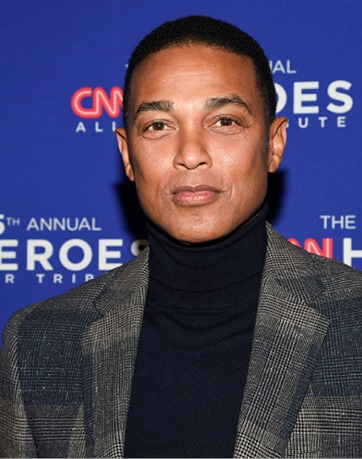
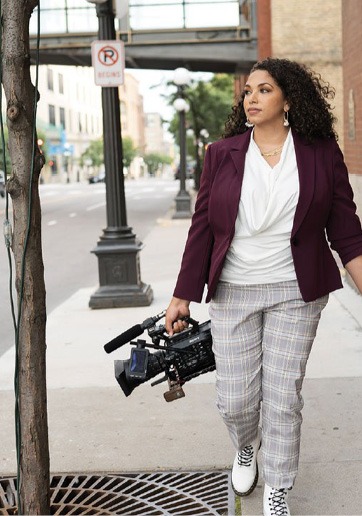
The recent arrests of journalists Don Lemon and Georgia Fort, for reporting on and filming an anti-ICE (U.S. Immigration and Customs Enforcement) protest held Jan. 18 at a church in Minneapolis, have sent shockwaves and panic throughout many media and non-media circles.
Mr. Lemon, a former CNN host who is now an independent journalist, and Ms. Fort, a Minnesota-based independent journalist, were both arrested by federal authorities. Both are Black. Ms. Fort also serves as vice president of the Minnesota chapter of the National Association of Black Journalists (NABJ).
What is their alleged crime, according to the federal government? Doing their job as members of the press. Mr. Lemon and Ms. Fort maintain they were at the church, not as participants in the protests, but as members of the media reporting on the events.
Minneapolis and the Twin Cities area have been in the national spotlight as ICE and Border Patrol agents have been in the city as part of an immigration enforcement operation called “Operation Metro Surge.”
Two other individuals, reportedly activists who were at the church protest, were also arrested. Trahern Jeen Crews and Jamael Lydell Lundy are also Black.
According to media reports, Mr. Lemon was in Los Angeles to cover the Grammy Awards when he was arrested Jan. 29 around 11 p.m. “More than two dozen agents from Homeland Security Investigations and the FBI arrested him, according to a law enforcement source familiar with the operation. His case is being led by HSI,” CNN reported.
Ms. Fort, an award-winning media professional, actually live-streamed her ordeal before she surrendered herself willingly to agents who had come to her home the morning of Jan. 29.
Both have since been released. However, their arrests caused some panic. There is growing concern that speech and press freedoms are under increasing attack by the current presidential administration.
Mr. Lemon has been highly critical of President Donald Trump and his administration. Just a few days before his arrest, a magistrate judge had already declined to issue arrest warrants against Mr. Lemon and others for their presence at the church, finding insufficient evidence.
According to media reports, he is being hit with federal civil rights charges after a grand jury in Minnesota indicted him on charges of conspiracy and interfering with the First Amendment rights of worshippers during the Jan.
18 protest at the Cities Church in St. Paul, where a U.S. Immigration and Customs Enforcement official is a pastor, Associated Press reported. Ms. Fort is facing the same accusations.
After his release, Mr. Lemon told reporters, “I will not be silenced,” adding, “I have spent my entire career covering the news. I will not stop now. In fact, there is no more important time than right now, this very moment, for a free and independent media that shines a light on the truth and holds those in power accountable.”
NABJ and other media organizations were swift in condemning the arrests of Mr. Lemon and Ms. Fort. “The National Association of Black Journalists (NABJ) is outraged and deeply alarmed by the arrests of journalists Don Lemon and Georgia Fort by federal agents.
And by the government’s escalating effort and actions to criminalize and threaten press freedom under the guise of law enforcement,” the statement read in part. It was released Jan. 30 and was signed in solidarity by other organizations, including:
Amnesty International USA, Arab and Middle Eastern Journalists Association, Asian American Journalists Association, Association of Foreign Correspondents in the USA, Center for Journalism & Democracy, Committee to Protect Journalists, National Association of Hispanic Journalists (NAHJ), and several others.
“NABJ calls on federal authorities to immediately clarify the legal justification for these arrests and to halt all retaliatory posture toward journalists that undermine constitutional press protections,” the statement continued.
Rapper-turned-actor Tracy Marrow, better known as Ice-T, released an album in 1989 titled “The Iceberg/Freedom of Speech … Just Watch What You Say!” Lately, it seems as though it is more like, “Freedom of the press, just watch what you say, write, report or cover,” in your line of duty.
The Honorable Minister Louis Farrakhan, in a message he delivered to the National Association of Black Journalists on August 21, 1996, spoke on the importance of a free press.
Minister Farrakhan, like his teacher, the Most Honorable Elijah Muhammad, the Eternal Leader of the Nation of Islam, understood the media’s role in society and the importance of reporting the truth and stories relevant to our communities.
The Most Honorable Elijah Muhammad published two newspapers, “The Final Call to Islam” in the 1930s and later in the 1960s and 1970s, “Muhammad Speaks.”
Today, the Honorable Minister Louis Farrakhan is the publisher of The Final Call newspaper, which is “A Message Dedicated to the Resurrection of the Black Man and Woman of America and the World.”
The mission of journalists should be to report facts and truth accurately and without fear of reprisal or interference from anyone, including local, state, or federal government.
“Without a free press, there is no real democracy. Free Press, what does that really mean? That you’re free, yes, to state your ideas, thoughts and opinions in a democratic society. But a free press is not a controlled press.
A free press is that—free to determine what the truth is and to write and speak that truth to the betterment of that society,” Minister Farrakhan said in his message to NABJ in 1996.
“The Founding Fathers of this great nation knew that in order to protect this nation and to keep it forever in the light of God, perpetually moving toward perfection, Freedom of Speech and Freedom of the Press and Freedom of Religion and Freedom of Assembly must be protected.
Without Free Speech, we are hindered from saying the things that might correct a democracy that has gone off course. Without a Free Press, we cannot say the things that would keep the nation (America) from falling into the abyss after the nation reaches its zenith and becomes wealthy and powerful and influential, yet corrupt.”
There is an attack on freedom and truth today; however, we must be undeterred, unbossed, unbowed, and unafraid—as Minister Farrakhan teaches us—to write and speak the truth, regardless of whom or what.
