






The United States and the Islamic Republic of Iran are dangerously close to the edge of conflict. Tensions have amped up with U.S. threats against the Islamic Republic, its leadership, and a build-up of warships, aircraft carriers, and troops in the Persian Gulf. The situation is highly tense and volatile due to America’s longstanding attempts to overthrow Iran’s government.
The U.S. military last staged a major buildup in the Middle East last June—days before striking Iranian nuclear sites while joining Israel’s 12-day war of aggression on Tehran.
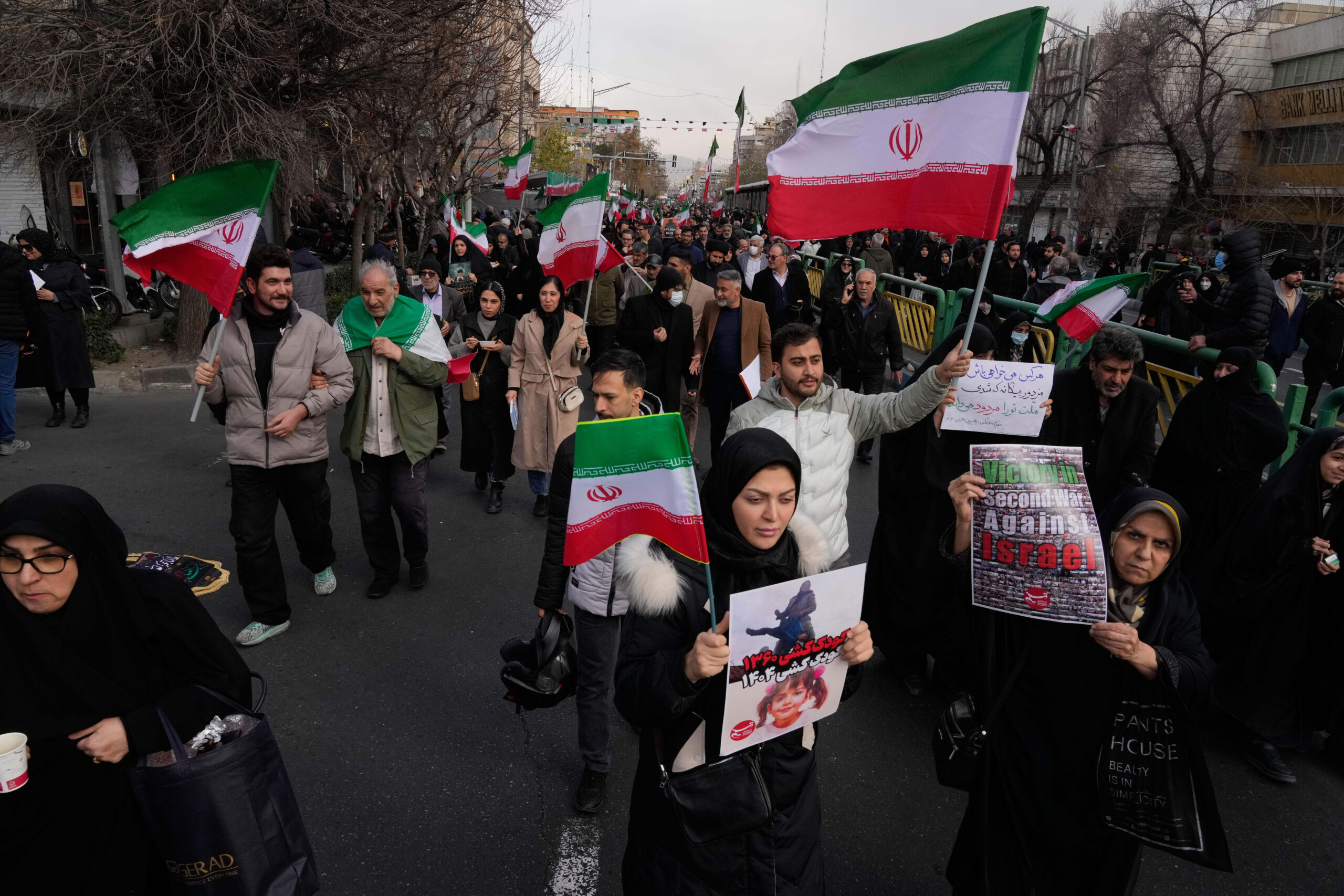
However, this current surge in America’s military posture comes on the heels of the Iranian government’s accusation that “foreign actors” fomented the violent anti-government protests, namely the U.S. and Israel. (See The Final Call, Vol. 45 No. 16).
Iranian officials blamed the intelligence apparatuses of the U.S. and Israel—long aiming to destabilize the Islamic Republic. They contend that the intensity of the protests, which also included the destruction of private, government, and religious institutions, including mosques, was not organically sparked but was manufactured dissent instigated by outside meddling.
Iranian state media said 3,117 people, including 2,427 civilians and members of the security forces, were killed in the protests that began in late December, over economic hardships in the country.
Critics argue that the U.S. is using the allegations of crackdowns as a pretext for a more sinister agenda to destabilize Iran. “It’s a continuation of a policy that both the U.S. and the Israeli government are in alignment with … to eliminate Iran as a major player in the region,”
said Ajamu Baraka, director of Black Alliance for Peace North South Project For People(s) Centered Human Rights. “In other words,” he added, “to execute what people refer to as regime change.”
“But the uprising failed,” Mr. Baraka continued. “Now, they are resorting to their ‘bread and butter,’ which is more direct threats and possible military intervention,” he explained.
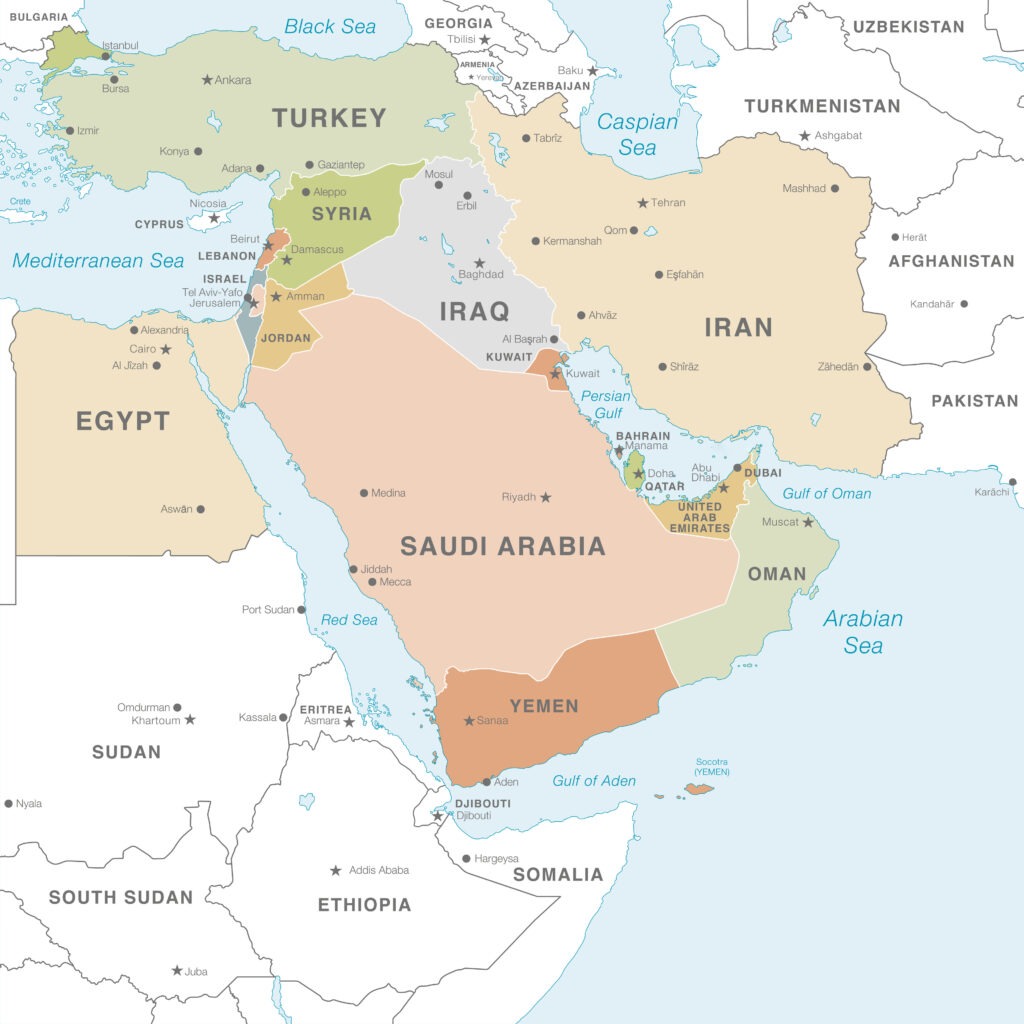
However, despite U.S. threats, Iran is not isolated on the world stage, and the Islamic Republic refuses to be intimidated by economic warfare and fomented violence. The Iranian people are still standing behind their government. Iran has its allies, including NATO member Türkiye, China and Russia.
Temperature for conflict rises
President Donald Trump threatened Iran on his Truth Social platform on Jan. 28 stating that if the U.S. attacks it would be worse than the attack of June 2025. “Hopefully Iran will quickly ‘Come to the Table’ and negotiate a fair and equitable deal …,” he posted in part.

In response to President Trump’s ultimatums, Iran pushed back against his “either negotiate or war” stance, maintaining that Tehran does not take orders from Washington, and vowed a firm response if attacked.
“When you hear them (the U.S.) talking about war, saying things like ‘we’ll come with this plane or that plane,’ or do this or that, it’s nothing new,” said Iran’s Supreme Lead-er Ayatollah Ali Khamenei, in comments on Feb. 1 from Tehran.
“The Americans have threatened us repeatedly in the past saying: ‘All options are on the table,’ which includes the option of war. They’ve always said these things,” the Supreme Leader said.
He added that President Trump constantly claims that the U.S. has sent warships to the region. “But the Iranian nation shall not be intimidated by these things, the Iranian people will not be stirred by these threats. They do not fear a fair confrontation.
We are not the initiators and do not want to attack any country, but the Iranian nation will strike a strong blow against anyone who attacks and harasses them. Also, America should know that if they start a war, this time it will be a regional war,” said Supreme Lead-er Ayatollah Ali Khamenei.
“Our brave Armed Forces are prepared—with their fingers on the trigger—to immediately and powerfully respond to ANY aggression against our beloved land, air, and sea,” said Seyed Abbas Araghchi, foreign minister of Iran, on X. “The valuable lessons learned from the 12-Day War have enabled us to respond even more strongly, rapidly, and profoundly,” he continued.
Iran’s top diplomat stated, at the same time, Iran has always welcomed a mutually beneficial, fair and equitable nuclear deal—on equal footing, and free from coercion, threats, and intimidation—which ensures Iran’s rights to peaceful nuclear technology and guarantees no nuclear weapons.
“Such weapons have no place in our security calculations and we have NEVER sought to acquire them,” wrote Mr. Araghchi, on Jan. 28.
States and non-state actors positioning themselves
Nations and non-state actors in the region and abroad are also responding to the escalating tensions. Mideast watchers say that Gulf States oppose an attack on Iran, fearing further political instability in the region.
The United Arab Emirates said it will not allow its territory, airspace, or waters to be used for any attack on Iran, stressing that dialogue, de-escalation, respect for international law, and state sovereignty are the best ways to address the crisis.
Behind the scenes, Saudi Arabia has reportedly been lobbying the U.S. administration to refrain from striking, while Qatar and Oman have been focused on diplomatic outreach between Iranian and American officials, according to reporting by Al Jazeera.
“They were all concerned because all traditional channels [between the U.S. and Iran] were not being utilized, at least from the U.S. side,” Anna Jacobs Khalaf, a Gulf analyst and non-resident fellow at the Arab Gulf States Institute, told Al Jazeera.
Iran’s Press TV reported reprisal for any aggression in the region. Yemen’s Ansarullah (Houthi) resistance movement warned the U.S. and Israel that they will resume conducting drone and missile strikes in the Red Sea against Israeli-affiliated vessels bound for Israel.
The Secretary-General of the Lebanon-based Hezbollah said another U.S.-Israeli attack on Iran will ignite the region. “A new war on Iran could set the entire region ablaze this time,” Sheikh Naim Qassem said in a televised speech on Jan. 26 from Beirut.
Sheikh Qassem vowed that Hezbollah will always stand with the people of the Islamic Republic and its Supreme Leader, Ayatollah Ali Khamenei. He said to threaten the 87-year-old top cleric of Iran is a threat to tens of millions of Muslims worldwide who consider him their religious authority, reported Press TV.
“Silence is not an option when death threats are directed at Ayatollah Khamenei. We view the threats against him as aimed at us as well. We have full authority to take any measure we deem appropriate,” the Hezbollah chief pointed out.
Within Iran, Al-Maydeen News reported that 600 Sunni scholars and clerics condemned the U.S. threats against Supreme Leader Ayatollah Khamenei.
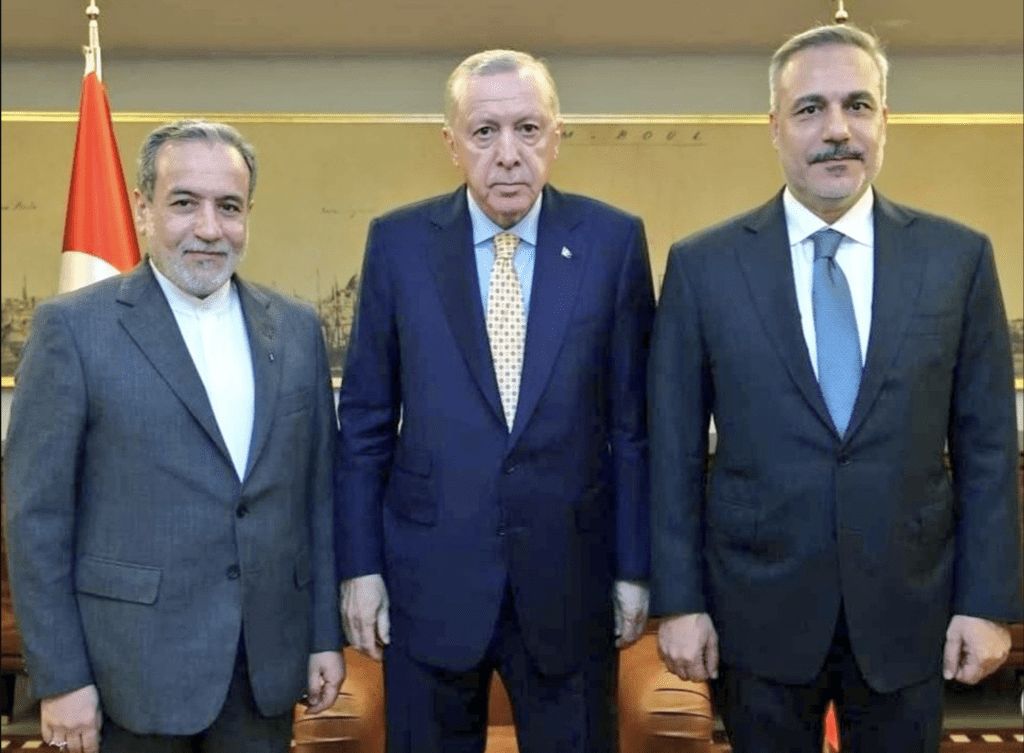
Pro-Iran political groups in neighboring Iraq said they are ready to back Iran in a war with the U.S., despite Washington’s threat to block Iraq’s oil revenues if those factions join the next government, still being formed since the November 2025 elections.
The Shia-backed Badr Organization warned it would confront “American-Israeli arrogance” if Iran is attacked, according to Press TV. In addition, the Harakat al-Nujaba movement vowed to join any response to a strike on Iran. Firas al-Yasser, a member of the group’s political bureau, warned there would be reverberating effects outside of Iran.
“Weakening Iran represents a preparatory phase for targeting Iraq in the future,” Mr. al-Yasser said, adding that “the role of the resistance in Iraq will be pivotal in defending the security and stability of the region.”
The behavior of aggression by the U.S. against Iran is seen as part of a long pattern of openly defying international norms, the sovereignty of other nations, and disregard for international bodies like the United Nations.
“Through a sustained pattern of unlawful actions, the United States has sought to substitute its unilateral decisions for the legitimate authority of the United Nations,” said Saeed Iravani, Iran’s UN ambassador, addressing a high-level open debate of the UN Security Council on Jan. 26.
He pointed out a “sustained pattern of unlawful actions” by Washington that undermines the UN Charter, including defying International Court of Justice rulings, imposing a blockade on Venezuela and illegally kidnapping its president, “issuing persistent threats,” and the “use of force against other sovereign states” and “threatening occupation or control of foreign territories.”
“These illegal unilateral actions erode the international rule of law, undermine multilateralism, and gravely endanger international peace and security,” he added.
Same playbook of the mischief maker
According to reporting from PressTV.ir in a Jan. 30 telephone call, Iranian President Masoud Pezeshkian told President of the United Arab Emirates Sheikh Mohamed bin Zayed Al Nahyan that Iran will never welcome war; however, he also issued a warning that “any aggression against the country or its people will be met with an ‘immediate and decisive’ response.”
The Honorable Minister Louis Farrakhan, National Representative of the Most Honorable Elijah Muhammad, the Eternal Leader of the Nation of Islam, has taught on and explained the strategy of America’s errant foreign policy.
Minister Farrakhan visited Iran in November 2018 and issued a statement at that time, giving his reasons for the visit and sharing guidance on U.S.-Iran relations that can be heeded in the current crisis.
Some 47 years ago, Iranian students threw off the yoke of American domination through the overthrow of the Shah of Iran, a brutal dictator and tool of U.S. foreign policy.
“While the Iranians have problems to solve, as do every nation and people on earth, they are a proud and independent people,” said Minister Farrakhan in the statement. “They do not wish to be under the thumb of America again,” he continued.
“As I said several times in Tehran, the U.S. sanctions are a mistake. And, while dialogue should be a good thing, the U.S. has a history of lying and breaking her commitments,” said Minister Farrakhan.
In a remark on the perpetuity of nations, Minister Farrakhan explained that to survive, America must turn away from yesterday’s policies, move forward in a new spirit, and seek a new direction.
“Despite U.S. efforts to foment disunity and rebellion inside of Iran, the Iranian people may not be as gullible as America believes. Iranians have the right to resolve their own problems without outside interference, just as the U.S. has claimed its right to conduct elections free of Russian influence. Self-determination is a right of every nation,” said Minister Farakhan.
