













While universities waive application fees in a desperate bid to attract students, Peyton Smith never looked back after deciding to skip college entirely. At 19, the Silver Spring, Maryland, native chose warehouse work and delivery driving over a four-year program. Fifteen years later, he runs a medical transportation company and promotes the “toolbelt generation.”
“I knew I wasn’t going to sit in a classroom,” Mr. Smith told The Final Call. His path reflects a seismic shift in American higher education, as more young Americans are rejecting traditional degrees, particularly those that lead to high student loan debt.
The power of hands-on learning
For many, it is not just about finances; it’s about how they learn. Newark’s Majied Muhammad, who has been teaching masonry and carpentry in Chicago and New York since 2013, sees this daily.
He is also a member of the Nation of Islam and serves as the Student Eastern Regional Fruit of Islam (F.O.I.) Captain responsible for the training of men and boys.
He explained that many young Black men between the ages of 16 and 40 may experience challenges when it comes to sitting in a classroom all day and study and that sometimes they do not do well. “However, when you put a tool in their hand, something happens,” he said.
Mr. Muhammad’s own journey mirrors the students he now mentors. He discovered his calling while watching masons at work on a job site. His father was a mason, and Mr. Muhammad says the skill is “in my DNA.” He eventually mastered carpentry, plumbing, electrical work, and mechanics simply by watching and doing.
“When you put a power tool or a hand tool in their hand, you see a different individual,” Mr. Muhammad observes of his students, including the increasing number of women entering the field.
The data tells a stark story. Trade school enrollment is projected to grow 6.6% annually through 2030, vastly outpacing the 0.8% growth expected for traditional higher education, according to market research firm Validated Insights. From 2020 to 2023, trade school enrollment surged by 4.9%, while conventional college enrollment declined by 0.6%.
Community colleges saw enrollment jump 5.4% to 6% in 2024-2025—the highest growth among all sectors. Most revealing: certificate programs grew 6.6% in fall 2024, double the 3.1% increase in associate degrees and far exceeding the 1.2% growth in bachelor’s programs.
“Sixty percent of trade school enrollment is concentrated in non-degree tracks,” explained Brady Colby of Validated Insights to Slate. “That tells you where students think the value is.” This includes culinary arts, beauty and wellness schools, and cosmetology.
Colleges lowering the bar
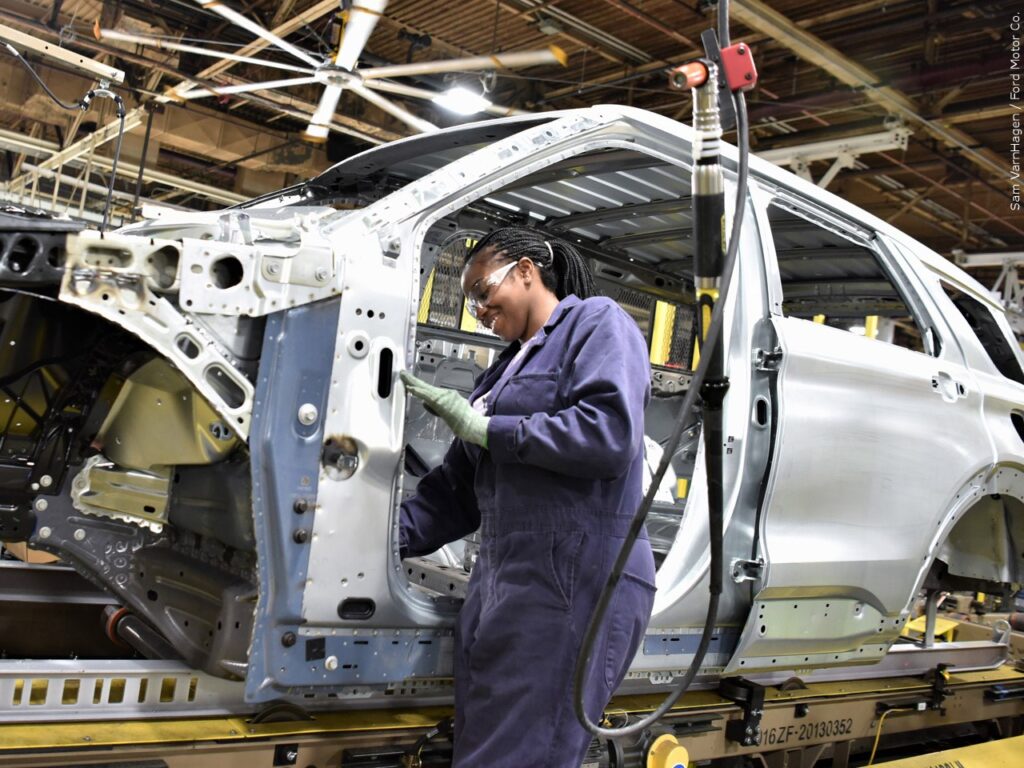
Traditional colleges are making admission easier even as fewer students choose to attend. According to Slate, universities facing declining enrollments offer one-click applications, waive fees, provide direct admission to students who haven’t applied, and recruit past traditional deadlines. During a recent fee-waiver month in New York, applications to public universities jumped 41%.
According to Kevin Krebs, founder of the college admission consulting firm HelloCollege, “the overwhelming majority of universities are struggling” to fill classrooms, he told Slate.
The demographic reality is stark: high school graduates face a projected 15-year decline in college enrollment. Four-year institutions have seen enrollment drop 13% over the past 15 years.
Trade schools are booming. According to data from the National Center for Education,healthcare programs grew by 10.1%, mechanical and repair technologies jumped by 10.4%, and beauty schools enrolled 240,000 students nationally. Search traffic for trade schools is up 27% in 2024.
Other educational and training routes are also becoming more popular, including career certificate programs. Some take only three to six months at a nominal cost. These programs include certificates in IT Support (Information Technology).
Community colleges, where students can receive a two-year associate’s degree, also serve as an option. According to National Education Statistics, enrollment among Black students increased by 10.3% in spring 2025, Hispanic enrollment rose by 4.4%, and enrollment among students aged 30-plus increased by 4.3%. Average tuition: $4,150 per year versus $11,950 at four-year institutions.
While young people have often been taught that a four-year degree is best in order to “find a good job,” a recent analysis by career site Resume Genius, using data from the U.S. Bureau of Labor Statistics (BLS), identified 15 high-paying roles that do not require a bachelor’s degree and pay over $59,228 a year.
Elevator installers top the list at $106,580 and require only a high school diploma, an apprenticeship, and certification. Transportation managers earn $102,010, and electrical power-line installers make $92,560.
Nearly six million workers without degrees earned $100,000-plus in 2023—9% of non-college graduates. The unemployment rate for associate degree recipients is just 2.1%.
High-paying careers span skilled trades, transportation (commercial pilots: $176,000; flight attendants: $67,000), healthcare, technology, sales, and public service.
So, while traditional colleges scramble to increase enrollment by lowering admission bars and waiving fees, the “toolbelt generation” is heading elsewhere. They are choosing certificate programs, which grew 6.6% in 2024, and community colleges.
For Majied Muhammad, the proof is in the work. His Chicago students recently applied their skills and training on a Chicago-based project. He believes the accessibility of information today—from YouTube to Google—allows anyone with the drive to succeed.
“I was unsure from the beginning,” said Mr. Smith. “I started with a warehouse job, but I knew I was going to the top. I knew I wanted my own business. I knew once I had more skills, I didn’t need a college degree or the debt.”
The Federal Reserve reports that in 2024, only 42% of young adults who attended college took on student loan debt, down from 55% in 2017, suggesting growing avoidance of student loan debt.
The toolbelt generation is betting on skills over credentials, hands-on training over lecture halls, and manageable debt over decades of loans. As colleges scramble to fill seats, these young people are heading to trade schools, community colleges, and online certificate programs instead.
