




by Anisah Muhammad and Nisa Islam Muhammad
Staff Writers @TheFinalCall
Iranian officials accused the U.S. and Israel of orchestrating riots by placing operatives among protesters and carrying out a “coordinated digital warfare campaign fueled by disinformation,” according to Press TV, an Iranian state-owned news network.
Iran continues to stand strong as the United States government issues threats and new sanctions against the Muslim country after peaceful protests turned violent.
Amir Saeid Iravani, Iran’s ambassador to the United Nations, submitted a letter to the UN Security Council on Jan. 10 placing responsibility on the U.S. government for the riots and violent acts that took place in Iran and accused the U.S. of violating the UN Charter.
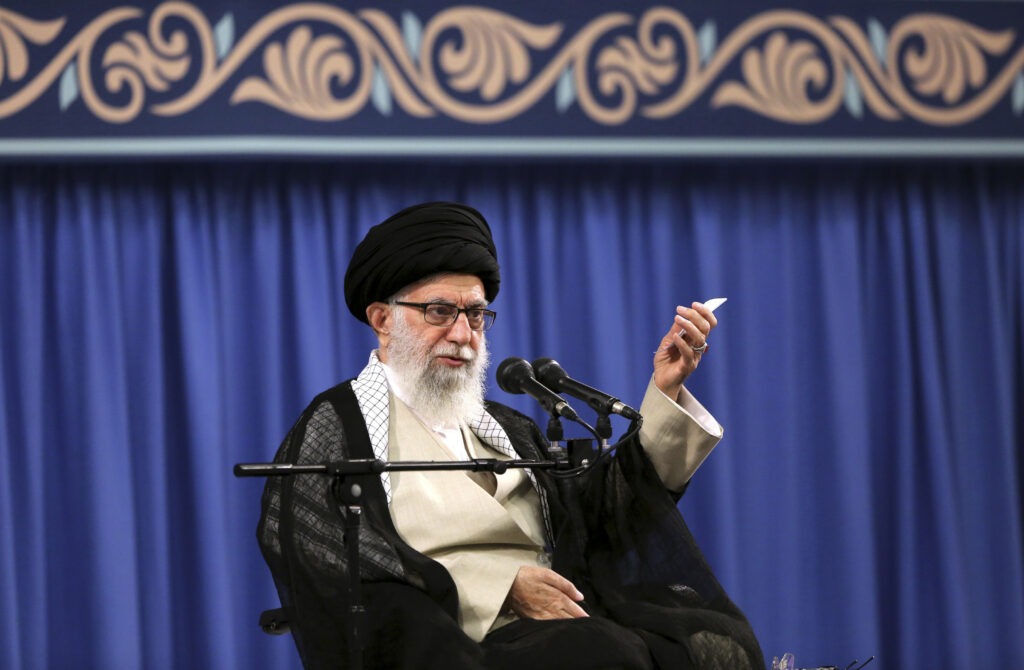
Iran’s Supreme Leader Ayatollah Seyyed Ali Khamenei said the country would stand firm against foreign-backed unrest. The accusations come after remarks by U.S. officials alluded to working with agents from Israel’s intelligence agency, Mossad, and after U.S. President Donald Trump threatened to attack Iran if “peaceful protesters” were harmed.
Axios reported on Jan. 16 that “The director of Israel’s Mossad spy agency, David Barnea, arrived in the U.S. on Friday morning for talks on the situation in Iran, according to an Israeli source and another source with knowledge of the meeting.”
“The U.S. and Israel are telling … ‘we are behind you.’ The same people who killed children and infants in our country are telling these rioters to go and destroy and burn,” Iranian President Masoud Pezeshkian said in a televised interview on Jan. 11, according to Press TV.
During an interview with George Galloway, former member of the UK Parliament, Tehran-based professor Seyed Marandi criticized the U.S. and Western media for their portrayal of the protests and violence and echoed claims that the riots were orchestrated by Western intelligence agencies, including Israel’s Mossad, in efforts to justify military interventions and additional sanctions.
Dr. Wilmer Leon, political scientist and host of Inside the Issues, said in an interview with The Final Call that analysts reviewing social media traffic found a substantial volume of protest-related content originating outside Iran, including from within Israel. “Many say this is a Mossad creation,” he said.
Casualty figures circulated by U.S.-based organizations have been sharply disputed by Iranian authorities, who accuse these groups of inflating numbers to justify further pressure and possible intervention.
Regarding the number of deaths being reported in Western media, Foreign Minister Abbas Araghchi has dismissed such reports as part of a coordinated misinformation campaign. Iranian state media has reported significantly lower casualty figures, including the deaths of security personnel killed while attempting to maintain public order.
Independent verification remains impossible due to media restrictions and internet limitations, a reality Western outlets exploit to present the most sensational version of events.
Dr. Leon, who has visited Iran twice, has cautioned against accepting Western narratives at face value. He emphasized that mainstream coverage consistently ignores the cumulative impact of sanctions and the U.S. theft of Iranian assets.
From Tehran’s perspective, these developments fit a familiar pattern. Sanctions weaken the economy, unrest is magnified through foreign media and covert operations, and calls for “humanitarian intervention” soon follow.
Supreme Leader Ayatollah Ali Khamenei has distinguished between peaceful citizens with legitimate grievances and violent rioters acting as instruments of foreign agendas. Iranian law enforcement actions, while criticized abroad, mirror the harsh responses routinely deployed by Western governments when confronting domestic unrest.
Dr. Leon has highlighted this hypocrisy by pointing to U.S. responses to protests at home. Washington condemns Iran while deploying militarized police, mass arrests, and surveillance against its own citizens, he pointed out. “It seems to be a very hypocritical argument,” he noted, particularly when U.S. leadership actively fans division both domestically and abroad.
Iranian President Masoud Pezeshkian has publicly acknowledged economic grievances and pledged to prioritize relief, while rejecting violence and foreign-backed sabotage. Recently speaking to students and faculty at Avicenna Tajik State Medical University, President Pezeshkian said in part, “We despise war and violence.”
The reemergence of Reza Pahlavi, son of the U.S.-backed Shah overthrown in 1979, as a favored voice in Western media further reinforces suspicions of regime-change ambitions, Dr. Leon explains. His sudden prominence coincided with renewed U.S. threats and high-level meetings between American and Israeli leaders, signaling coordination rather than coincidence.
Shopkeepers first took the streets of Tehran on Dec. 28, amid Iran’s currency, the rial, plummeting to a record low. With rising inflation, the protests quickly spread across Iran. Food prices in Iran are 72% higher than last year, and annual inflation has reached around 40%, according to Al Jazeera.
Maximum pressure doctrine and its application
The U.S. policy that guides its strategy on Iran is called “Maximum Pressure,” as articulated by President Trump’s first-term officials and operates on a deceptively simple theory:
That sufficient economic pain—sanctions strangulation, oil embargoes, financial isolation—will force a targeted nation to capitulate to American demands or collapse entirely, explained Nation of Islam Student National Imam Sultan Rahman Muhammad.
“In February 2025, President Trump signed National Security Presidential Memorandum 2, directing officials to ‘drive Iranian oil exports to zero and eliminate Iran’s nuclear capabilities across related programs,’” Student Imam Sultan Muhammad told The Final Call.
The U.S. has engaged in “economic warfare,” targeting Venezuela and countries that engage in business with the South American country, including Russia and Iran, he explained. Some of the examples of this interference include:
Since 2018, comprehensive sanctions on Venezuelan oil, freezing access to international markets; In December 2025 President Trump declared a “total and complete blockade” of sanctioned oil tankers;
Multiple seizures of shadow fleet vessels attempting to export Venezuelan oil, and a coordinated international pressure on third-party nations to cease Venezuelan trade.
While Iranian officials acknowledged legitimate economic concerns by the Iranian people, they noted that the country’s economic hardships are the result of years of U.S. sanctions. Press TV cited economic data tracing the rial’s depreciation and the surge in living costs to sanctions issued in 2011-2012 targeting the country’s central bank and oil exports.
President Trump threatened to impose an additional 25% tariff on countries doing business with Iran. In a Jan. 15 statement, U.S. Treasury Secretary Scott Bessent announced new sanctions on Iranian officials.
Countries rebuke U.S. as damages totaled
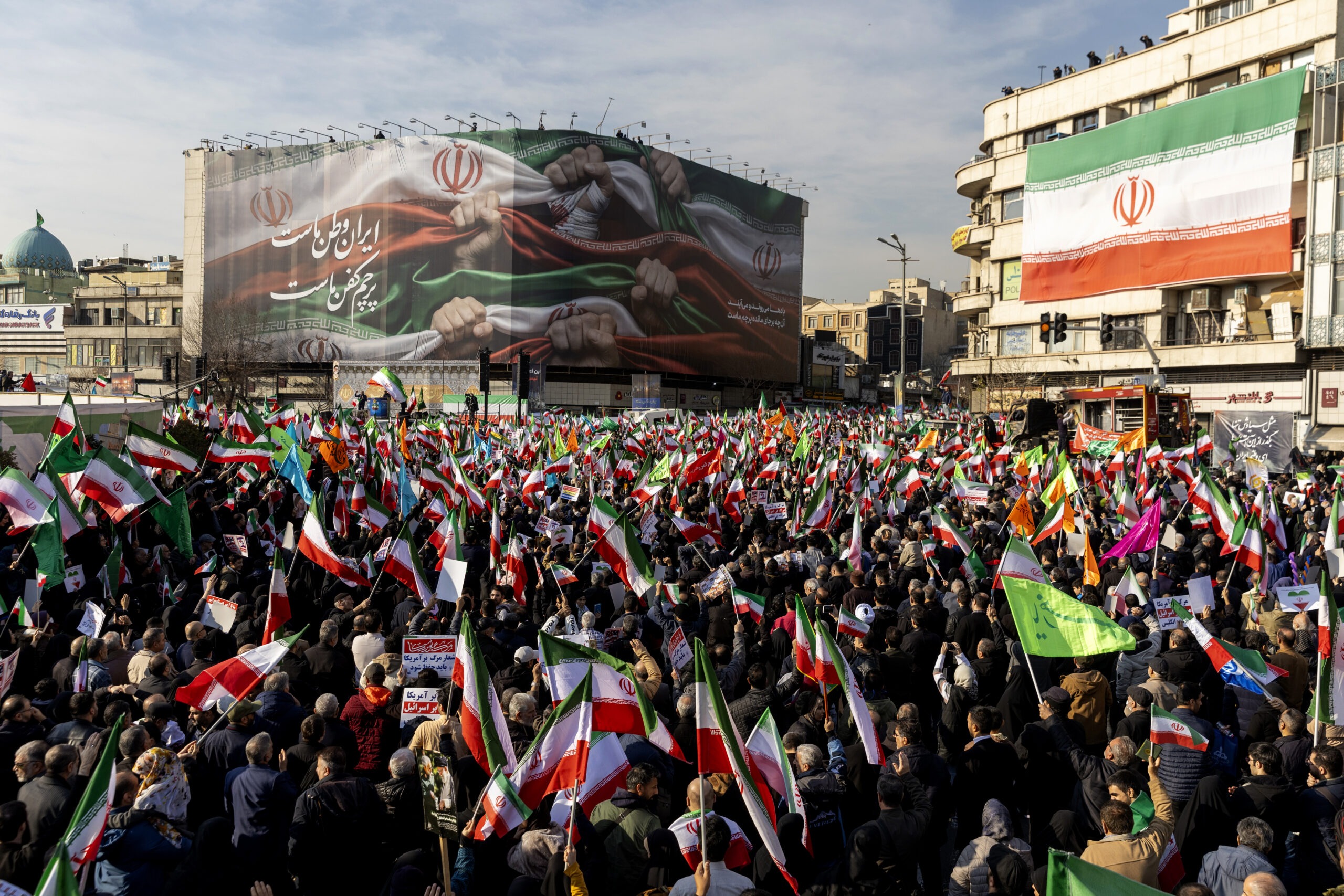
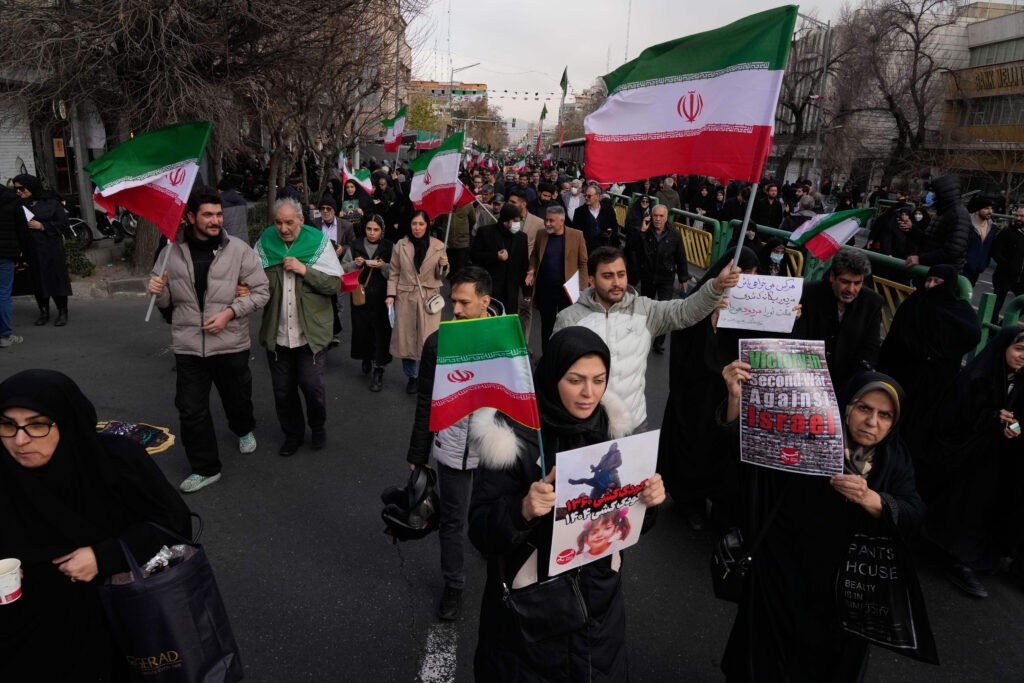
After the protests, millions of Iranian citizens took to the streets in a show of unity and solidarity with the Iranian government. Demonstrators marched in various cities, many carrying Iranian flags.
Saeed Montazer al-Mahdi, spokesperson for the Iranian police, said “organized groups” (believed to be backed by the U.S. and Israel) torched public and private property, including ambulances, rescue and fire vehicles, buses, cars, shops and businesses and damaged banks, hospitals and religious sites, according to Press TV.
Tehran’s mayor reported that more than 26 banks, more than 25 mosques, two hospitals, three police stations, 48 fire trucks, 10 government facilities and 89 buses had been targeted, attacked or set on fire, adding up to nearly 30 trillion rials ($27.9 million) in damages.
Mashhad’s mayor reported 10 trillion rials ($9.3 million) in damage. Destruction included 12 buses, a fire station, about 54 ambulances and 71 firefighting vehicles, along with 44 mosques, 26 government buildings and several homes and shops damaged.
China opposed America’s interference into Iran’s affairs. During a press conference on Jan. 14, Chinese Foreign Ministry Spokesperson Mao Ning answered a question on President Trump’s threats toward Iran.
“On the situation in Iran, we’ve made clear our position more than once. We hope the Iranian government and people will overcome the current difficulties and uphold stability in the country.
We oppose external interference in other countries’ internal affairs, object to the use or threat of force in international relations, and hope parties will act in ways conducive to peace and stability in the Middle East,” she said, according to a translated transcript posted on China’s embassy website.
Saudi Arabia, Qatar, Oman and Egypt warned the U.S. against further action in Iran, in fear of destabilizing the region. Abdul-Malik al-Houthi, leader of Yemen’s Ansar-Allah resistance movement, condemned what he called the “American-Israeli scheme.”
During a UN Security Council emergency meeting on Iran on Jan. 15, requested by the U.S., Russia rejected the U.S. government’s rhetoric and further accused the U.S. of exploiting the situation in Iran in attempts to overthrow its government.
Martha Pobee, UN assistant secretary-general, said during the meeting, “We note with alarm various public statements suggesting possible military strikes on Iran. This external dimension adds volatility to an already combustible situation.” She added that “all efforts must be undertaken to prevent any further deterioration.”
U.S. hypocrisy
Iran’s Supreme Leader Ayatollah Seyyed Ali Khamenei called out the hypocrisy of the U.S. government’s claims of wanting to “support” Iranian citizens when it was the U.S. government that joined Israel’s 12-day war against Iran in June 2025, killing hundreds of Iranians.
President Trump’s “hands are stained with the blood of Iranians,” he said, according to Press TV, saying this recent history makes the U.S. government’s claims “meaningless.”
Supreme Leader Ayatollah Khamenei linked the U.S. government’s hostility towards Iran to the Islamic Republic taking its vast wealth and resources out of the grip of the U.S., leaving the U.S. “angered and resentful.”
“They besiege a country and shamelessly say we did it for the oil,” he said, according to Press TV.
“The great nation of Iran, through the glorious Islamic Revolution, cut off the hand of plundering and criminal America from Iranian soil,” the Iranian Army said in a Jan. 10 statement, Press TV reported.
“Over the past 47 years, the aggressive and satanic U.S. government has continuously sought, through various tricks and conspiracies, to restore its domination over the Iranian people and territory,” the statement said, adding that today, the U.S., with Israel’s backing, “seeks to disrupt order and calm in cities and undermine public security.”
At its core, many see the confrontation between Iran and the United States as not about democracy or human rights. Instead, about power, control, and resistance.
Iran’s refusal to submit to U.S. dictates, abandon its independent foreign policy, or surrender its right to peaceful development places it squarely as a target of Western powers. Yet history shows that nations grounded in self-determination and collective resolve are not easily broken.
As the pressure campaign intensifies, Iran’s message remains unmistakable. The Islamic Republic will address its internal challenges on its own terms, without foreign interference.
Economic warfare, propaganda, and threats of force have failed for nearly half a century. They will fail again. Iran stands firm, defending its sovereignty and charting its future despite America’s continued attempts at bullying and coercion.
The Honorable Minister Louis Farrakhan, National Representative of the Most Honorable Elijah Muhammad, visited Iran in November 2018 and issued a press conference at the offices of Press TV describing the history of America’s greed for Iran’s oil and resources.
In 1953, the CIA plotted to overthrow Iran’s democratically elected leader, Mohammad Mosaddegh, to install a puppet who would give America access to Iran’s oil. The Islamic Revolution of Iran overthrew the puppet government in 1979.
Minister Farrakhan warned the U.S. government that its actions targeting Iran would plunge the world into war. He quoted his teacher, the Most Honorable Elijah Muhammad, in saying that there would be war and bloodshed and that America would come out of the Middle East.
“I am begging our president and the government that supports him to be very, very careful because if the trigger of war in the Middle East is pulled by you, using your surrogates at the insistence of Israel.
Then the war will trigger another kind of war, which will bring China, Russia, all of the nations into a war,” Minister Farrakhan warned. “And it bothers me to say this to you, Mr. President, but the war will end America as you know it.”
