





Are the winds of change blowing through New York, or is the election of Mayor Zohran Kwame Mamdani the beginning of another political storm about to hit the nation’s largest city?
Mr. Mamdani, 34, unexpectedly won the hearts of an electorate presumably tired of the usual rhetoric coming from political candidates of the Democratic and Republican parties, winning the election by nine percentage points.
As with most political races, New York’s was a low-down and dirty one, with Mr. Mamdani’s opponents espousing fear-mongering tactics against the democratic socialist candidate, who is the first Muslim to lead a major American city.
He was called extremist, radical, a tax-happy socialist, and anti-Semitic for his views against the genocide in Gaza. Islamophobia was stirred by the opposition.
The Anti-Defamation League (ADL) created a Mamdani Watch platform that critiqued every move his transition team made, labeling some of his new hires as anti-Semitic, causing some of them to resign before taking their positions.
The ADL has a history of spying on Black activists, working to destabilize Rev. Jesse Jackson’s 1984 presidential campaign run, and working with apartheid South Africa on the movements of Black organizations like the NAACP.
The ADL was at the forefront of condemning free speech rights of college students who held protests on campuses criticizing Israel’s targeting of women and children in Gaza. ADL attacks led to the resignation of several Ivy League college presidents.
Their Mamdani project, however, was roundly condemned: “… we reject false accusations of antisemitism against Black, brown, and Muslim progressive champions who are fighting for a country where all of us can thrive.
Zohran Mamdani’s victory reminds us to look ahead—to a future where Americans across faith, race, and place have each other’s backs to end antisemitism, Islamophobia, and all forms of bigotry,” a coalition of progressive Jewish groups wrote in an online petition condemning the Mamdani Watch effort.
After the inauguration, at another event, Mayor Mamdani rescinded two previous anti-Semitism Executive Orders (EO) by former Mayor Eric Adams. One order rescinded a broad definition adopted by the IHRA (International Holocaust Remembrance Alliance), and the other EO which prohibited city employees from participating in the BDS (Boycott, Divestment, Sanctions) movement.
The cards are stacked against Mr. Mamdani. He pledges to freeze exorbitantly high rents, provide free public transportation, implement universal childcare, crack down on bad landlords and open a city-owned grocery store in each borough to address food deserts.
All his goals are geared toward helping the poor and middle class, but are diametrically out of synch with the status quo. To pay for his agenda, Mayor Mamdani proposes taxing corporations and the wealthy. He will need support from city, state and federal officials—many of whom carry the water for corporate lobbyists and the wealthy.
Support is highly unlikely. Compromise may be the most he can hope for.
Political discord and the inability of politicians to talk across the aisle to solve America’s problems is causing anxiety for the masses struggling to make ends meet. In his insightful book, “A Torchlight for America,” the Honorable Minister Louis Farrakhan identifies causes of America’s decline, including “greed and perverse immorality.”
“The fundamental motivation in this society is greed and preying upon the weak of the country and the weak of the world, versus sharing wealth in cooperation with the weak and the poor,” he writes on page one.
Minister Farrakhan proposes a change in the “state of mind” of leadership to tell the truth to the people, that America is in decline and that sacrifices are needed to correct the ship of state. “The reason leaders desire to hide the truth is to keep the people blind and powerless so that the rich can engage unhindered in feeding their own greed,” he writes.
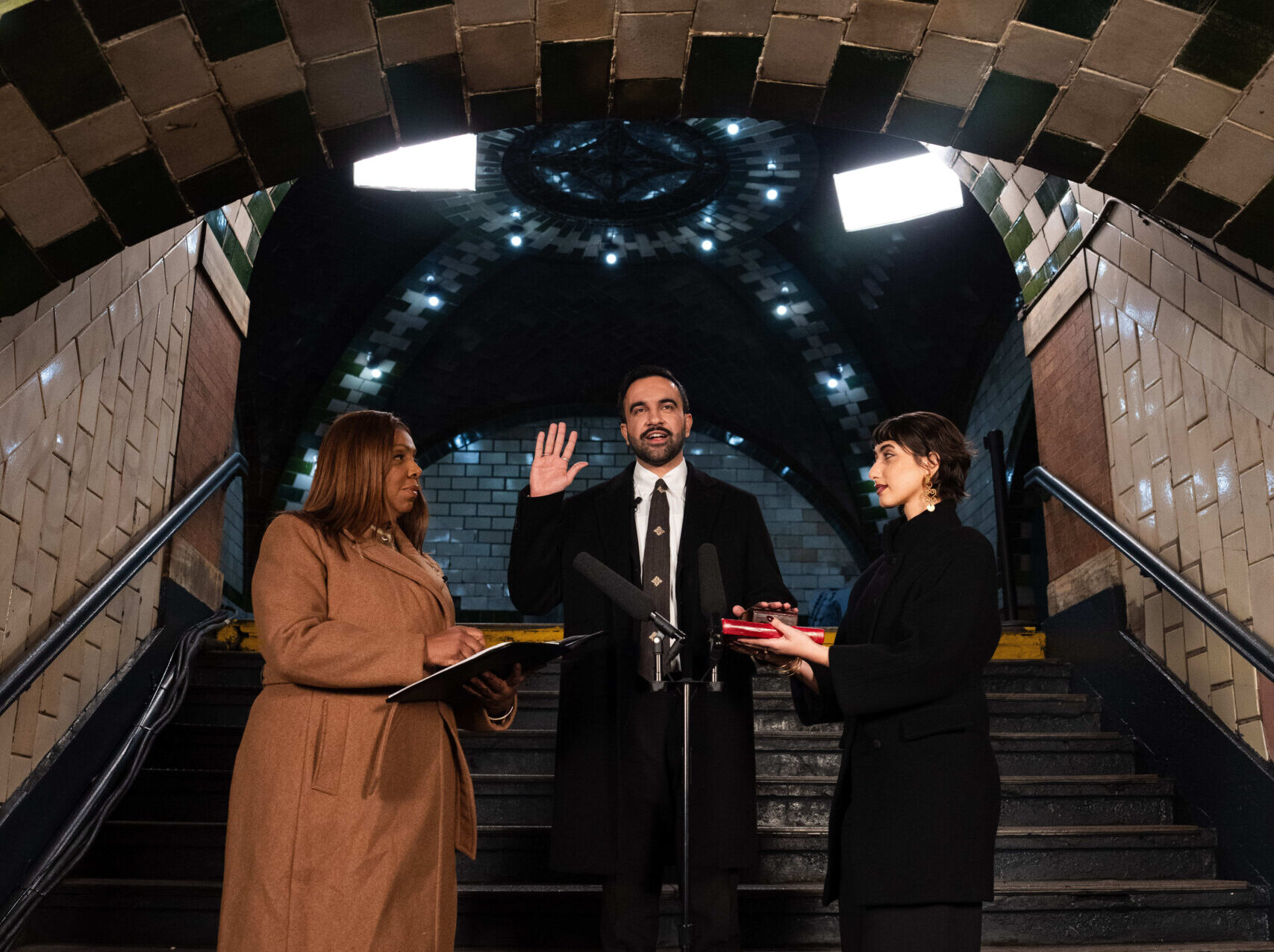
Doubling down on his promise to legislate as he campaigned, as a democratic socialist, the new mayor, who took his oath of office on Jan. 1, signaled his new approach. “Too often in our past, moments of great possibility have been promptly surrendered to small imagination and smaller ambition,” he said.
What was promised was never pursued, what could have changed remained the same. New Yorkers most in need of change continue to be disheartened and cynical to political rhetoric, he suggested.
In writing his inauguration address, he was advised to “reset expectations” and use the address to encourage the people of New York to “ask for little and expect even less.”
“I will do no such thing,” he declared. “The only expectation I seek to reset is that of small expectations. Beginning today, we will govern expansively and audaciously. We may not always succeed. But never will we be accused of lacking the courage to try.”
Mayor Mamdani, more than others before him, is proposing a change in the way America does business. Change that prioritizes the needy. Change that calls for buy-in from those who have exploited the masses for far too long. Changes that may be necessary for the future of New York and the country to survive.
The difficult times ahead will require voters who supported the mayor to be the wind beneath his wings and for leadership to heed Minister Farrakhan’s guidance.
The country needs a “spiritual awakening” and a spiritual change that will lead to “moral consciousness,” he suggests in “Torchlight.”
“Qualified spiritual teachers have to be urged to teach the populace, particularly the rich, against their greed and immorality and put the people in a position to make sacrifices. … Without the will to make sacrifices the country will go down. The rich have to be imbued with the spiritual and moral desire to sacrifice more of their profits to help America survive.”
Godspeed, Mr. Mayor.
James G. Muhammad is a former editor-in-chief of The Final Call and is currently a contributing editor.
