

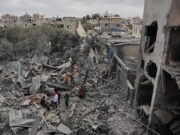
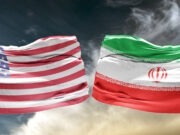
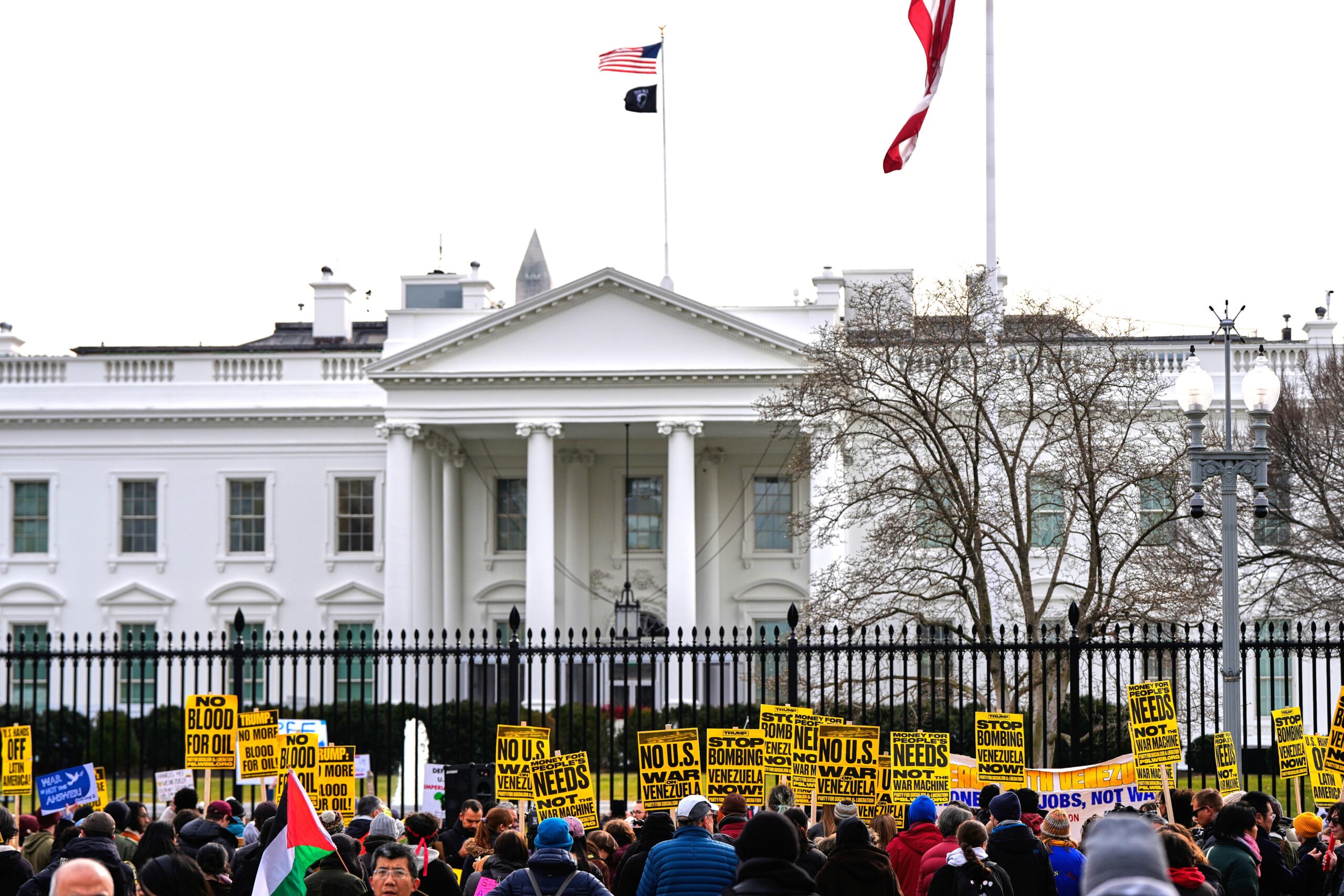

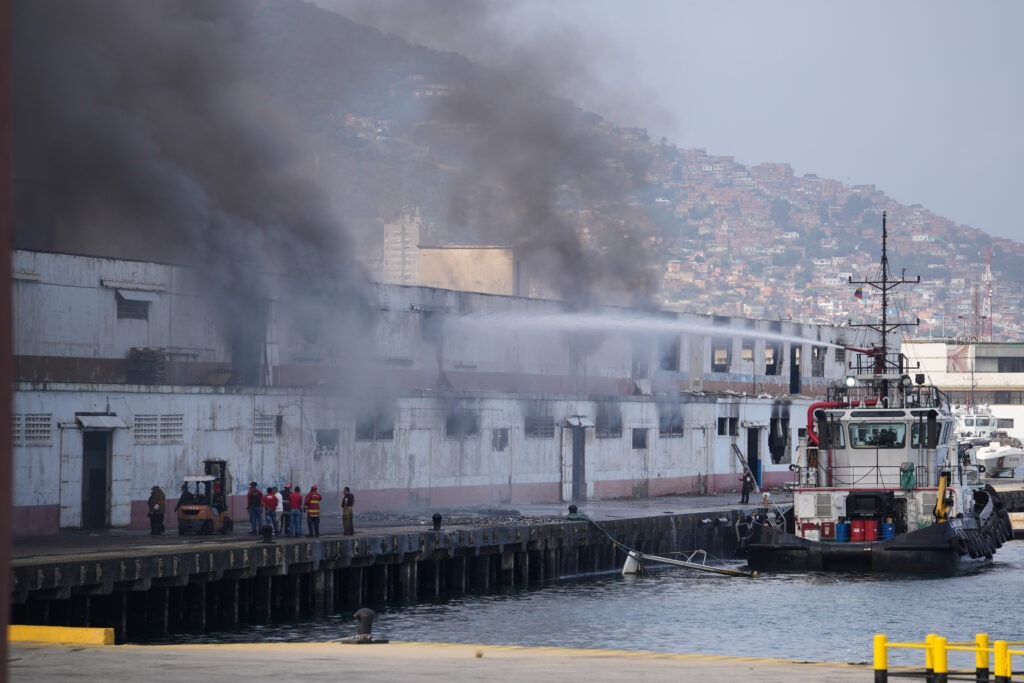
Global condemnation was swift and strong against the United States for militarily attacking and bombing the city of Caracas in the Bolivarian Republic of Venezuela and abducting and forcefully removing its sitting president from the country. (See Foretold, page 3) The invasion took place at 2:00 a.m. local time following weeks of threats by U.S. President Donald Trump of possible ground operations in the oil-rich Venezuela under the guise of targeting illicit drug networks.
After an intense firefight at the Miraflores presidential palace, President Nicolás Maduro and his wife, Cilia Flores, were taken by U.S. forces, placed on a warship, and brought to New York to be charged with U.S. criminal drug charges. According to U.S. officials, the detainment is based on a 2020 narcoterrorism indictment in New York during the first Donald Trump administration.
However, the legality of the move is being questioned, prompting swift denunciation and condemnation. International law forbids the forcible seizure or kidnapping of an individual from another state’s territory—especially a head of state.
“The Bolivarian Republic of Venezuela rejects, repudiates and denounces to the international community the very serious military aggression perpetrated by the current Government of the United States of America,” read a government statement issued on the messaging app Telegram.
As the Jan. 3 invasion ensued, Venezuela declared a state of emergency and called on the whole country to activate and defeat “this imperialist aggression,” said the statement.
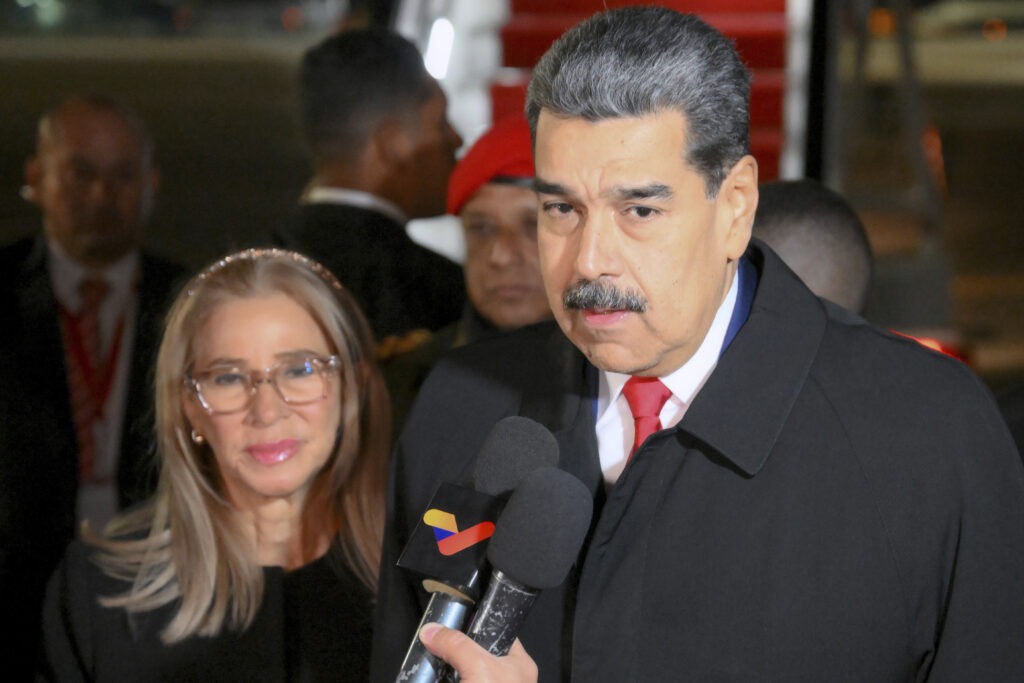
Venezuela argues the act constitutes a flagrant violation of the United Nations Charter, particularly Articles 1 and 2, which protect respect for state sovereignty, the legal equality of states, and the prohibition of the use of force. Such aggression threatens international peace and stability—especially in Latin America and the Caribbean—and places the lives of millions of people at serious risk.
Under international law, the forcible removal or detention of a sitting head of state by another country raises profound legal concerns.
In addition to prohibiting the use of force against the sovereignty and political independence of states, long-standing principles of international law grant sitting heads of state personal immunity from arrest or detention by foreign authorities. Legal experts note that this immunity applies regardless of allegations or criminal charges while a leader remains in office, unless overridden by bodies like the UN Security Council or the International Criminal Court.
Under its constitution, Venezuela’s Vice President Delcy Rodriguez was sworn in as acting-president. Ms. Rodríguez addressed the nation via state television, flanked by the country’s top legal, political, and defense officials in a display of governmental continuity amid the unfolding crisis.
“There is only one president in this country, and his name is Nicolás Maduro,” she defiantly said, while demanding the immediate release of the leader and his wife.
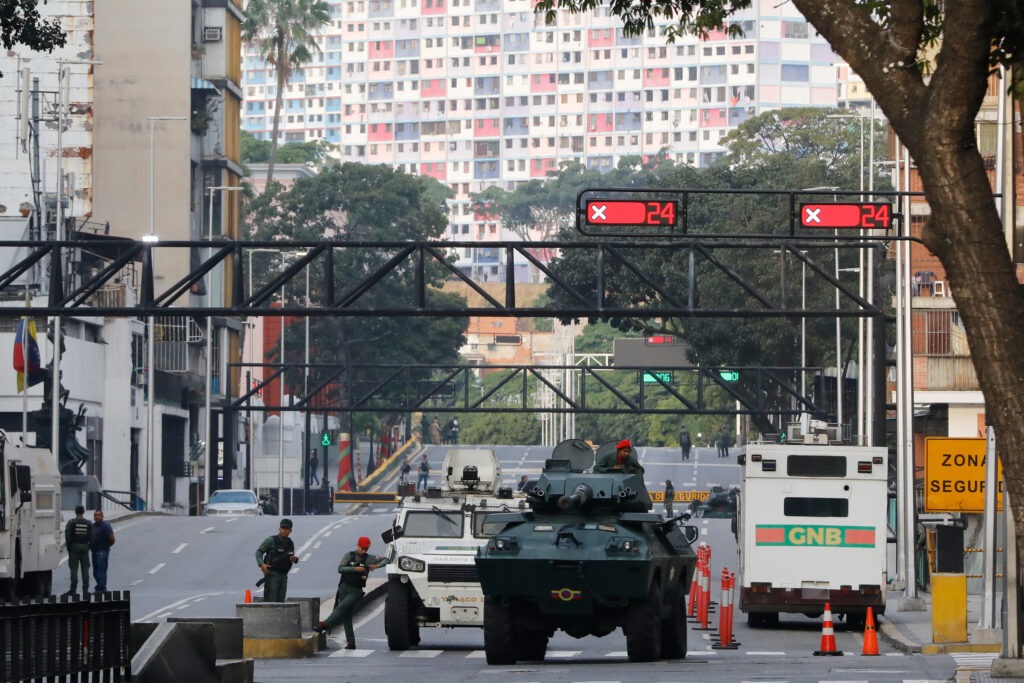
“We call on the peoples of the great homeland to remain united because what was done to Venezuela can be done to anyone. That brutal use of force to bend the will of the people can be carried out against any country,” Ms. Rodríguez admonished. Venezuela is only willing to engage within the framework of international law and the constitutional order of Venezuela, she vowed.
“This is the sole basis acceptable to us … after our nation and capital have been subjected to military assault and a sustained campaign of attacks,” said Ms. Rodríguez, declaring that “Venezuela is not going to be a colony of anyone, of any old or new empire.”
In additional comments, she stated: “The masks have fallen. The true objective of the operation was to dismantle the nation’s political independence and reestablish colonial-style rule. What is being done to Venezuela is an atrocity that violates international law. History and justice will make the extremists who promoted this armed aggression pay.”
Ms. Rodríguez also said, “The Venezuelan people are outraged by the illegal, illegitimate kidnapping of the president and the first lady. This armed aggression constitutes a terrible stain on the development of bilateral relations with the United States.”
Prior to the Jan. 3 bombing, the U.S. expanded its military footprint of warships and troops in the region. They ordered the seizure of sanctioned oil tankers in recent weeks. And since September, the U.S. military carried out missile strikes on small fishing vessels, it contended, without showing evidence, were moving narcotics in the Caribbean seas and Eastern Pacific water. The strikes reportedly claimed nearly 120 lives.
Analysts and observers argue that “narco-terrorism” is just a smokescreen and the attack was the latest illegal aggression to topple Mr. Maduro and gain unfettered access to Venezuela’s oil and rare mineral resources.
“We’re looking at state robbery,” said Ajamu Baraka, the director of Black Alliance for Peace North South Project For People(s) Centered Human Rights.
“Narco-terrorism was the pretext, but the motivation was to basically rob the Venezuelan people of their resources, using the U.S. military as their muscle and as their enforcers,” he said.
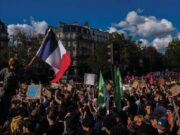
What is widely seen as a brazen and illegal action by the U.S. drew strong condemnations from around the world.
Russia
The Russian Foreign Ministry issued the following statements. “We firmly call on the U.S. leadership to reconsider this position and release the lawfully elected president of a sovereign country and his wife.” Russia’s Foreign Ministry said Maduro’s capture would represent an “unacceptable encroachment on the sovereignty of an independent state.”
“Russia will continue to support the course pursued by its Bolivarian leadership to defend the country’s national interests and sovereignty,” Russia’s Foreign Ministry said, according to the Moscow Times. The ministry expressed solidarity with the Venezuelan people, saying that “Venezuela must be guaranteed the right to determine its own future without destructive external interference, particularly of a military nature.”
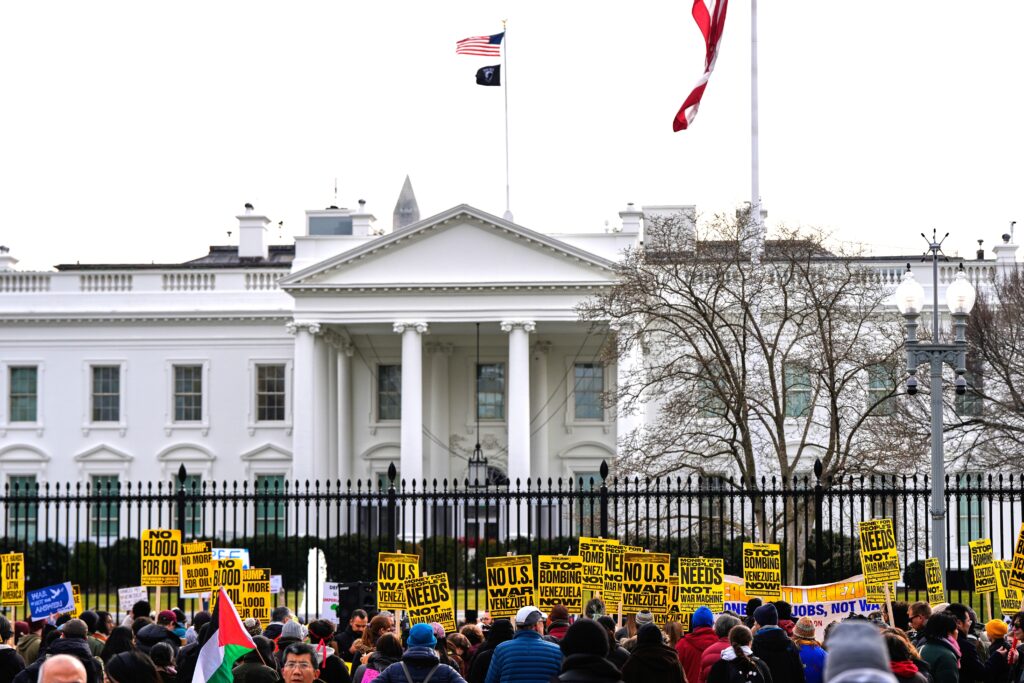
Iran
In a statement, the Ministry of Foreign Affairs of the Islamic Republic of Iran reaffirmed Venezuela’s inherent right to defend its sovereignty, territorial integrity, and self-determination, while stressing the legal and moral duty of all governments and international organizations—particularly the United Nations and its Security Council—to immediately halt what it described as illegal U.S. aggression and to hold accountable those responsible for crimes committed during the military assault.
South Africa
On its government website, South Africa urged a UN Security Council session. History has repeatedly demonstrated that military invasions against sovereign states yield only instability and a deepening crisis. Unlawful unilateral force of this nature undermines the stability of the international order and the principle of equality among nations, the South African government stated.
China
On the social media platform X, the Peoples Republic of China responded with the following: “China is deeply shocked and strongly condemns the U.S.’s blatant use of force against a sovereign state and action against its president. Such hegemonic acts of the U.S. seriously violate international law and Venezuela’s sovereignty.”
Niger
In a statement, the African country of Niger said: “The United States has once again revealed to the world its homicidal, militaristic, violent, colonialist, and interventionist nature by attacking the sovereign people of Venezuela and kidnapping President Nicolás Maduro and his wife, Cilia Flores. We agree that this aggression not only affects Venezuela, but represents an attack on the entire Global South, and must be unanimously rejected.”
The foreign ministers of Burkina Faso, Liberia, Mali, and Namibia also condemned the actions of America and expressed support to their Venezuelan counterpart on behalf of their governments and people.
Latin American leaders also issued strong responses to the aggression against their fellow countrymen.
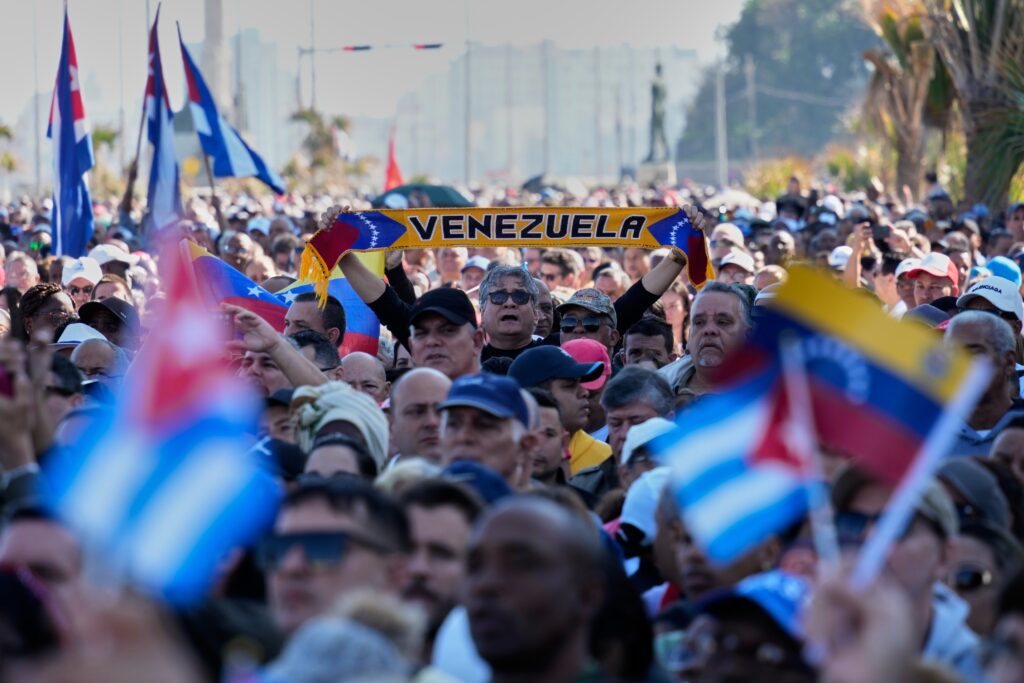
Colombia
President Gustavo Petro warned that Venezuela had come under attack and called on the international community to prioritize peace, respect for international law and the protection of human life over armed confrontation.
Cuba
Havana described the U.S. action as a “criminal attack” and accused Washington of state terrorism. President Miguel Díaz-Canel urged an urgent global response, warning that the strike threatened regional peace and stability.
Mexico
“The Government of Mexico condemns and strongly rejects the military actions unilaterally carried out in recent hours by the armed forces of the United States of America against targets in the territory of the Bolivarian Republic of Venezuela,” a statement posted by Mexican President Claudia Sheinbaum said.
A statement from its Secretariat of Foreign Relations issued Jan. 3 read in part: “The Government of Mexico strongly condemns and rejects the military actions carried out unilaterally in recent hours by armed forces of the United States of America against targets in the territory of the Bolivarian Republic of Venezuela, in clear violation of Article 2 of the Charter of the United Nations (UN).”
Mexico also added that Latin America and the Caribbean are a zone of peace, built on the basis of mutual respect, the peaceful settlement of disputes, and the prohibition of the use and threat of force, so that any military action puts regional stability at serious risk.
Nicaragua
The Government of Reconciliation and National Unity and People of Nicaragua stated: “As Brothers … we join the cry of the entire world, and from a deep rejection we affirm that we will continue fighting for International Law and Sovereignties to prevail.
“Peace has been deeply wounded and the Human Family, the Community of Nations, the Peoples of the World, urge that it be reinstated.”
The African Union
The African Union urged restraint in the aftermath of the bombing. In a statement it released, the AU stated in part that what has occurred, “highlights that the complex internal challenges facing Venezuela can only be addressed sustainably through an inclusive political dialogue among the Venezuelans themselves.”
The African Union expressed its solidarity with the Venezuelan people and reiterated its commitment to promoting peace, stability, and mutual respect among nations and regions.
The United Nations
“The Secretary-General is deeply alarmed by the recent escalation in Venezuela, culminating with today’s United States military action in the country, which has potential worrying implications for the region,” said a statement issued by UN Spokesperson Stéphane Dujarric.
“Independently of the situation in Venezuela, these developments constitute a dangerous precedent. The Secretary-General continues to emphasize the importance of full respect-by all- of international law, including the UN Charter,” the statement continued.
ALBA
The Bolivarian Alliance for the Peoples of Our America (ALBA) condemns what it called “the act of war perpetrated by the Government of the United States against the Bolivarian Republic of Venezuela.”
ALBA denounced the illegal military aggression and immediately demanded the immediate and unconditional release of President Maduro “and the absolute respect for his physical, political and moral integrity.”
The Final Call will continue following this story in upcoming editions.
