









Despite touting itself as a global peacemaker, the U.S. continues demonstrating the opposite. The United States military conducted airstrikes in Northern Nigeria, targeting members of ISIS on Christmas night. The attack occurred after several weeks of back and forth between the two countries over U.S. allegations that an alleged genocide of Christians by “Islamic” militants was taking place in Nigeria. However, there was a swift response by Nigerian leaders and analysts who rejected the claim of religious persecution in an internal crisis where both Muslims and Christians are being affected.
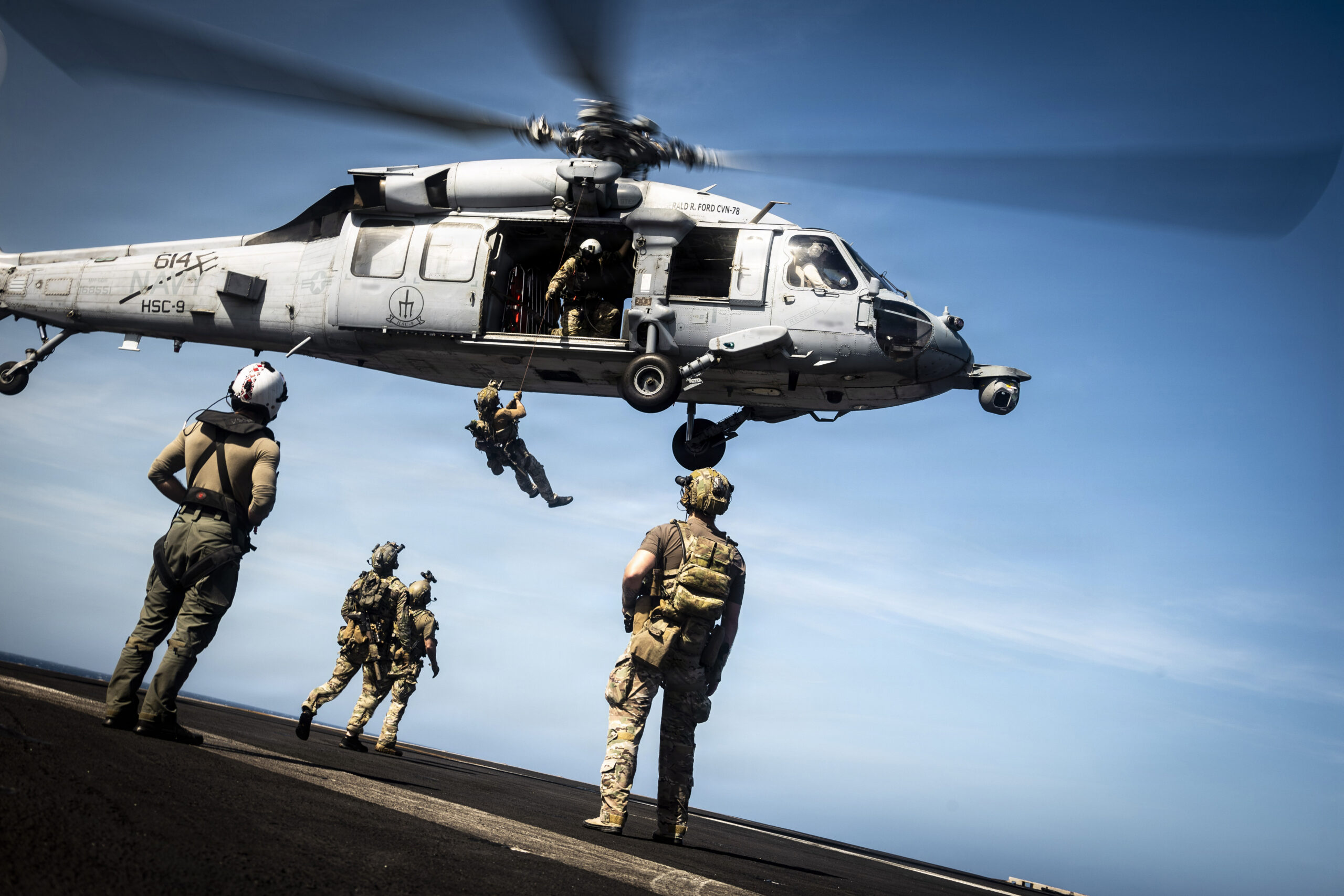
The U.S. Africa Command (AFRICOM) conducted the strikes in Nigeria’s Sokoto State under the direction of President Donald Trump and Secretary of Defense Pete Hegseth, with coordination with Nigerian authorities, said a statement on Dec. 25.
“The Department of War executed numerous perfect strikes, as only the United States is capable of doing,” the president stated in part.
A Dec. 26 statement from Nigeria’s foreign ministry confirmed their cooperation in the move.
“This cooperation includes the exchange of intelligence, strategic coordination, and other forms of support consistent with international law,” read the statement in part. The ministry reiterated that all counter-terrorist efforts are guided to uphold national unity and to protect and safeguard the rights and dignity of all citizens, irrespective of faith or ethnicity.
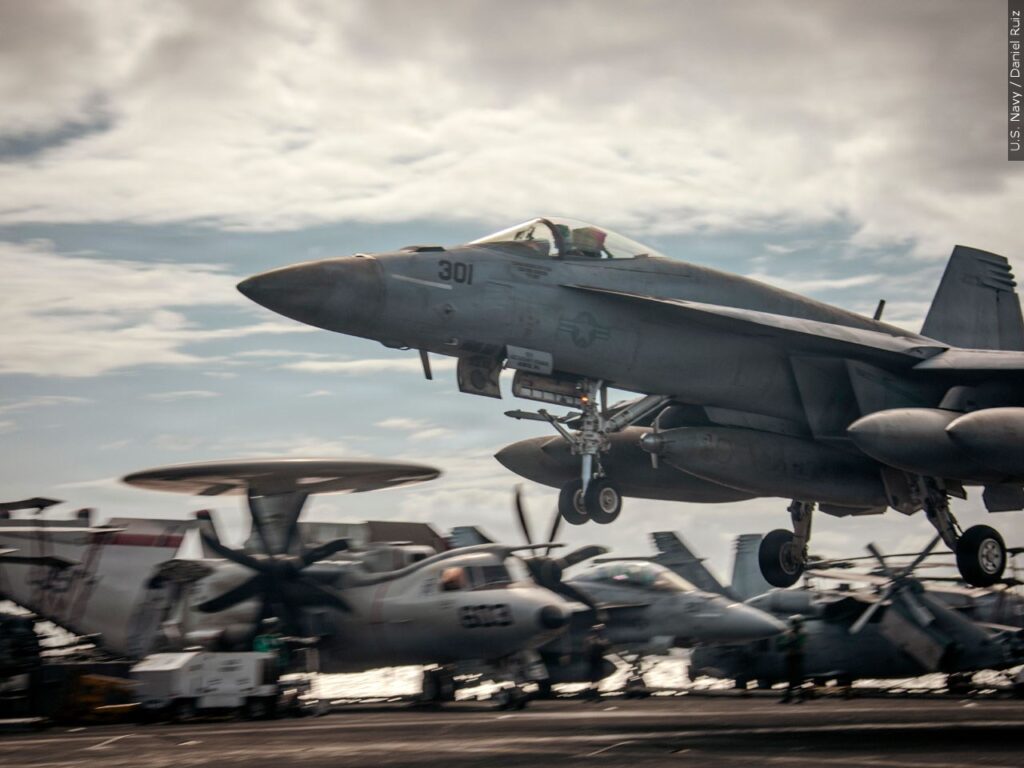
“A U.S.-led coalition has been carrying out airstrikes and ground operations in Syria targeting Islamic State suspects in recent months, often with the involvement of Syria’s security forces,”
Reuters reported. Photo: MGN Online
However, some analysts and observers note that the vile and hawkish posture of U.S. leaders’ is intensifying. The strikes on Nigerian soil, an oil-rich African nation, happened while the U.S. is also inching closer to invading the oil and mineral-rich Venezuela in Latin America and threatening the stability of the Western Hemisphere.
America is on a blood lust march and has a penchant for war. Every nation has a term, so warns the scriptures. America has been warned by the Most Honorable Elijah Muhammad and His National Representative, the Honorable Minister Louis Farrakhan, that it is a country in power at the time of Allah’s (God’s) Judgment, and the Day of Requital when nations shall reap what they have sown.
“In this ‘Day of Judgment,’ God’s ‘Law of Requital’ applies to all if this is ‘that Day’—and it is—when every nation is being called to its record; and the scripture says emphatically, ‘And you will be requited for what you did,’” said Minister Farrakhan, in Part 15 of his series called “The Time and What Must Be Done” delivered in 2013.
“That’s a terrible ‘day’: A day when somebody is ‘requited’ for what they did! We are pointing out the things that America has done, internally and externally, and some of the things that America is doing to foreign nations and governments while we speak,” explained Minister Farrakhan.
“So, as the Honorable Elijah Muhammad said that ‘The Principle of Justice’ will be ‘The Weapon’ that God will use in ‘The Day of Requital,’ or, ‘The Day of Judgment,’ then this is ‘a bad day,’ then, for the wicked—a very bad day,” Minister Farrakhan continued.
“Whether on an individual basis, a national basis, or an international basis, this is that Time that we will be paid fully for what we have done, and only The Mercy of God can keep back from us what each of us is justly due,” he warned.
All are being called to “our record,” and the nations will kneel before their record. It’s a law that none escapes, Minister Farrakhan cautioned.
America’s latest aggressions in Nigeria did not come as a shock to Abayomi Azikiwe.
“It’s not surprising that this has happened,” said Mr. Azikiwe, political commentator and editor of Pan-African News Wire, referring to the U.S. strikes in Nigeria. “They’ve been making preparations for several months,” he told The Final Call.
Mr. Azikiwe said when stories began circulating that Christians were being persecuted in northern Nigeria, he suspected an ulterior motive, arguing the narrative was “based on total fabrication” and was being used to lay the groundwork to engage in military intervention.
“The problems in northern Nigeria, in the Northeast and the Northwest, are not religiously based. They’re regionally based,” explained Mr. Azikiwe. “It needs to be investigated who’s really behind Boko Haram, and also the Islamic State of West Africa,” he added.
Other commentators and analysts on Africa agree that the problems in Nigeria are not faith-driven, pointing out the existence of criminal activity and bandits involved with kidnappings in the areas. The Trump administration is mischaracterizing the crisis to rationalize military action.
It is also meant to distract from domestic issues like the Epstein files and the administration’s failed economic agenda, which has fueled rising unemployment, homelessness, food insecurity, and mounting crises in America’s health care system, argued Mr. Azikiwe.
Meanwhile, with several U.S. military engagements abroad, it begs the question: is the world’s strongest military and economic power hammering the drumbeats of war? President Trump has embarked on skirmishes that foreign policy watchers have criticized as contradictory to his pledge to end wars or his statement that, in his previous presidential term from 2017 to 2020, he started no wars.
“We had no wars. For four years, we had no wars. Except we defeated ISIS,” President Trump proclaimed, on election night, Nov. 6, 2024, upon defeating then-Vice President Kamala Harris for the presidency. “They said, ‘he will start a war.’ I’m not going to start a war, I’m going to stop the wars,” he said.
However, like previous administrations under Democrats and Republicans, the U.S. continues its warmongering and conflict abroad.
During President Trump’s first term in office, U.S. forces continued longtime military operations in Afghanistan, Iraq, Syria, and heightened hostilities with Iran, Venezuela, Cuba and China. In addition, the U.S. maintained airstrikes and special operations against ISIS (Islamic State of Iraq and Syria), also known as ISIL or the Islamic State (IS).
While the U.S. did not declare any new wars during that time, nearly one year into his second term, there is an acceleration of U.S. war play and preparation for future warfare.
An indicator of the priority of war is the massive Department of Defense (DoD) budget for fiscal year 2026, which totals nearly $1 trillion. The National Defense Authorization Act (NDAA) is the annual defense policy and spending authorization that determines how much the U.S. military can spend in 2026.
The $901 billion authorization was voted on by lawmakers and signed by President Trump on Dec. 18. According to the Daily News Brief, a newsletter of the Council on Foreign Relations, the price tag was $8 billion more than President Trump requested.
The massive budget comes at a time when the U.S. has intensified hostilities in multiple parts of the world. In the Middle East, despite brokering a so-called ceasefire in Israel’s genocidal war on Palestinians in Gaza, and some condemnation of illegal settlement expansion in the occupied West Bank, Washington continues providing Israel “qualitative military edge” in the region. By U.S. law, multiple administrations were bound to ensure that Israel maintain this edge through advanced weapons sales, technology transfers, and joint military cooperation. Any proposed U.S. sale of weapons or defense services to Middle Eastern countries, other than Israel, must be certified to ensure it does not harm Israel’s qualitative military edge.
The 2026 NDAA also contains a U.S. commitment to offset any arms embargoes slapped on Israel as the country’s isolation deepened due to the Gaza genocide, reported Mondoweis News.
Critics argue that the size of the authorization skews priorities in light of rising living costs at a time of domestic strain on the American people.
On December 19, the U.S. launched large-scale strikes against dozens of Islamic State targets in Syria, which, according to officials, was reportedly in retaliation for an attack that killed two U.S. Army soldiers and a civilian interpreter on Dec. 13.
“A U.S.-led coalition has been carrying out airstrikes and ground operations in Syria targeting Islamic State suspects in recent months, often with the involvement of Syria’s security forces,” Reuters reported.
“This is not the beginning of a war—it is a declaration of vengeance,” Secretary Hegseth said, the outlet reported. “Today, we hunted and we killed our enemies. Lots of them. And we will continue,” he added, reported reuters.com.
Another example of America’s War hawkish posture was rebranding the “Department of Defense” to the “Department of War,” although the name change is not legit until Congress authorizes the change.
In addition, President Trump announced on Dec. 22 the first two of a fleet of 20 naval ships to be built and equipped with weapons systems complete with high-powered laser technology, nuclear-armed sea-launched cruise missiles and hypersonic weapons and named the USS-Defiant.
While nearly a trillion-dollar authorization for the military is passed, which will benefit a profitable military industrial complex, federal funding supporting the poor is marginalized.
Local services toward public education, childcare, senior/community programs and homelessness have taken drastic cuts, with some headed to the chopping block into 2026. Federal housing programs for low-income Americans, including affordable retrofitted housing grants and homelessness assistance face cuts, restructuring, or restrictions.
Areas like public education, for example, where funding was redirected and impacted when the Trump administration froze nearly $7 billion in federal education funding already allocated by Congress for the 2025-2026 school year, are in jeopardy.
These actions reflect a mix of cuts already in play, proposed policy changes, and threatened funding withdrawals that collectively weaken the nation’s social safety net. Together, they affect key social services such as disability benefits, food assistance, public health programs, housing, and nonprofit support. Some changes are already in effect, like staff reductions and program eliminations, while others could take effect later, depending on regulatory processes, court challenges, or future budget decisions.
For Mr. Azikiwe, the Trump administration is waging a war on two fronts. The escalating military budget is international and domestic, because how much does it cost to place all these National Guard troops, Immigration and Customs Enforcement (ICE) agents, and Customs and Border Patrol agents in the major cities across America, he questioned.
“This is a war-oriented administration, no matter what they said last year during the elections. As it turns out, they’re waging war domestically and internationally,” he said. “That is the reality of the situation.”
