







‘Political prisoners represent the ultimate sacrifice because they are separated from their family and are engaging with the state at a foundational level of torture, isolation and imprisonment.’—Attorney Jinan Chehade
TINLEY PARK, Ill.—The soul of the Palestinian struggle against settler colonialism, apartheid, and ethnic cleansing lies in the example and determination of political prisoners held in Israeli jails.
Panelists said during the opening workshop at the 18th annual American Muslims for Palestine (AMP) convention held Nov. 27-29. This year’s gathering was themed, “Beyond Survival: Resisting Genocide.” (See The Final Call, Vol. 45 No. 10)
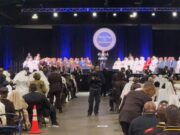
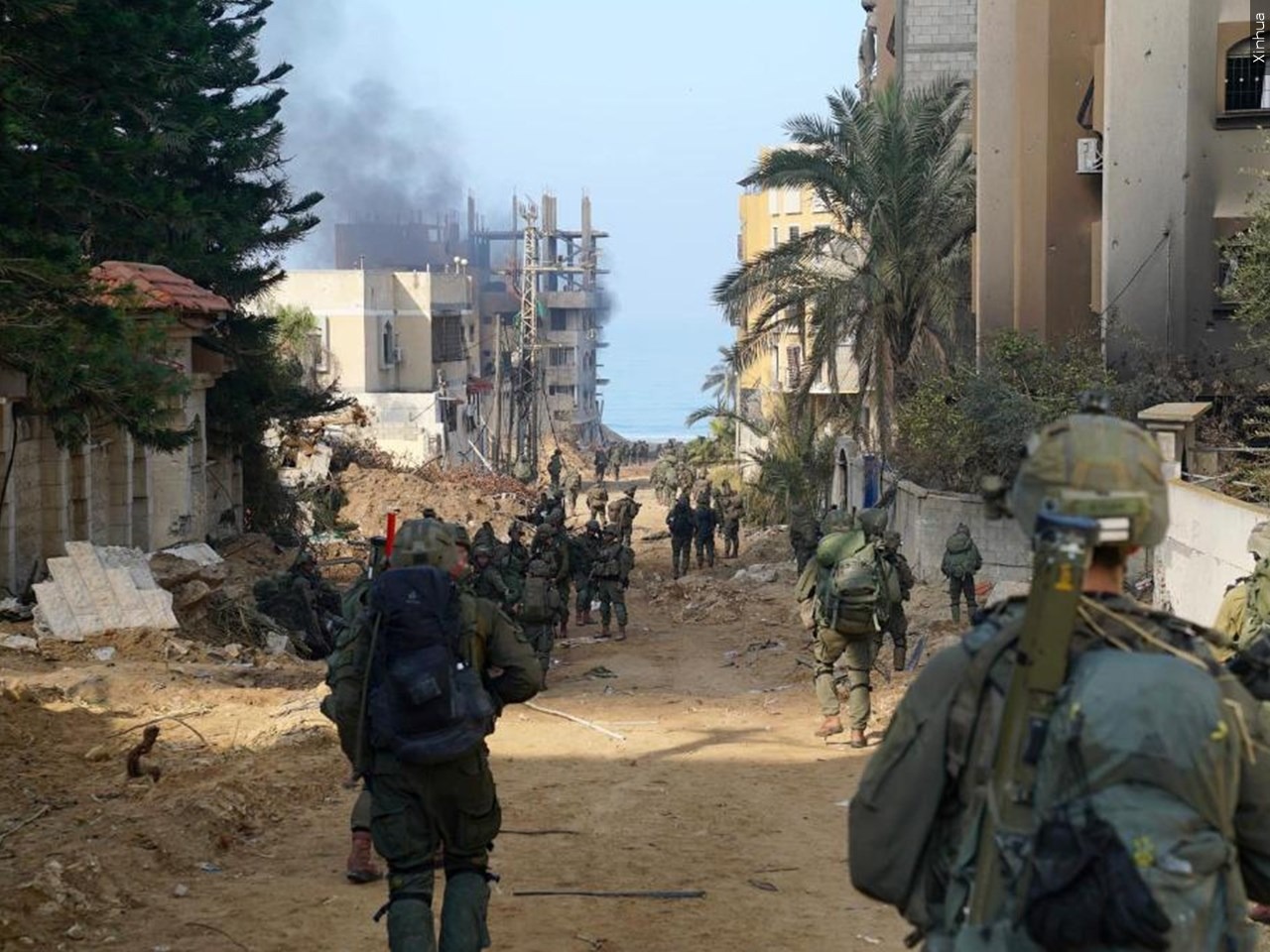
Several thousand activists, scholars and religious leaders from various faith traditions gathered at the Tinley Park Convention Center outside Chicago to discuss ways to end the 77-year stranglehold of Palestine by Israeli settlers and to convince the international community to take action to stop the Gaza “war” that the world has called a genocide.
Held in the room named for Hind Rajab, a five-year-old Palestinian girl killed by the Israel Defense Forces during the Israeli invasion of the Gaza Strip, panelists said Israel’s main goal is to suppress Palestinian resistance.
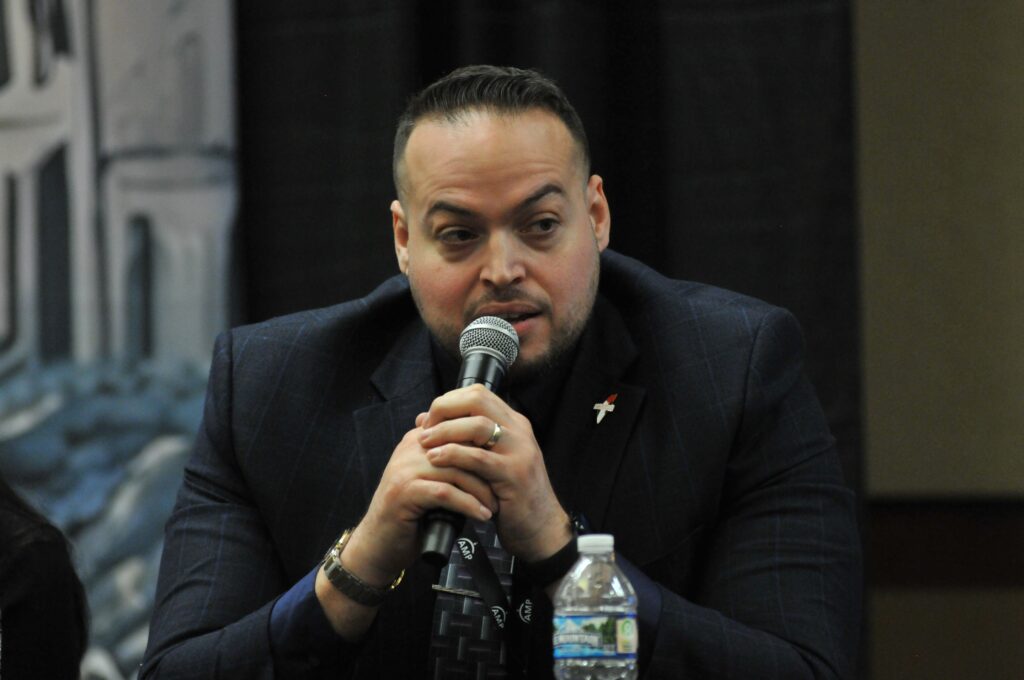
“Political prisoners represent the ultimate sacrifice because they are separated from their family and are engaging with the state at a foundational level of torture, isolation and imprisonment,” said Attorney Jinan Chehade.
Referencing American political prisoner Imam Jamil Al-Amin, aka H. Rap Brown, the former Black Panther Party leader who recently died, Ms. Chehade said the goal of the occupier is to “make prisoners invisible. They want to make it so you don’t even want to utter their names,” she said.
There are two systems of justice in Israel, Attorney Tarek Khalil said, one for Israelis and one for Palestinians. Israelis are tried in courts administering laws for “civilians,” while Palestinians are subjected to “military courts” for non-citizens living under occupation.
Under civilian law, a person isn’t considered an adult until age 18. For many years, Palestinians were subjected to adult law much younger than 18. That law was changed to reflect age 18 for Palestinians, “but only for purposes of adjudication,” Atty. Khalil said. Children ages 15, 14 or even 13 are often detained under military law as if they were adults, he said.
The attorney noted that Israelis use the policy of “administrative detention,” a tactic described as holding a person without trial and without having committed a crime on the grounds that he or she “plans to break the law in the future,” according to the B’Tselem website.
“This leaves the detainees helpless—facing unknown allegations with no way to disprove them, not knowing when they will be released, and without being charged, tried or convicted,” the website notes.
“They will say anything so they can go home. That’s why there’s over a 97% arrest and conviction rate and plea bargains,” Atty. Khalil said.
Atty. Khalil, who also is AMP’s education director, explained that Israeli law classifies Palestinians by their ethnic identity—Arab Israelis or Israeli Arabs—instead of their national identity as Palestinians “because there’s only one nationality, the Jewish nationality,” he explained.
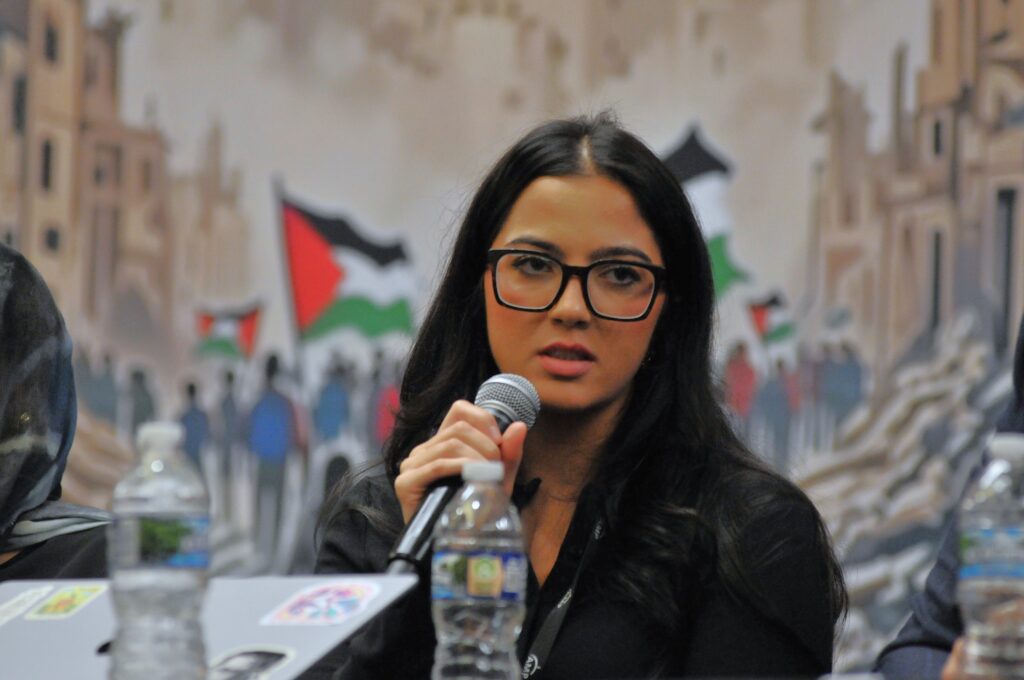
Dr. Zarifah Baroud, a lecturer at the University of Hawai’i at Manoa, commented that “criminalizing the struggle for liberation is inherently genocidal. To criminalize struggle against ethnic erasure is inherently genocidal.”
Citing the case of Mohamed Rahim, she criticized the American government for not coming to the aid of U.S. citizens detained in Israeli jails. Rahim, a 16-year-old Palestinian American, was released on Thanksgiving Day after nine months in prison. His crime? Israelis accused him of throwing rocks at Israeli settlers, which his family denies.
A resident of Florida, the boy was held without trial and was subjected to starvation and torture, according to the Council on American-Islamic Relations (CAIR).
“The struggle of Palestinian political prisoners needs to be front and center,” Dr. Baroud said. “It’s critical to know their stories because it is to know the stories of 40% of Palestinian men detained since 1967. They are on the front lines.”
Other rooms named for Palestinian political prisoners and martyrs were Hussam Idris Abu Safiaya, a Palestinian hospital director detained without charge; Anas Jamal Al-Sharif, a Pulitzer Prize winning Palestinian journalist and videographer for Al Jazeera;
And Refaat Alareer, a Palestinian professor and writer killed by an Israeli airstrike along with his brother, sister, and four of his nephews, during the Israeli invasion of the Gaza Strip.
Attorney Chehade concluded the discussion with an observation: “[President] Trump and the Zionist entity has made a fundamental and grave miscalculation when it comes to youth,” she said.
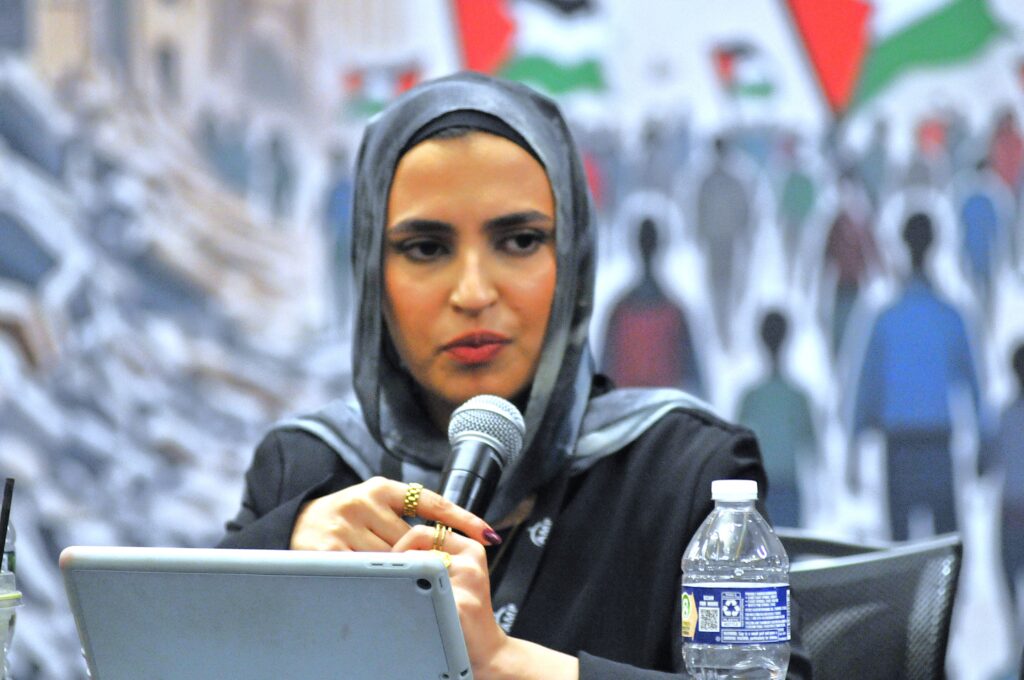
“This is the same generation that grew up with active shooter drills, surveillance, mass incarceration. We witnessed how the state at every turn has turned its back against us.
“They have pushed us too far. We’ve seen too many babies in body bags. The youth now are engaging in struggle with complete moral clarity. No tactic, no manner of criminalization or detainment will deter them from the struggle.”
