



President Nicolás Maduro of the Bolivarian Republic of Venezuela remains resolved and steadfast against accelerating threats of military intervention by the United States.
The longtime enmity between the two nations has reached dangerous heights after the U.S. increased its military footprint to 15,000 troops in the Eastern Caribbean, near the coast of the oil-rich Venezuela, under the guise of combating drug cartels.
However, a growing chorus of critics rejects Washington’s stated reasons as a pretense for eventual regime change and pillaging of Venezuelan resources. The recent months of tension are the latest of decades of hostilities and U.S. meddling that includes excruciating economic sanctions against Venezuela.
“We have lived through 22 weeks of psychological terrorism, which have tested us,” Mr. Maduro told a mass rally of Venezuelans in Caracas, the capital city. “The test of love for the homeland,” he said.
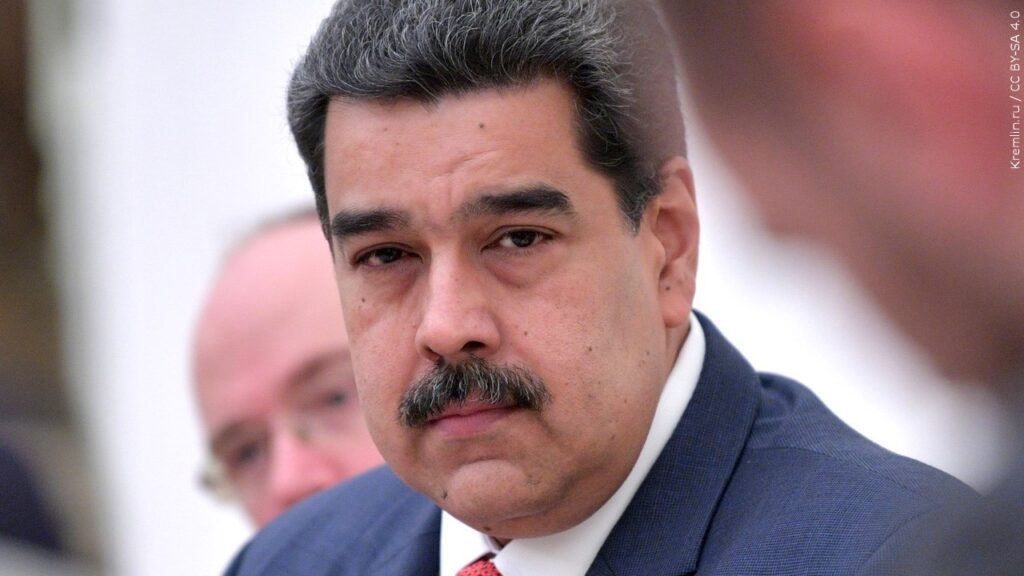
Venezuela President Nicolas Maduro
Photo: MGN Online
The December 1 remarks came after several days of public speculation about the leader’s political fate amid statements by U.S. President Donald Trump that President Maduro, in a phone call last month, should step down from power or else. In response to the call, President Maduro rejected the posture as an unacceptable “slave” offer.
Addressing the crowds outside the Miraflores Palace, President Maduro vowed that Venezuela wants peace, but only a peace “with sovereignty, equality and freedom,” Al Jazeera reported. “We do not want a slave’s peace, nor the peace of colonies! Colony, never! Slaves, never!” he said.
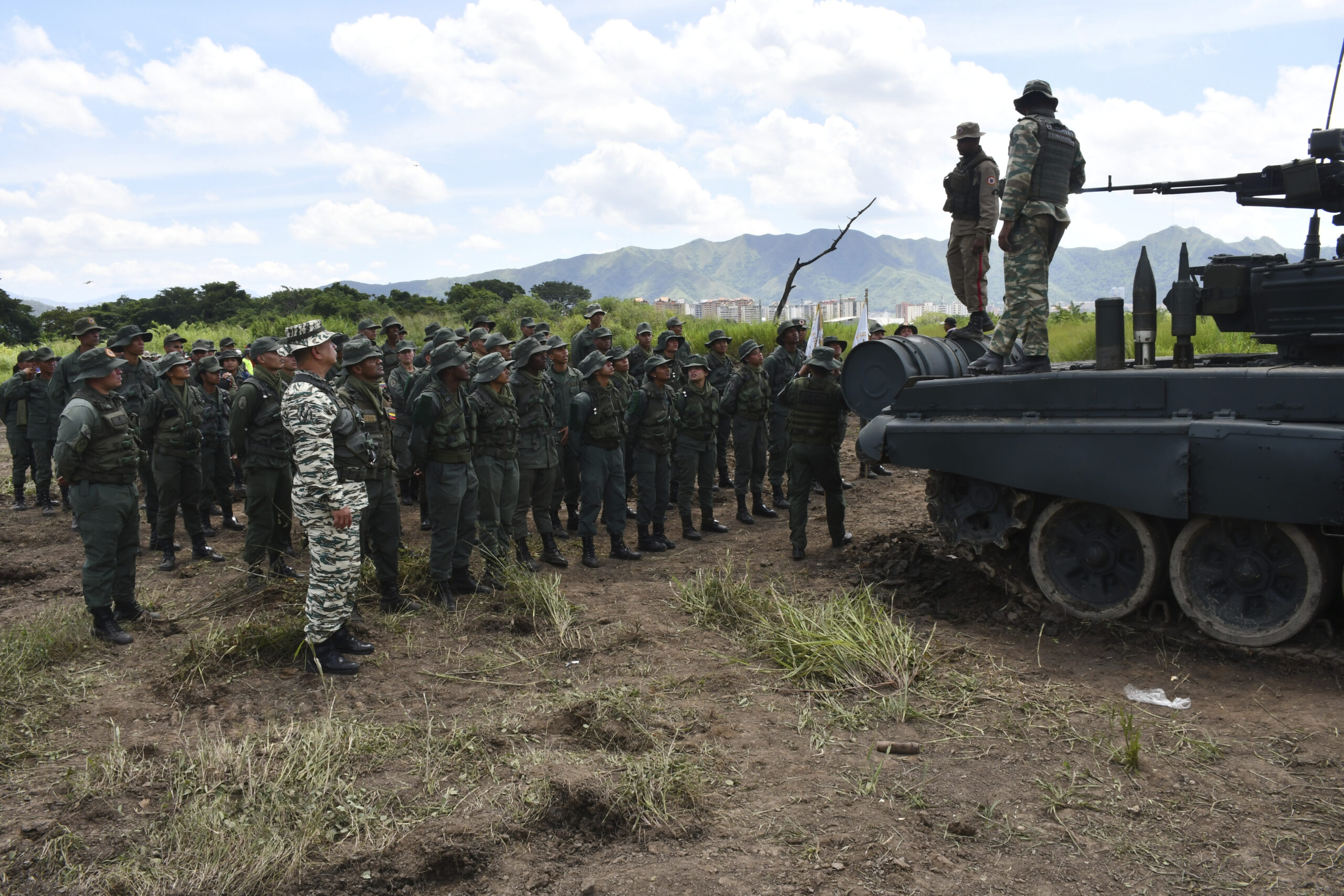
During the rally, the Venezuelan leader swore in the “Comprehensive Bolivarian Community Base Commands” designed to organize Venezuelans “block by block” into territorial circles aimed for national defense. Mr. Maduro also announced the creation of a new political bureau made up of trusted aides, reported El Paise, a Spanish-language newspaper.
Meanwhile, the U.S. continued its targeting of speed boats in the Caribbean and the Pacific waters in what is being widely deemed as extrajudicial killings. The strikes are combined with incendiary—yet unsubstantiated—rhetoric by U.S. officials that the victims were “drug smugglers.”
Some U.S. lawmakers are accusing the Trump administration of circumventing U.S. law that requires Congressional approval for military strikes. In a social media statement, Senator Rand Paul (R-KY) flatly accused Secretary of State Marco Rubio of covertly angling for regime change.
“There are some people surrounding President Trump, like Marco Rubio, who are secretly pushing for regime change in Venezuela. They seem to forget that war powers belong to Congress, not the president. Any step toward regime change in Venezuela is too serious to bypass Congress,” Mr. Paul said in a Dec. 5 X post.
On Dec. 3, Senator Paul, along with Democratic lawmakers, filed a War Powers Resolution to block the use of U.S. Armed Forces engaging in hostilities within or against Venezuela unless authorized by Congress.
The lawmakers were reacting to President Trump’s statement that there would be land strikes “very soon.” In a press statement the lawmakers said The War Powers Resolution may be called up for a vote on the Senate floor in 10 days.
“Although President Trump campaigned on no more wars, he and his administration are unilaterally moving us closer to one with Venezuela—and they are doing so without providing critical information to the American people about the campaign’s overall strategy, its legal rationale, and the potential fallout from a prolonged conflict,” said Rep.
Tim Kaine (D-VA), a member of the Senate Armed Services Committee and Ranking Member of the Senate Foreign Relations Subcommittee on the Western Hemisphere, and co-author of the resolution.
In addition, an investigation and congressional hearings are underway scrutinizing U.S. Secretary of Defense Pete Hegseth over a deadly boat attack in September that killed several people.
Clinging survivors were bombed again and killed under alleged orders of Mr. Hegseth to “kill everybody,” according to a report in The Washington Post. Mr. Hegseth denies giving such an order. However, the controversy raises legal questions concerning U.S. conduct and use of its military in the region.
There is expanding pushback and condemnation of Washington’s actions, including calls for accountability of U.S. officials on possible criminal charges. Some experts argue that the administration’s actions raises legal and diplomatic questions by blurring the lines between law enforcement, interdiction, and war.
“This is not ‘combat.’ There is no war on ‘narco-terrorists.’ This is state murder of civilians in peacetime, like executing alleged drug traffickers on the streets of New York or (Washington) DC,”
Said Ben Saul, a United Nations Special Rapporteur on Human Rights and Counter Terrorism a post on X. “@PeteHegseth and @POTUS (Pres. Trump) should be arrested & charged with ordering the mass murder of 80 people,” Mr. Saul continued.
United Nations experts expressed alarm over the extent to which the U.S. is going to threaten the Latin American nation. They condemned President Trump’s declaration that airspace over Venezuela is considered a no-fly zone, which experts contend is illegal. They argue it’s a blatant disregard for international law.
In a Dec. 4 press release, the experts expressed deep concern about mounting pressure from Washington on Venezuela. “International law is clear: States have complete and exclusive sovereignty over the airspace above their territory,” the release said.
“Any measures that seek to regulate, restrict or ‘close’ another State’s airspace are in blatant violation of the Chicago Convention,” the experts said, referring to Article 1 of the Convention on International Civil Aviation (1944).
They also recalled that the UN Charter prohibits “the threat or use of force against the territorial integrity or political independence of any State” (Article 2). Actions affecting another country’s airspace may amount to a breach of sovereignty and could constitute an illegal threat of use of force under international law.
The release noted the International Court of Justice case of Nicaragua v. United States (1986), affirmed that the principles of “non-use of force,” “non-intervention” and “territorial inviolability” are cornerstones of the international legal order that must be observed.
“Unilateral measures that interfere with a State’s territorial domain, including its airspace, risk fully undermining the stability of the region and are seriously undermining Venezuela’s economy,” the UN experts said. They noted that, despite President Trump’s assertion, the U.S. has no legal authority to “close” another country’s airspace.
The U.S. foreign policy in the Americas and the Caribbean has a history of political bullying, threats, and invasion. From the long decades of sanctions on Cuba, hostile interference in Nicaragua, the overthrow and assassination of leaders in Grenada, and the current eye on the Panama Canal, the U.S. has been a bully in the region.
“The long history of external interventions in Latin America must not be repeated,” the UN experts said in their statement “Respect for sovereignty, non-intervention and the peaceful settlement of disputes are essential to preserving international stability and preventing further deterioration of the situation.”
