










CHICAGO—October 16, 1995, became what may be the most historic date in American history. On that date, the Honorable Minister Louis Farrakhan called for one million Black men to meet him in the United States capital, and nearly two million men descended upon Washington, D.C., for The Million Man March and Holy Day of Atonement.
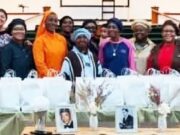
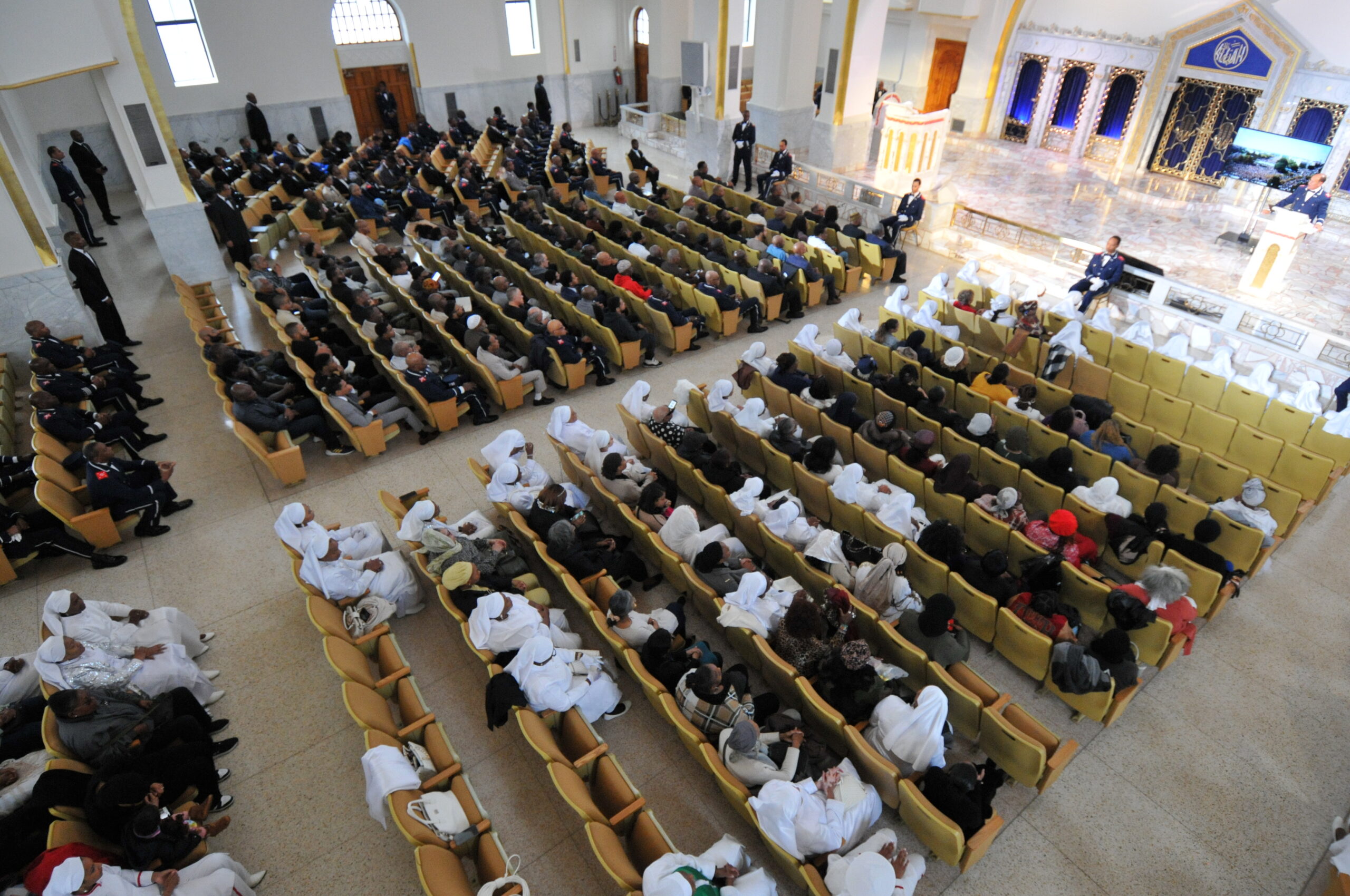
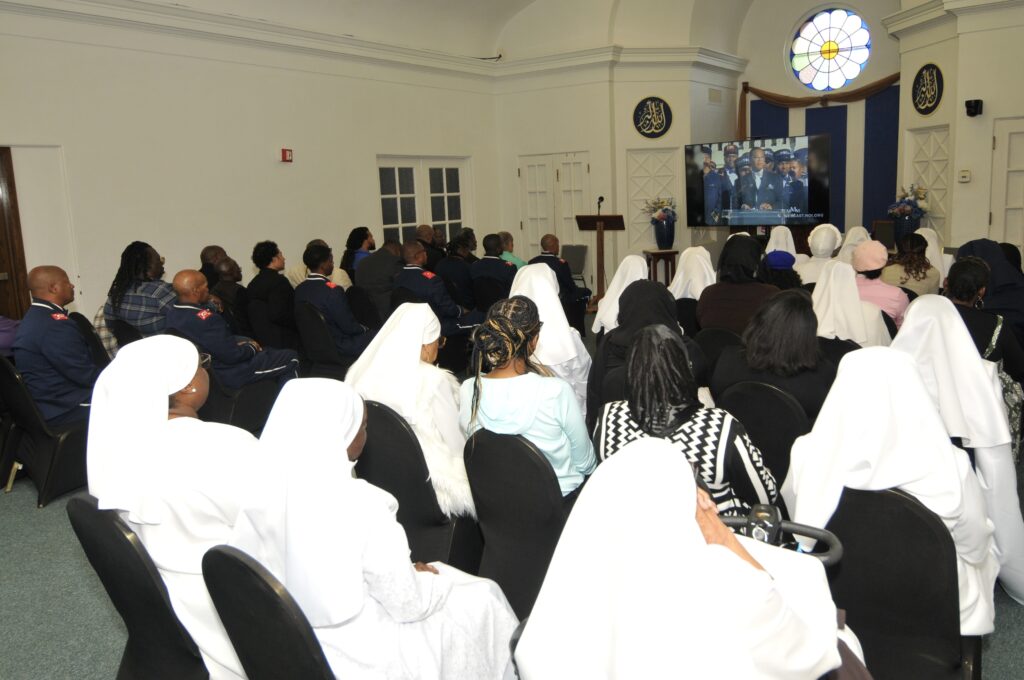
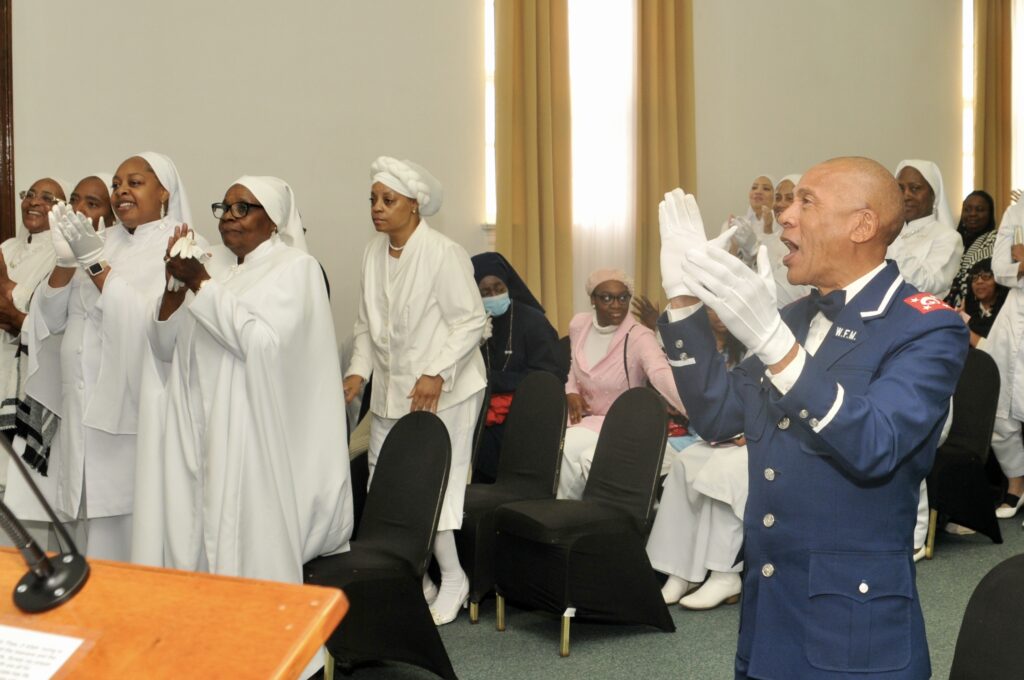
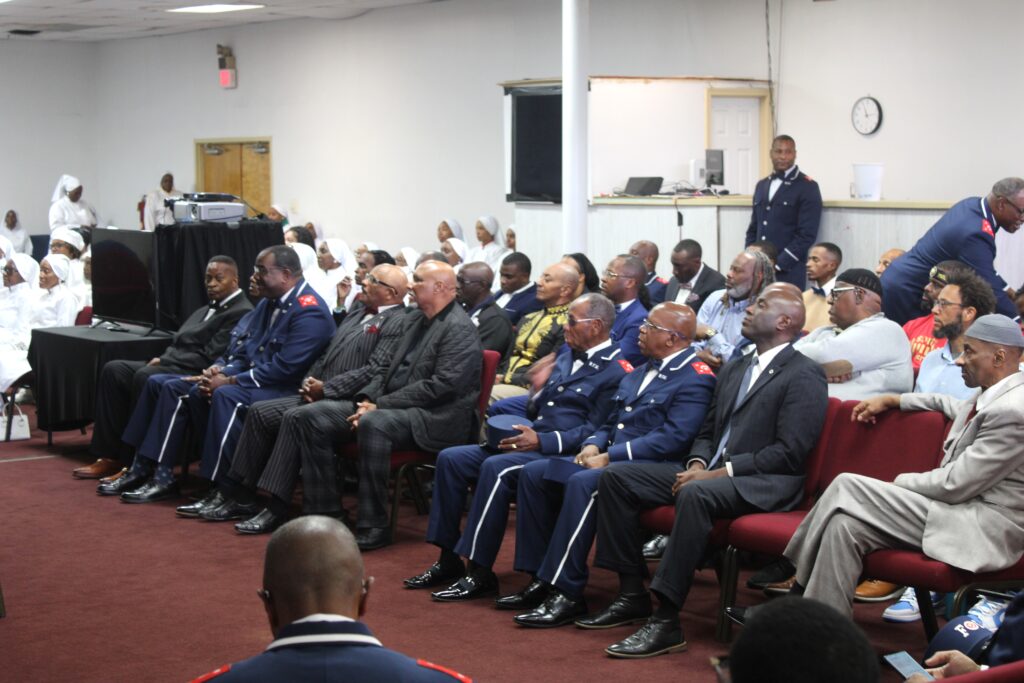
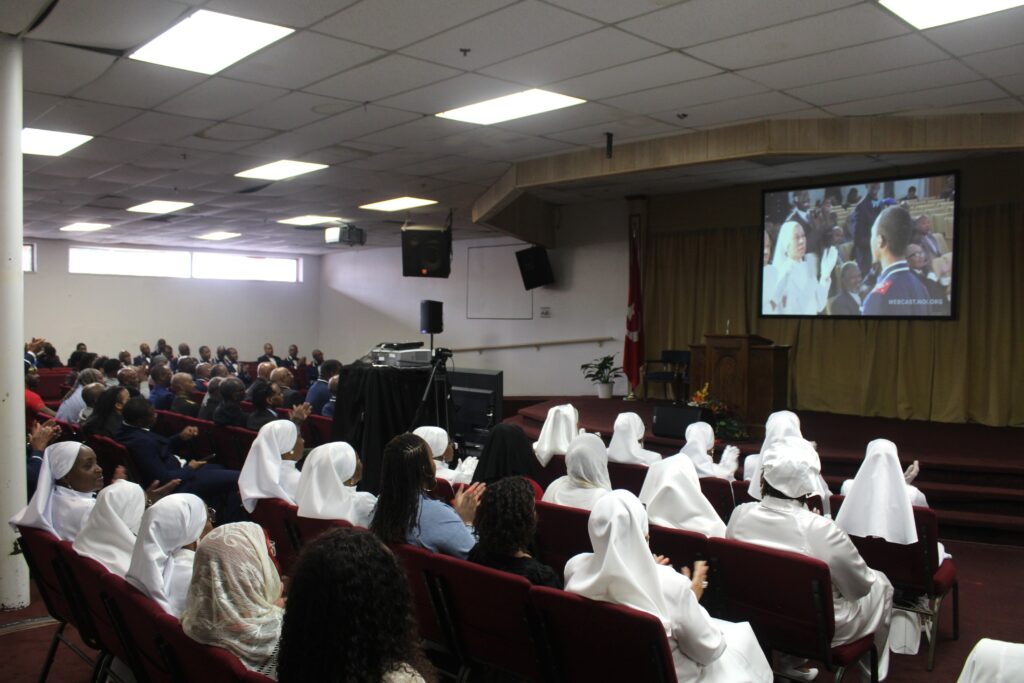
Members of the Nation of Islam and supporters filled Mosque Maryam in Chicago on October 19 to commemorate the monumental 30th Anniversary of The Million Man March.
Student Minister Ishmael Muhammad, National Assistant to the Honorable Minister Louis Farrakhan, stated during his introductory remarks on Oct. 19, “This is a first time that there has been a march on Washington where the theme has not just been justice and jobs, and some social action, but it has been and was to reconnect a people to God. That is the reason why The March was so overwhelmingly successful.”
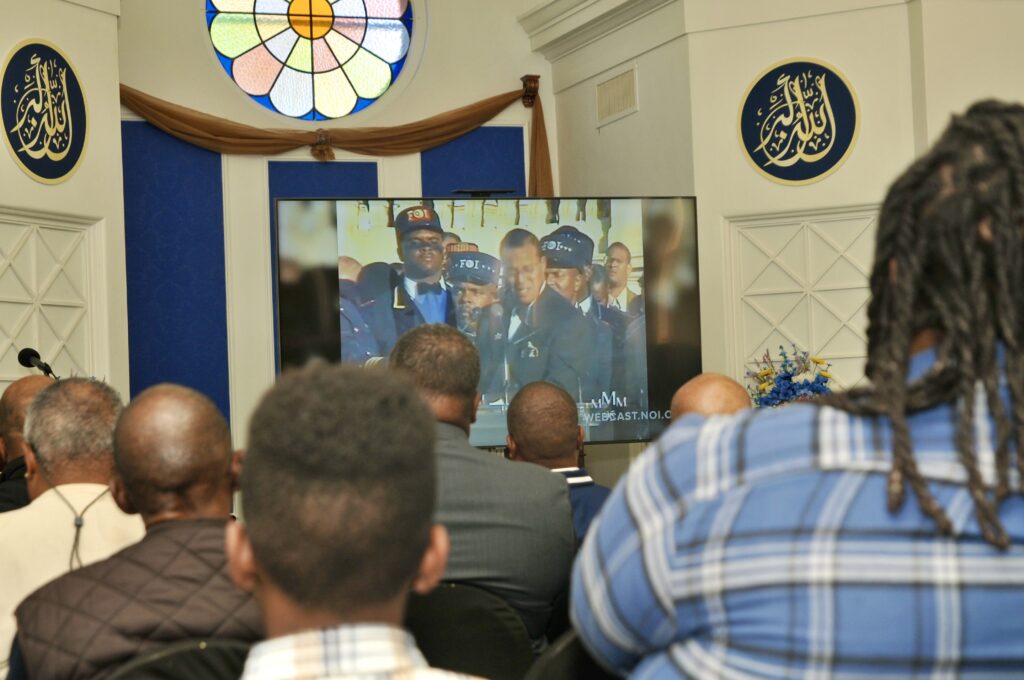
During the commemoration, which was live-streamed, Minister Farrakhan’s October 16, 1995, message on the National Mall was shown in its entirety. The process of atonement was introduced to the men in attendance and to a global audience. In part, Minister Farrakhan stated, “A perfect union with God is the idea at the base of atonement. Atonement demands of us eight steps; in fact, atonement is the fifth step in an eight-stage process. Look at our division, we as a people who have been fractured, divided, and destroyed because of division, now must move toward a perfect union.”
Three decades later, the message and the magnitude of that day still resonate with Black people.
Commenting on the program and reflecting on that day 30 years ago, Bro. Troy 5X of Chicago stated, “Being at the Million Man March was an amazing experience. I was a college student during that time; however, I was not a member of the Nation of Islam until 1998. I helped mobilize different fraternities to attend The March.”
Bro. Peter Muhammad of Chicago, who also attended The March, stated, “Today brought tears to my eyes. I never experienced so much love, and I have been a registered member in the Nation of Islam since 1968.”
Activists Zakiyyah S. Muhammad and Doris Lewis collaborated in Chicago, organizing and mobilizing men and encouraging them to attend the Million Man March 30 years ago. Three decades later, after the special commemorative program, they walked out of Mosque Maryam together.
“We went up and down the housing developments trying to reach our brothers,” Sis. Zakiyyah told The Final Call. “Through all of that, I was able to coordinate two buses. … They looked like special soldiers going on a mission. We watched TV that day and we cried.”
Sister Doris, 81, said she helped because of her love for Minister Farrakhan. “With a call like that, how can you not get involved. It was about the salvation and liberation of our people and to do away with the image of Black men that this government has put them in. Once you capture our Black men, you’ve captured us,” she told The Final Call.
“The beauty of Minister Farrakhan is that his message is always timely,” she continued. “We have the same issues today, just worse. He laid out a plan. He had a very thorough agenda.”
“I wanted to go,” said Malcolm Scott, 43, of Chicago, noting he was only 12 years old in 1995. “My father went. He and his friends were super geeked to go. When they got back, their attitudes were changing. My father stopped cursing so much,” he chuckled.
Psychologist Obari Cartman brought his two young sons and a cousin to Mosque Maryam for the program. His father took him to the March in 1995 when he was 15 years old. “This is my first time really hearing the speech as an adult, understanding the depth of what Minister Farrakhan was giving to us. I was impressed with the clarity of his analysis and instruction. It’s amazing and saddening to think about how relevant it is still. If we had honored those pledges, we wouldn’t be in the condition we are now.”
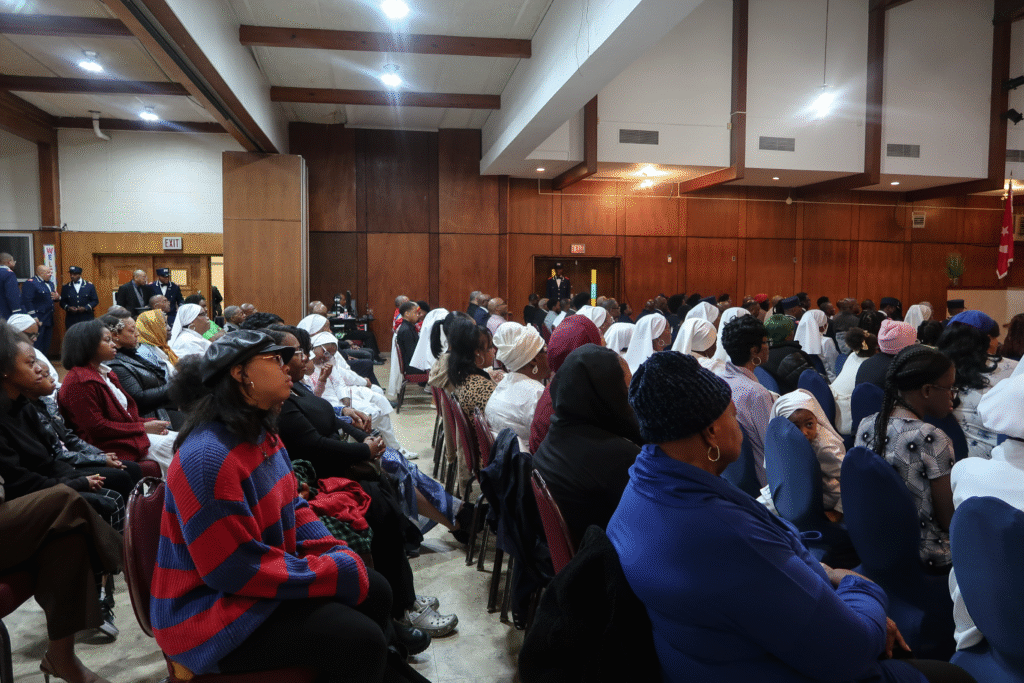
Chicago activist affectionately known as “Mama Dee” told The Final Call, “The speech given then is for a time as this. We are drunk with the wine of the world—‘Look at my car, look at my house,’” she commented, referring to a spirit of materialism. “We have forgotten the God of our silent tears and weary years. Until we sober up, nothing we do is going to prosper. The Minister [Farrakhan] has said, the War of Armageddon has begun!” she said.
In other parts of the country, at various Nation of Islam mosques and study groups, the special October 19 program also resonated with audience members.
In Los Angeles, at Mosque No. 27, the Western Region headquarters of the Nation of Islam, Kenneth Williams heard about the commemorative program, and although he could not attend the historic 1995 Million Man March, he was happy he could attend its 30th anniversary. “The Minister [Farrakhan] always is excellent,” he said. “The healing needed for today is the same as the healing needed then,” Mr. Williams added.
Mary Porterfield, like Mr. Williams, received word of the 30th anniversary program through flyers that were distributed at a local festival in Los Angeles. She hadn’t heard the 1995 message before, but knew of Minister Farrakhan, she shared. “I knew he had some very powerful thoughts on economic development, culture, pride and all of that so, it was a great opportunity to hear the entirety of what he thinks,” she stated. “It was definitely a very spiritual moment to be able to feel a sense of fellowship with people who have the same thoughts as yours,” she continued.
In Philadelphia, audience members viewed the program at Mosque No. 12. Brent Woods agreed that what Minister Farrakhan addressed in 1995 is still relevant today. “Everything he spoke about applies to what’s going on now—looking out for each other as brothers, doing right by each other, getting businesses together, and forming one unified unit,” said Mr. Woods. “We need to get the drugs out of the streets and handle all these issues, but we have to do it as one. One brother can’t just go do it alone—we all need to come together as one unit and do it together,” he added.
At Mosque No. 55 in Memphis, the capacity crowd overflowed into the back of the mosque, and the webcast was also played over the loudspeakers broadcasting onto the parking lot.
“When I recited the pledge this time, today, it brought so much memory back. I remember saying the pledge, but I remember being just so excited about saying the pledge, but maybe 30 years ago, I didn’t internalize what was said. I love the pledge, and I think it warrants us studying, more, what he asked us to do and we are taught that word is bond,” said Student Min. Muthakkir Muhammad of Mosque No. 55. He was referring to the pledge that the two million men recited from Minister Farrakhan at the March.
“I was so happy to hear the Million Man March address again, that I promised myself I’m going to read the whole thing, how he [Minister Farrakhan] described local operations and what to do locally. I have a greater respect, it impacted me profoundly, for what to do locally. And it seemed like, to me, he touched everything that we are looking at,” he added.
Omar Baruti attended the Million Man March, and it still deeply resonates with him today. “Early that morning [October 16, 1995] we went out to the National Mall and lo and behold, as you walked to the Mall, in the dark, it had to be at least 150,000-200,000 brothers out there on the mall in the dark, already,” said Mr. Baruti.
“One time, I went to go to the restroom, and I saw a brother step on another brother’s foot and the brother who got his foot stepped on said, ‘Oh, man, I’m sorry brother, I didn’t [mean to] put my foot like that there, brother.’ That was the mindset and the attitude I saw. I said this is amazing. These brothers respecting each other and all over the place and they were doing it,” Mr. Baruti reflected.
For Brenda Edwards, seeing the number of Black men who attended the Million Man March had a significant impact on her. “Just the sea of men, it just did your heart good. It was just overwhelming,” she said. Ms. Edwards especially appreciated the principle of atonement as presented by Minister Farrakhan and expressed that she hopes that the message will be applied.
Bro. DeAree X was not even born in 1995. Yet, what the Million Man March symbolizes is not lost on him, especially the message of atonement. “I was questioning … I said, you know, with a gathering of that magnitude, I wondered what caused the Minister to choose that topic and I settled on, ‘well, it’s what we needed at the time. And it’s what all of our people need to hear and therefore, it is the message for the time. I took it and I said, you know what, I’m going to implement it in every aspect of my life and consider what he said. It was amazing,” said Bro. DeAree.
“It’s relevant 30 years later and forevermore. I was reading in the bible how the message of Jesus, he first began teaching repentance, teaching atonement. That’s how he started his ministry, so it’s definitely a central focal point in every aspect of life, in my judgment,” he added.
The rebroadcast of Minister Farrakhan’s historic Million Man March address for the 30th anniversary also resonated with believers, friends and guests of Mosque No. 15 in Atlanta.
“My father was at that March, and he brought home the same message to me in the household, and he raised me to be that type of Black man. And the message is still relevant today,” Joel Judah of Sons of Thunder Israelites said to The Final Call. “We as brothers, even though we’re Israelites, we understand that brotherhood is the primary thing. That was also part of the lesson. We’re trying to be obedient to the Honorable Minister [Louis Farrakhan] and fellowship with our brothers and bring love and unity to the community.”
Shamque Baugh’s father went to the Million Man March 30 years ago. She wanted to come to the 30th anniversary commemoration to follow up on community progress. “I wanted to celebrate, but I wanted to see what have we done in the community as Black men to empower our youth as well as our community,” she said. She enjoyed Minister Farrakhan’s words on those who are languishing in America’s prisons.
“He said make a commitment to reach back and go draw out one of the men who’s incarcerated. That touched my heart, because my brother has been in jail since he was 16. It’s been 30 years,” she said. “When he mentioned the men making that vow and that promise to protect their families and make sure we’re good as a community, I just feel that’s important,” she added.
Atlanta residents Tegeset and Kidane Ali attended the program at the Atlanta mosque together.
“I like when he [Minister Farrakhan] said to stick together and don’t put each other down or compete with each other. Come together. That’s the only way you stop White supremacy,” Ms. Ali said. “He was talking like that 30 years ago, like he knew the future.”
Mr. Ali noted that Black progress today is as simple as keeping the dollar within the Black community or offering a word of encouragement.
“Don’t degrade each other with words. Uplift each other,” he said. Basically, we just need to let our actions speak for itself instead of having that energy towards them.”
Contributing Editor James G. Muhammad and Contributing Writer Shawntell Muhammad reported from Chicago; National Correspondent Charlene Muhammad from Los Angeles; Staff Writer Anisah Muhammad from Atlanta; Contributing Writer Michael Z. Muhammad from Philadelphia and Contributing Writer Donna Muhammad from Memphis.
