





WASHINGTON, D.C.—Thirty years after nearly two million Black men filled the National Mall in response to the Honorable Minister Louis Farrakhan’s historic call for unity, atonement, and brotherhood, the D.C. area marked the 30th Anniversary of the Million Man March with remembrance events.
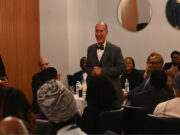
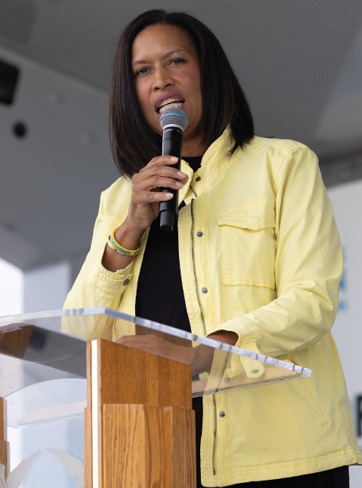
“We are acknowledging what many people thought was impossible, a million Black men coming to Washington, D.C., 30 years ago,” said D.C. Mayor Muriel Bowser, to the crowd at a Million Man March celebration.
“My friend Marion Barry was instrumental in making sure and working with Brother Louis Farrakhan, who organized to bring Black men peacefully to our city, to strategize, to take account, and to lead in our communities.”
“This is what we all know as Black women, that we need strong Black men for our communities and our future. It’s true today. Just like it was true 30 years ago. What we know as Black women is that we need the protection of our men.
It’s true today. Just like it was 30 years ago. What we know as Black women is that we need strong Black fathers for our Black boys and our Black girls. It’s true today, just like it was 30 years ago,” she added.
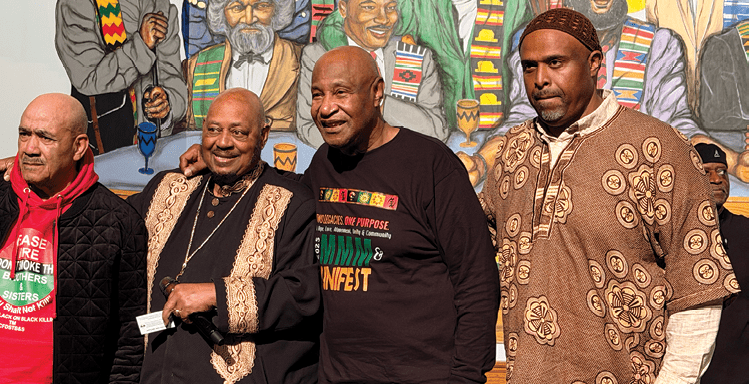
Over the week leading up to the October 16th anniversary, churches, community organizations, and local leaders across the D.C. area held commemorations honoring the 1995 march—one of the largest demonstrations in U.S. history, called for by Minister Farrakhan and the Nation of Islam.
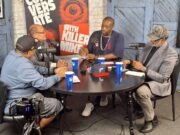
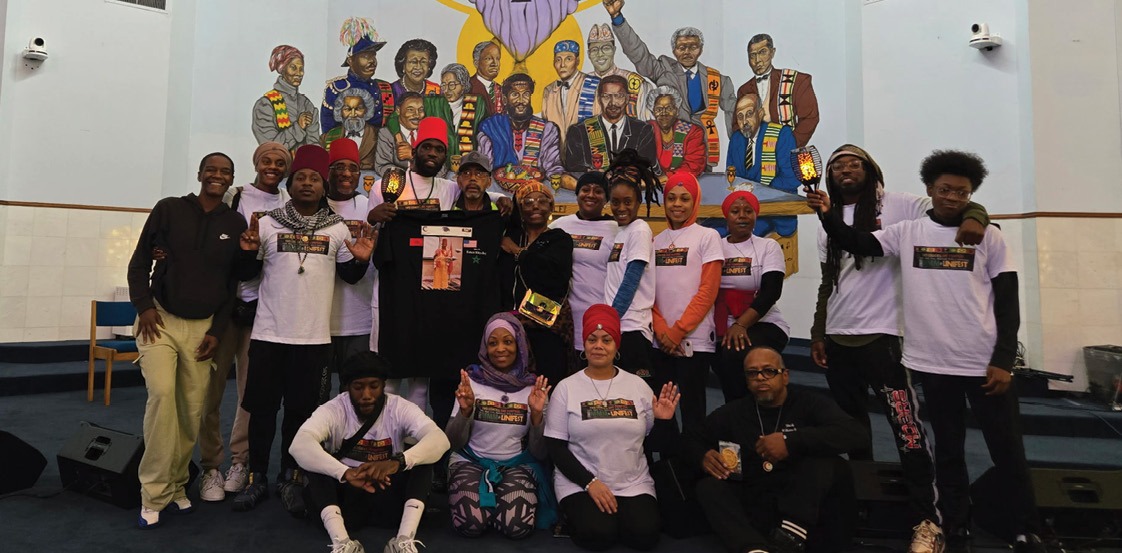
At Union Temple Baptist Church in Southeast D.C., the church’s senior pastor emeritus, Rev. Willie Wilson, with with Nation of Islam Mid-Atlantic Regional Student Laborers, including Student Regional Minister Abdul Khadir Muhammad and Student Regional Protocol Director Brenda Muhammad, organized a weeklong celebration filled with prayers for the city, a peace walk, and historical reflections.
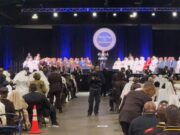
Participants gathered at various events, including a Torch Run, a day of fasting and prayer for atonement and reconciliation, and the return of the community festival Unifest. Rev. Wilson urged attendees to “recover the spirit” that guided the 1995 March—a collective responsibility for restoring family, faith, and community.
“So much has changed since that day,” Rev. Wilson said. “But the call remains the same. We needed each other then, and we need each other now.”
“We wanted to take this to the community,” Rev. Wilson told the media at a press conference. “We wanted to highlight the great history of this community. The Piscataway Indian Nation will be participating with us; they will do a prayer vigil. During the day on Oct. 16, we will have youth, women, and a focus on the Black family.”
Student Min. Khadir Muhammad reminded the audience about the Eight Steps of Atonement that Minister Farrakhan introduced at the March. “The Day of Atonement is established by God to help us achieve a closer tie to the source of wisdom, knowledge, understanding, and power. A perfect union, but God is the idea and the base of atonement.”
“The first step is to point out the wrong. Someone must point out the wrong when they find it in you or someone else. The idea is this: how do you treat the person who points out the wrong?”
Baltimore also hosted early morning interfaith prayers, a community breakfast, and afternoon gatherings, emphasizing that this anniversary was less about recreating a single monumental event and more about revitalizing its message in local contexts.
“I wasn’t at the Million Man March and have only heard stories. Being a member of Union Temple has helped me see the value of what was done,” Tarik Jackson Harrison told The Final Call. “I wish I had been there. But what I can do is duplicate the spirit of the March in what I do. I learned a lot from the speakers.”
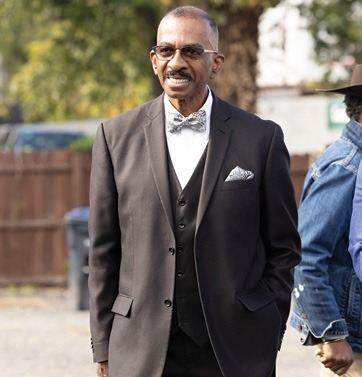
Reflecting on the march’s enduring meaning, many noted both the progress and the persistent inequities that have shaped the lives of Black Americans since 1995. Economic disparities, gun violence, and systemic barriers to opportunity remain pressing concerns—but so too does a deep well of resilience and faith.
The Day of Absence
Part of Minister Farrakhan’s plan for the Million Man March was a Day of Absence. Dr. Maulana Karenga, professor and Chair of Africana Studies, California State University-Long Beach, executive director of the African American Cultural Center (U.S.) and creator of Kwanzaa, wrote the event’s Mission Statement.
It begins, “The Million Man March and Day of Absence can only have lasting value if we continue to work and struggle beyond this day. Thus, our challenge is to take the spirit of this day, the process of mobilization and the possibilities of organization and turn them into ongoing structures and practices directed toward our liberation and flourishing as a people.”
He explained that the Million Man March/Day of Absence Mission Statement guided participants “to stay away from work, school, businesses, and from places of entertainment and sports and focus on the themes of atonement, reconciliation and responsibility in our lives and struggle.”
Community activist, journalist, and African Studies teacher Obi Egbuna was a 25-year-old member of the Pan African Youth organization when he was approached by Bob Brown, the field director for the Day of Absence, to help organize the D.C. Day of Absence.
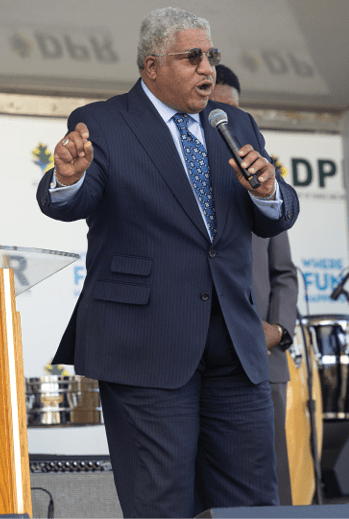
“When we came to deal with the Day of Absence, we would think of the most intelligent demonstrations that had ever been organized anywhere,” he said at Union Temple during the Spiritual Service and Recommitment Rally during the 30th Anniversary commemoration.
A call for unity
The Million Man March was the culmination of a series of men-only addresses by Minister Farrakhan. Minister Farrakhan spoke at the 1983 commemoration of the 1963 March on Washington. The Washington Post reported on September 3, 1983, that his remarks were “praised as perhaps the most significant and stirring of the day, according to march organizers and participants.”
Time passed, and with the influx of crack cocaine in the Black community, the destruction of the Black family was on full display. This prompted Minister Farrakhan to organize a “Stop the Killing Tour,” which led to men-only meetings focused on helping Black men improve as husbands and fathers.
He announced the March in New York. The formal announcement of the March was given by the Minister in February 1995 at the annual Saviours’ Day celebration.
Student Minister Jamil Muhammad paid tribute to Minister Farrakhan at the concluding event. “Minister Farrakhan is the quintessence of brotherhood, the archetypal brother. The prototypical brother, because when he has a major undertaking (the Million Man March)
He came and sat in the mayor’s office (Mayor Marion Barry), leaned over and said, ‘Brother mayor, I want to bring a million men to Washington.’ He didn’t come in saying ‘they coming. Get out the way’. No, he asked the mayor for his help.”
Women and the March
A sisterhood of service was created by the women who supported the Million Man March. Sister Claudette Marie Muhammad was the National Deputy Director of the March. D.C.’s first lady in 1995, Cora Masters Barry, organized women and the National Voter Registration Drive. Dr. Dorothy Height, head of the National Council of Negro Women, was one of the first to support the March. Fredrica Bey organized the state of New Jersey to send 50,000 men to the March.
Sister Charlene Muhammad was the National M.G.T. and G.C.C. Captain of the Nation of Islam at the time and she organized all of the women in the Nation of Islam mosques from around the country to help support the men and to work in the Local Organizing Committees. The poem written by Dr. Maya Angelou for the March was recited by 10-year-old Tiffany Mayo.
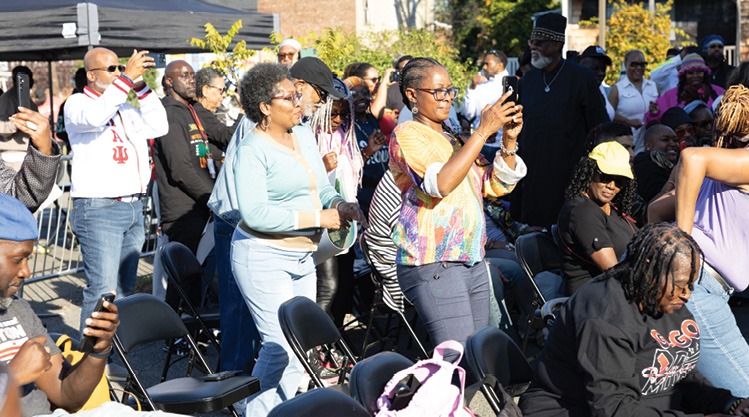
Mrs. Barry reflected on the March and spoke about the tremendous work her husband, then-Mayor Marion Barry, did. “For nine months, he (Mayor Marion Barry) turned the city over to the Million Man March organization, from housing, and office space, permits all of it.
Because he knew the march was important to not only our people, but to humanity, and in doing that, he did pay a price. Some people resigned from his cabinet, his boards, and commissions. He was excoriated in the press. Funders walked away, and he stood calm.”
Women played an important and significant role in supporting The Million Man March.
Mrs. Barry read the list of women who spoke that day, which included Dr. Dorothy Height, author Dr. Maya Angelou, Mrs. Barry, Dr. Betty Shabazz, Rosa Parks and Mother Tynnetta Muhammad.
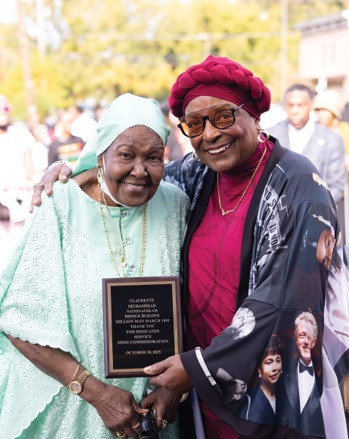
Sis. Claudette Marie Muhammad received a Bridge Builders award from Rev. Wilson.
Thirty years later, the spirit of brotherhood that once drew millions to Washington continues to ripple through the region—reminding many that the journey toward collective healing and justice is still unfolding.
