












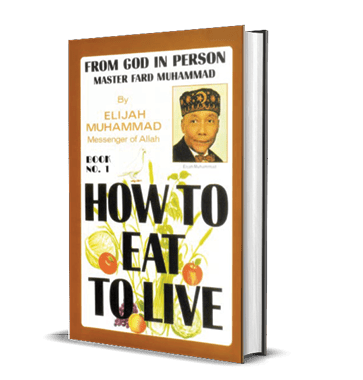
The Honorable Elijah Muhammad, Eternal Leader of the Nation of Islam, has long-warned about the dangers of alcohol consumption, writing on pages 21-22 of His book, “How To Eat To Live,” Book two, that “The government permits the deliberate making of alcoholic drinks which it knows are not good for a person who has no limitation on how much of it he drinks.”
Now, a new study indicates that drinking even low levels of alcohol may increase the risk of dementia. Published online by BMJ Evidence-Based Medicine, the new study is reportedly the most extensive combined observational and genetic study to date.
According to the study, even light drinking—generally thought to be “protective,” based on observational studies—is unlikely to lower the risk, which rises in tandem with the quantity of alcohol consumed, noted a BMJ Group press release.
According to the researchers from the BMJ study, current thinking has previously suggested that there might be an “optimal dose” of alcohol for brain health, but most of these studies have focused on older people and/or didn’t differentiate between former and lifelong non-drinkers, complicating efforts to pinpoint causality.
“This report is the largest study of alcohol and dementia to date. The genetic analyses are more novel than existing studies,” Dr. Anya Topiwala, senior clinical researcher at the University of Oxford, United Kingdom, told The Final Call via email.
She concurred that more studies have come forth about the dangers of alcohol when it comes to health, versus those from years ago, stating, “Yes, [there is] lots more evidence to suggest even small amounts of alcohol may cause harm. Larger samples means we can detect smaller effects than before.”
A recent Gallup survey indicates that the percentage of U.S. adults who say they consume alcohol has fallen to 54%, the lowest by one percentage point in Gallup’s nearly 90-year trend. This coincides with a growing belief among Americans that moderate alcohol consumption is bad for one’s health, is now the majority view for the first time, according to an August 13 online article, “U.S. Drinking Rate at New Low as Alcohol Concerns Surge,” published on news.gallup.com.
The belief that moderate drinking is bad for health rose to 53%, Lydia Saad, the author and Gallup’s director of U.S. Social Research, wrote. The latest results are from Gallup’s annual Consumption Habits survey, conducted July 7 through July 21. The bottom line is “Americans’ drinking habits are shifting amid the medical world’s reappraisal of alcohol’s health effects,” the survey concluded.
The Honorable Minister Louis Farrakhan, National Representative of the Most Honorable Elijah Muhammad, cautioned about the consequences of what he called “exceeding the limits.”
“The Honorable Elijah Muhammad was a Guide, a bearer of Good News and a Warner to Black people in America and the government and people of the United States. What was he warning America about?
He was warning America because America had exceeded the limits,” Minister Farrakhan said, in a message delivered August 15, 2004, titled, “Good News, Guidance and A Warning.”
“In the doing of evil, the American nation has outstripped every nation on earth, in that which Allah (God) condemns. If He speaks against alcohol, America is the greatest consumer of alcohol. If He speaks against drugs, America is the greatest consumer of drugs in the world,” Minister Farrakhan stated.
The BMJ study also noted that most studies have had limited inclusion of heavy or dependent drinkers, which restricts their power to detect the full range of alcohol’s effects, and that many studies have involved elderly participants, where cognitive decline may influence drinking patterns rather than the opposite—that is, reverse causation.
The study used two large and diverse sample groups: the Million Veteran Program in the USA (recruited from 2011 to the present) and the UK Biobank (volunteers aged 40–69 years from 2006 to 2010), and included a broad range of dementia phenotypes, rather than restricting focus to Alzheimer’s disease, as has been done in prior studies, researchers noted.
Approximately 560,000 participants were included in observational analyses and followed up from recruitment until either their first dementia diagnosis, death or the date of last follow-up (December 2019 for participants from the U.S. and January 2022 for those from the UK).
“Ethnic diversity in alcohol use and dementia risk has been understudied, but our analyses across European, African and Latin American ancestry populations observed similar risks associated with alcohol use disorder,” said the report’s authors.
Their study concluded that these findings provide evidence for a relationship between all types of alcohol use and increased dementia risk.
“While correlational observational data suggested a protective effect of light drinking, this could be in part attributable to reduced drinking seen in early dementia; genetic analyses did not support any protective effect, suggesting that any level of alcohol consumption may contribute to dementia risk. Public health strategies that reduce the prevalence of alcohol use disorder could potentially lower the incidence of dementia by up to 16%,” researchers wrote.
Dr. Abdullah Hassan Pratt, an emergency room physician at the University of Chicago Hospital, sees the dangers of alcohol and the damaging effects, such as how the brain, under long-term damage, is unable to formulate full thoughts in a moment, and one’s motor functioning becomes permanently “off,” and not just when they are drunk.
“We know the larger amounts and chronic use cause brain damage. … Large amounts and even the acute use causes brain damage in developing fetuses … and even small amounts, they’re finding now, in the Neonatal ward. It’s almost like the more we study it, the more we’re finding out in the most sensitive of brains that are developing, that it has an impact,” Dr. Pratt told The Final Call.
“What that shows us is that there is theory to believe that maybe we don’t understand the fullest extent of how small amounts of alcohol can affect even adult brains or even degrading brains as our brains do once we hit peak maturity and we get to our elder years,” he said.
One’s nutritional intake, hormone levels, and body’s resiliency change, he explained. Furthermore, stem cell counts decrease, all leading to change, and subsequently, the natural, small cognitive decline observed in American society, Dr. Pratt continued.

“And that’s what we’re all trying to prevent,” said Dr. Pratt. “That’s what ‘How To Eat To Live’ talked about, that longevity. That longevity of life doesn’t actually just mean how long can I keep somebody’s body alive. The primary thing other than just your heart and body is do I have my mental faculties?” he added, referring to the Most Honorable Elijah Muhammad’s consistent, long-time warning about the dangers of consuming alcohol.
According to Dr. Pratt, prior research that showed that smaller amounts of alcohol were thought to be “protective” mostly studied wine and red wine. Usually, those controlled for other factors, for example, whether that person was living an otherwise completely healthy lifestyle.
Previous studies indicated that one glass of red wine a day could protect one’s heart, even from getting dementia and prolong life, stemming from the belief in the antioxidant effects that red wine may have, in addition to other things that may reduce toxins, explained Dr. Pratt. That includes blueberries and dark fruits, because of oxidative stress on the body, meaning when the body typically undergoes metabolism or produces toxins or pollutants from normal daily activity, he said.
“That is different than looking at any alcohol, just ethanol consumption, and saying that if we were to isolate that factor in itself, aside from any protective factor of the antioxidants, aside from your lifestyle and anything else you do, and we just say does this amount help you? Is it neutral, or does it hurt you?” explained Dr. Pratt.
“We’re saying, though we don’t know if it’s causative, they’re (researchers) seeing a correlation between even smaller amounts of alcohol consumption. … I think the point here is that some people may use the take an inch take a mile type of approach to allowing themselves to consume alcohol, thinking that ‘it’s good for me.’ That’s what I hear from patients,” he said.
The Most Honorable Elijah Muhammad was clear about the dangers of alcohol, which scientists are now confirming. “Do not burn your hearts and brains up with alcoholic liquids,” He writes on page 67 of “How To Eat To Live,” Book two.
In the chapter titled, “Fasting, Eating Right Foods, Keys To Long Life,” the Most Honorable Elijah Muhammad addresses medical scientists and doctors. “They know that tobacco, hard whiskey and alcohol are not good for you and will shorten your life and kill you. But most of them are too weak themselves to stop drinking or smoking or chewing tobacco. So they do not teach you that tobacco and alcoholic drinks—made into what is known as whiskey, beer and wine—are not good for you, although they know it to be true.
“They will say, ‘Yes, it is good for you if you are temperate.’ But, they know that once you get started on that stuff, it is such an enemy that it just takes you into its power, and it is almost like trying to break an iron chain to get away from the habit,” the Honorable Elijah Muhammad writes.
