








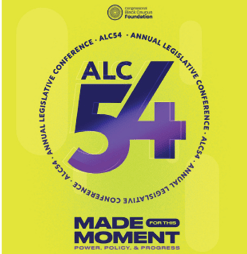

The Congressional Black Caucus Foundation (CBCF) recently held its 2025 Annual Legislative Conference (ALC) in Washington, D.C. The gathering attracted a “who’s who” in Black political circles from around the country, including strategists, consultants, elected officials on the local, state, and federal levels, entertainers, civil rights activists, media outlets and more.
The ALC attracts thousands of people, with last year’s gathering bringing 16,000 to the nation’s capital. This year’s gathering was projected to also bring thousands.
The Congressional Black Caucus (CBC) was founded by 13 members of Congress, including the late Shirley Chisolm (D-NY) and the late Charles Rangel (D-NY), who passed away earlier this year. The CBCF is the nonprofit arm of the CBC.
According to the CBCF’s website, “The Annual Legislative Conference is the leading public policy convening focused on issues impacting African Americans and the global Black community.
The ALC is a unique platform where thought leaders, legislators, influencers, and concerned citizens converge to discuss and address critical issues, forge partnerships, and promote the political, economic, and social advancement of Black communities.”
This year’s convention theme was “Made for this Moment: Power, Policy, & Progress.”
As America’s political climate becomes more contentious and acrimonious, Black folks, as usual, are left with the short end of the stick. Our people are disregarded by one party and taken for granted by the other.
This is despite the fact that there are more Black elected officials than ever, and the CBC has a record 62 members who were sworn in during the most recent Congress.
Politics has its place as a tool, but engagement must be strategic and carried out by those with an unapologetic focus on helping Black people and the underserved in our communities.
Being “political slaves” to big money Political Action Committees and capitulating to lobbyists and corporate billionaires and millionaires has left the most vulnerable of Americans wondering who will truly fight for them.
The Most Honorable Elijah Muhammad wrote in His book, “Message To The Blackman In America,” published in 1965, in the chapter, “Put Muslim Program To Congress,” that “It is difficult for me to advise my followers on taking part in the corrupt politics of our enemies, who are in complete control of the political affairs.”
However, He also explained the important qualities and characteristics that Black people should look for in their politicians.
“There are many Black men and women who make splendid politicians. They could accomplish considerable good if they—like the White politician and his people—were given proper and equal recognition and justice for themselves and their people.
“If our politicians are to serve us, they must have no fear of the White man when they plead our case in the White courts before White judges.”
Today, people are becoming increasingly frustrated with their elected officials. A 2024 Pew Research Poll revealed “more than 80 percent of Americans believe elected officials don’t care what people like them think.”
The number was slightly higher when it came to Black people who were surveyed, with 82% saying elected officials don’t care what they think. The American people’s frustration with politics and politicians in a system that has historically been influenced by big money and back-door deals, especially at the expense of Black folks, is growing.
The Pew poll also revealed that “Seven-in-ten Americans say ordinary people have too little influence over the decisions members of Congress make. And majorities say that large employers in their districts, lobbyists and special interest groups, and wealthy donors have too much influence.”
Once again, Black people are being urged to look ahead to the 2026 mid-term elections as panic and frustration mount with certain decisions and policies being implemented by the current presidential administration.
Economic woes, including budget cuts to programs that help the poor, reductions in the Department of Education, and skyrocketing prices on goods and services, as well as other harsh realities that impact daily lives, are a very real concern.
Politics and politicians do have their place. However, while the CBCF Annual Legislative Conference is underway and Black people are elected to positions of political influence, what must not be overlooked, overshadowed, or forgotten is the proper, practical and divine solution to our plight.
During a 2010 radio interview, the Honorable Minister Louis Farrakhan was asked by scholar and author Dr. Michael Eric Dyson about the need and purpose of political engagement for Black people.
Minister Farrakhan laid out the aim and purpose while perfectly explaining that politics is not the “end all be all” for Black people. Economics, as taught by the Most Honorable Elijah Muhammad, is the key, the Minister explained.
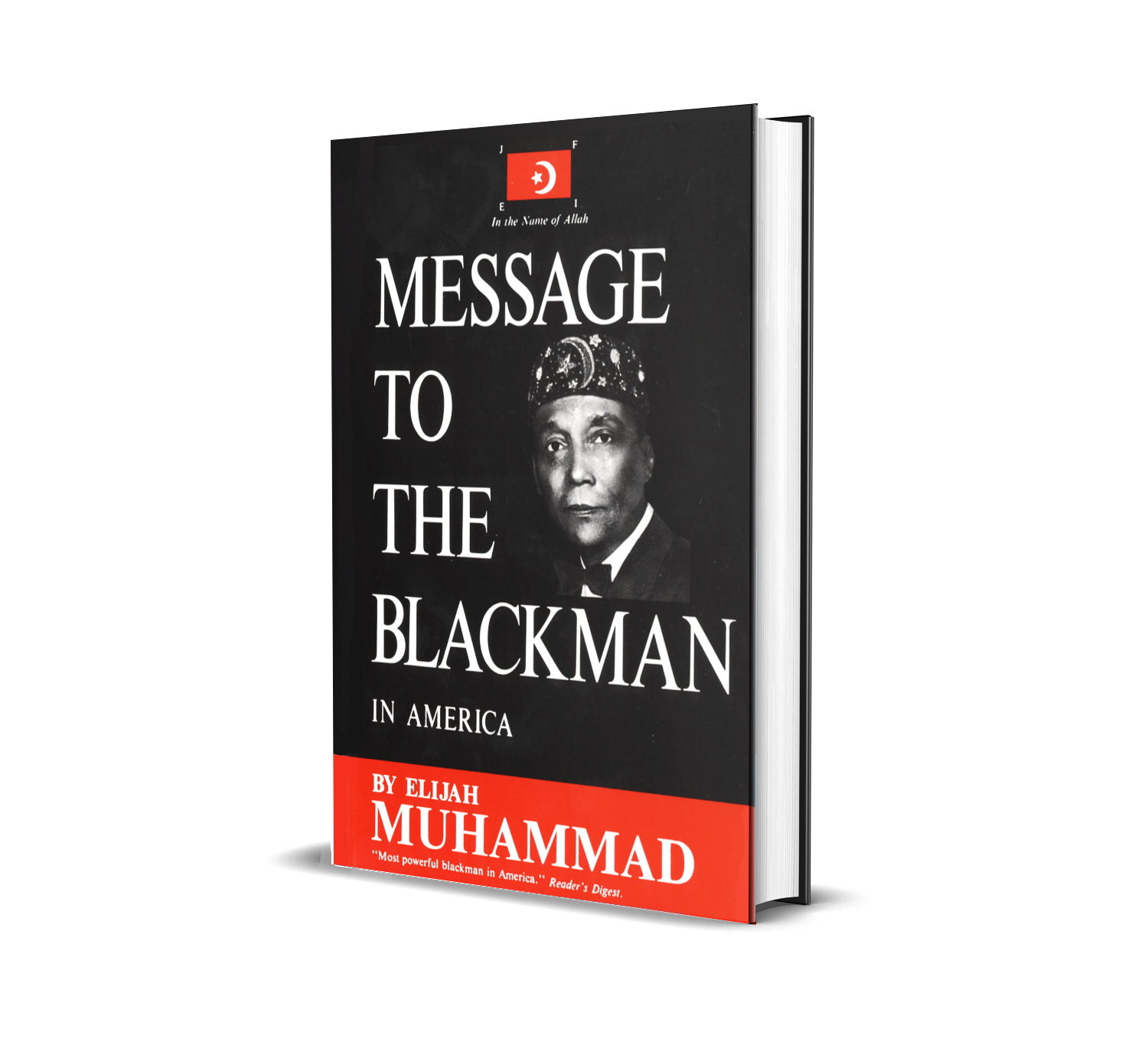
“The most successful of Caucasian people are the members of the Jewish community. And if we look at how they became wealthy and powerful, they are politically powerful now, but they didn’t start politically powerful—they went after economics.
And, as the Honorable Elijah Muhammad said, ‘Politics without economics is symbol without substance.’ And so, what we need to do is see how others capitalized on what they had in America, and used it to advance a people rather than advance individuals,” Minister Farrakhan said.
“Our tax dollars are interwoven with the tax dollars of every other citizen of America; and therefore, we cannot abdicate a political responsibility to put pressure on government to yield, to create opportunity, to create an atmosphere; to try to create a level playing field so that we have as much of a chance to advance in the society as others,” Minister Farrakhan continued.
“And we can’t do that without political inclusion, political activism—but activism on a political front must be matched by activism on the economic front.
Otherwise, we’ll have political power that looks powerful, but in the end, if you can’t back it up with economic power, then our voice is very, very weak in the political sphere in America,” he added.
In the same chapter of “Message To The Blackman In America,” the Most Honorable Elijah Muhammad explained that the Civil Rights Bill and integration “will not stand and can never bring independence to you and your people, no matter who is President.”
“The wisest and surest way to success is to unite behind me. I assure you that, with the help of Allah, you will accomplish your goals—money, good homes, and friendships in all walks of life,” He wrote.
Brothers and sisters, regardless of who is in office, we have a duty and responsibility to one another and to our communities. There is no need to be afraid or panic if we work together in unity for the advancement of our people.
The Most Honorable Elijah Muhammad gave us the blueprint; the Honorable Minister Louis Farrakhan has continued to exemplify it. Now it is up to us.
