









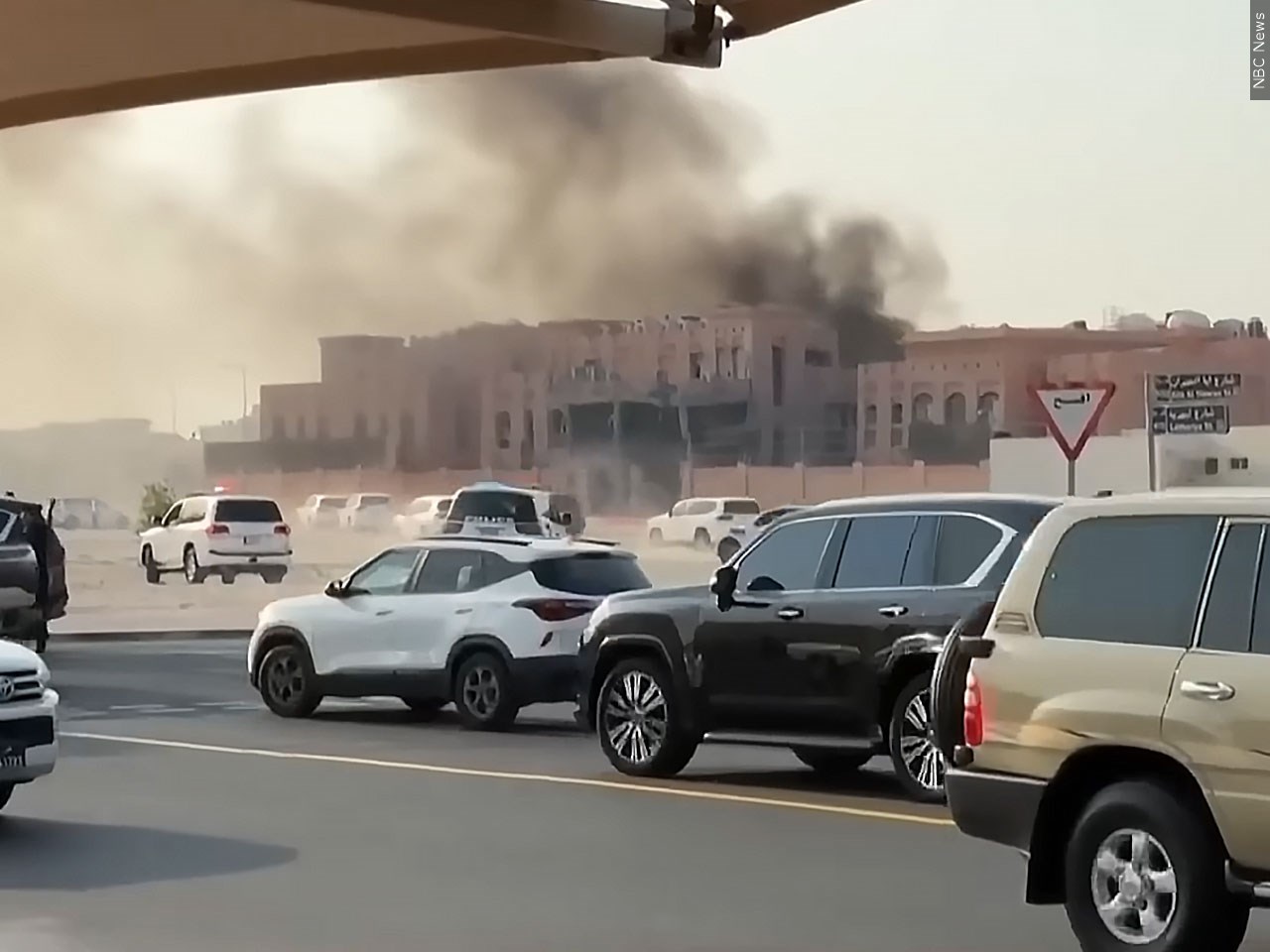
Israel’s tactic of targeted assassinations took a dramatic turn with a bombing attack on residential buildings in Doha, Qatar, where members of Hamas’ Political Bureau were staying. The intended targets were Hamas’ top leadership deliberating on a ceasefire proposal advanced days before by the United States. The airstrikes occurred on Sept. 9 killing six people and injuring several others, said Qatari officials. According to media outlets quoting Hamas, all of the targeted leaders survived the attack.
The strike on Qatari soil marks the latest expansion in Israel’s war, which is spreading across multiple fronts. Analysts and observers told The Final Call that bombing the small Gulf oil nation represents a major escalation in the nearly two-year-old conflict when Israel began its genocidal campaign against the Palestinian people.
“This is a significant escalation, not because Israel has not been attacking a bunch of countries across the region, they have been,” said Phyllis Bennis, director of the New Internationalism Project at the Institute for Policy Studies in Washington, D.C.
Over the course of three days starting on Sept. 9, Israel carried out strikes in Palestine, Lebanon, Syria, Tunisia, Qatar and Yemen.
“So this is just a further escalation, but it’s a very serious one, because Qatar is one of the closest U.S. allies in the region,” explained Ms. Bennis.
America has been Israel’s unwavering financial, political and military backer, despite the illegal occupation, forced displacement, and tactics like weaponized starvation and a genocidal war that has slain over 64,656 Palestinians and at least 404 people who died of starvation. Tens of thousands more are injured.
“But this is something different,” continued Ms. Bennis. This isn’t just about Palestine, Gaza or going after Hamas, she explained.
With Qatar such an important U.S. ally, “it’s a statement about how little regard the Israeli government—and I wouldn’t say just Netanyahu—the Israeli government has for U.S. interests and opinion,” explained Ms. Bennis
Severe reaction to the attack
Qatari officials denounced the latest Israeli aggression as a “criminal” and “cowardly” act of “state terrorism,” an infringement of Qatar’s sovereignty and clear breach of international law. The Qatari government did not mince words replying to Israel.
“While the State of Qatar strongly condemns this assault, it confirms that it will not tolerate this reckless Israeli behavior and the ongoing disruption of regional security, nor any act that targets Qatar’s security and sovereignty,” the Qatari foreign ministry said in a statement.
Ibrahim bin Ali Al-Mohannadi, the Minister of Justice and Minister of State for Cabinet Affairs said in a Sept. 10 statement, that the attack exposes Israel’s belligerent posture.
“The international community must take a strong stance and impose decisive measures to stop these reckless and irresponsible Israeli actions that threaten regional security and global peace,” stated Mr. Al-Mohannadi.
The Qatar government declared the Israeli strikes “must not be overlooked” and is marshalling all available tools to respond beyond only statements and condemnations. Mr. Al-Mohannadi said a legal team was formed to pursue legal measures against Israel for its actions.
Hamas said the move reveals the criminal nature of the Israeli occupation and its desire to undermine any chances of reaching an agreement. Hamas accused Israel of acting with direct support from the U.S.
Khaled al-Qaddoumi, Hamas’s representative in Tehran said the assassination attempt on the leaders failed and accused Washington of paving the way for the attack under the guise of ceasefire talks, according to Al Jazeera.
For the war that ignited 23 months ago between Israel and Hamas, Doha has been the mediating center for negotiations between the Palestinian group and the occupier state.
Israel bombing Qatar jeopardizes ongoing talks and efforts to secure the release of Israeli captives taken at the start of the conflict.
A White House statement on Sept. 9, said it was informed of the attack by the U.S. military and President Donald Trump directed his Special Envoy Steve Witkoff to inform the Qataris of the imminent attack, which he did, said the statement—a claim Qatar strongly denies.
“The statements being circulated about Qatar being informed of the attack in advance are baseless,” said Foreign Ministry Spokesperson Majed al-Ansari. “The communication received from one of the American officials came during the sound of explosions,” he said, reported Al Jazeera.
“Unilaterally bombing inside Qatar, a sovereign nation and close ally of the United States … does not advance Israel or America’s goals,” said a White House statement.
Israel made the move as antagonistic rhetoric from Tel Aviv and Washington intensified toward Hamas. Days before the strikes, President Trump threatened Hamas leaders with an ultimatum to take America’s new deal. He said: “This is my last warning; there will not be another one!”
In a call to Sheikh Tamim bin Hamad Al Thani, the Qatari Emir, the president assured the Qataris that such an attack would not happen again. But notwithstanding President Trump’s assurance, 24-hours later Israeli Prime Minister Benjamin Netanyahu stated Israel’s willingness to attack again.
Netanyahu threatens more strikes
In video remarks, Prime Minister Netanyahu further heightened tensions by warning of possible additional strikes in Qatar, which hosts a Hamas headquarters.
“I say to Qatar and all nations who harbor terrorists, you either expel them, or you bring them to justice, because if you don’t, we will.” Mr. Netanyahu said. Taking umbrage to Mr. Netanyahu’s comments, Qatar’s Prime Minister Mohammed bin Abdulrahman bin Jassim Al Thani dismissed them as duplicitous from a leader lacking credibility.
“We don’t accept, first of all, such a threat coming from someone like Netanyahu,” Mr. Al-Thani told CNN on Sept. 10, in an interview also posted on Qatar’s foreign ministry X page.
“He’s calling about bringing them to justice. He needs to be brought to justice. He’s the one who’s wanted by the ICC (International Criminal Court),” retorted Mr. Al-Thani.
He said Mr. Netanyahu has no credibility lecturing the world about the law while Israel notoriously flouts international law, including “starving people in Gaza,” and undertaking “rogue actions” throughout the region.
Qatar’s foreign ministry, responding on X, called Prime Minister Netanyahu’s accusation that Qatar harbors terrorists by hosting a Hamas office deceitful, noting the country’s longstanding role as a mediator in regional and international conflicts. When the Hamas movement’s office was opened in Doha, it was based on direct coordination and requests from both Washington and Tel Aviv. The office was used for years as a primary communication channel regarding Gaza.
“Netanyahu is fully aware that the hosting of the Hamas office took place within the framework of Qatar’s mediation efforts requested by the United States and Israel,” the ministry said on X.
“The negotiations were always held in an official and transparent manner, with international support and in the presence of U.S. and Israeli delegations. Netanyahu’s insinuation that Qatar secretly harbored the Hamas delegation is a desperate attempt to justify a crime condemned by the entire world,” said the ministry.
The attack sabotaged hope
In the CNN interview, Mr. Al-Thani reasoned Israel’s attack “undermined the negotiations in their entirety” and “directly thwarts American efforts aimed at achieving stability.”
The timing came days before a scheduled meeting of the mediators on the U.S. proposal.
Mr. Al-Thani told CNN that ironically on the same morning of the attack, he met with one of the captives families, carrying a message that the families were counting on the mediation and had no other hopes. “What Netanyahu did yesterday (Sept. 9), he just killed any hope for those hostages,” said Mr. Al-Thani.
The current proposal being pushed by President Trump appears to call for a release of all Israeli captives upfront, in exchange for an unspecified number of Palestinian captives in Israeli prisons, and then only negotiations—but no permanent end to the war, said an Al Jazeera Explainer on Sept.8.
“There is very good reason not to trust either Netanyahu or Trump at this moment on forcing Israel to stick to its word,” said Omar Rahman, an expert on Israel-Palestine with the Middle East Council on Global Affairs, a think tank in Doha, Qatar.
“That is especially true in light of their public plans to ethnically cleanse Gaza and turn it into an American real estate development,” he told Al Jazeera.
Condemnatory reactions from the region and the world
Mahdi al-Mashat, head of the Houthi Supreme Political Council, said Arab and Muslim countries must “pay attention” to Israel’s plans before it’s too late, according to Al Jazeera. “We warn against a formula for the violations of all countries in the region,” al-Mashat said. “What happened in Doha will happen again and more in the rest of the countries if we do not all unite in confronting the Zionist threat.”
The South African government unequivocally condemned the “illegal and unprovoked” attack carried out by the Israeli Defense Force in Doha, Qatar, in a statement issued by the Department of International Relations and Cooperation.
Iranian President Masoud Pezeshkian condemned Israel’s aggression against Qatari territory as “illegal, inhuman and anti-peace.”
“This terrorist act reflects the fact that the Zionist regime recognizes no boundaries for crime and terror, and on the other hand, it sabotages any attempt at diplomacy,” he said.
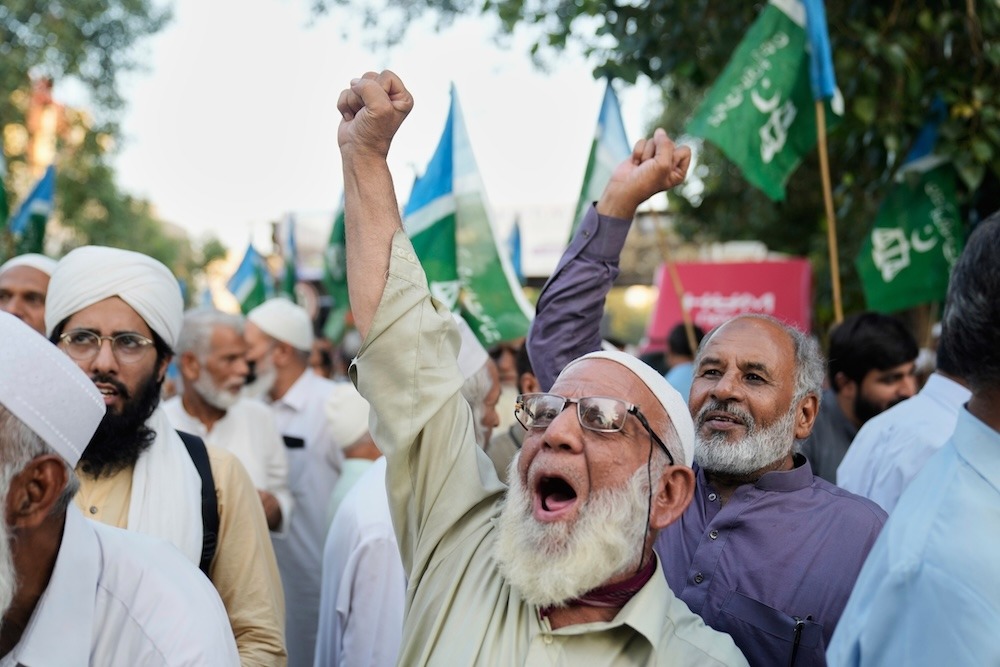
Saudi Arabia condemned the attack as a “flagrant violation of the sovereignty of the sisterly State of Qatar,” warning of “grave consequences” from continued Israeli transgressions. Pakistani Prime Minister Shehbaz Sharif described the attack as an “unjustified and aggressive violation of sovereignty” that could destabilize regional peace.
Türkiye condemned the attack, saying it reflects Israel’s lack of interest in resolving the Gaza genocide. Jordan’s Foreign Minister, Ayman Safadi, described it as an extension of Israel’s “brutal aggressiveness” that endangers regional stability.
With Israel expanding the fire of war and destruction, it is becoming more isolated as a pariah state. But what happens from there remains to be seen.
“So, what’s going to be the consequences? I think it’s a bit too soon to know,” said Ms. Bennis.
