








WASHINGTON, D.C.—Hours after President Donald Trump’s 30-day emergency declaration placing the D.C. Metropolitan Police Department under federal command recently came to an end, the city continued to simmer with a mix of protest, legal pushback, and community tension.
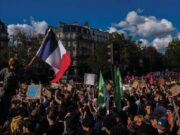
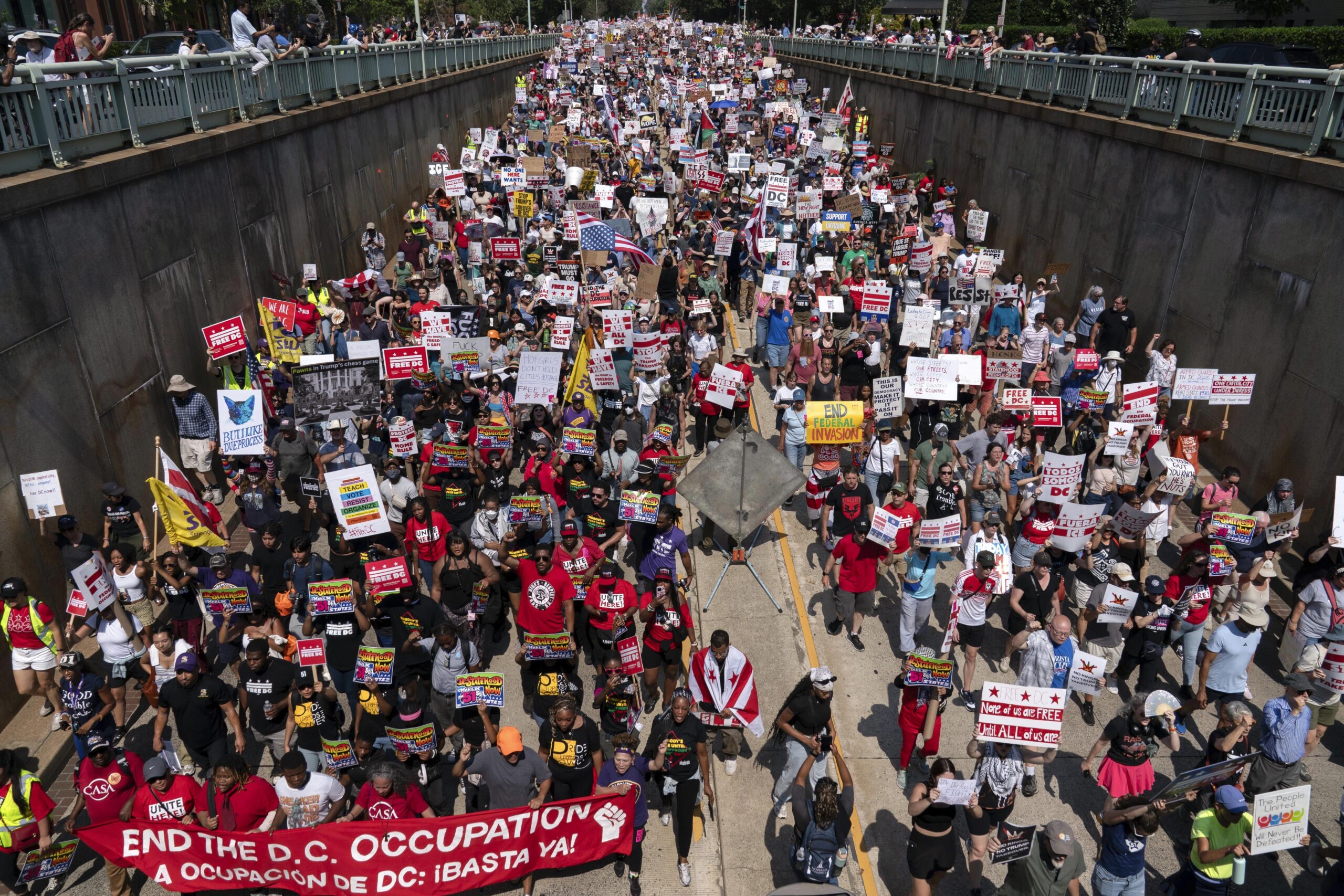
Thousands gathered downtown before the end of armed troops on the streets for the “We Are All D.C. rally.”
Organized by groups such as Free DC, ACLU, and All Souls Unitarian Church, participants carried banners reading “End the D.C. Occupation” and marched from Malcolm X Park to Freedom Plaza on Sept. 6. They condemned the federal deployment of law enforcement and National Guard troops—calling it an insult to D.C.’s autonomy and home rule.
The protesters argued the 30-day emergency control of the city’s police amounted to a militarization of the capital, despite the lowest crime rates in years.
“Trump’s deployment of thousands of National Guard troops to the District of Columbia aren’t affected by the deadline and will remain on the city’s streets,” reported USA Today.
Lisa Jenkins works at a D.C. nonprofit. She came to the rally because she was “disgusted” to see the National Guard downtown, “protecting monuments.” She told The Final Call, “These past few weeks have been like watching a movie or something from another country.”
She added, “I’m a native Washingtonian. Never in my wildest dreams did I think this would happen in my city. We have to resist the president’s takeover. If it works here, he will take it somewhere else. He’s already threatening to take it to Chicago and Baltimore. Why? We have to resist this takeover.”
President Trump recently warned Chicago about plans to dispatch ICE (U.S. Immigration and Customs Enforcement) agents to deport suspected undocumented immigrants.
“Chicago [is] about to find out why it’s called the Department of WAR,” the post continued.
On September 4, the D.C. Attorney General, Brian Schwab, filed a lawsuit labeling the National Guard deployment a “military occupation,” contending it violated the District’s Home Rule Act and federal restraints such as the Posse Comitatus Act. The lawsuit argues that the deployment, which now involves more than 1,000 troops, is an illegal use of the military for domestic law enforcement.
“Armed soldiers should not be policing American citizens on American soil,” Mr. Schwab posted on X. “D.C. did not request or consent to the deployment of National Guard troops. Yet there are 2,300 National Guardsmen on our streets in military gear, carrying weapons, and driving armored vehicles.”
Community members responded to the deployment with a blend of large protests and grassroots expressions of dissent from the very beginning. The resistance reverberated across neighborhoods.
Mark Fitzpatrick, a former U.S. diplomat who has lived in D.C. for about a decade, recently told The Associated Press that he’s concerned about the “authoritarian nature” of the way the administration is treating D.C. “Federal agents, national guards patrolling our streets, that’s really an affront to the democracy of our city,” he said, adding that it’s worse for D.C. residents due to their lack of federal representation.
Mayor Muriel Bowser recently issued an order to continue the work of an emergency operations center that the city set up in response to the law enforcement surge. The mayor said police would collaborate with federal law enforcement agencies and credited the surge with reducing crime in the city, including an 87% decrease in carjackings.
As of September 10, the federal control over D.C.’s police formally ended; Congress allowed President Trump’s temporary takeover of Washington’s police department to expire as the 30-day limit came to an end. However, several troops have received orders to stay until December. City leaders, legal experts, and activists remain watchful as Congress considers the fate of legislation that could reshape D.C.’s law enforcement and justice structures.
Meanwhile, civic resistance persists—founded on the belief that D.C.’s democratic identity must be protected from overreach. What started as a temporary measure has developed into a wider struggle over authority, representation, and the future of the nation’s capital.
