









Washington has barred Palestinian Authority (PA) President Mahmoud Abbas and more than 80 officials from the Palestinian Liberation Organization (PLO) and the PA from attending the United Nations,
Blocking their visas ahead of the 80th General Assembly session starting Sept. 9, with high-level debates set for Sept. 24. The move was announced by the U.S. Department of State on Aug. 29.
“It is in our national security interests to hold the PLO and PA accountable for not complying with their commitments, and for undermining the prospects for peace,” said a State Department statement.
The statement demands that the groups “must consistently repudiate terrorism, and end incitement to terrorism in education, as required by U.S. law and as promised by the PLO.”
However, critics argue the move is political punishment and the latest in a long string of U.S. obstructions using its veto power to shield Israel’s accountability at the UN.
For some, through weaponizing visas, Washington is reasserting itself as a gatekeeper against Palestinian self-determination, particularly as momentum builds globally for recognition of Palestinian statehood, which President Donald Trump’s administration opposes.
In reaction, PA President Abbas’ office urges the decision be rescinded. Besides Mr. Abbas’ annual address, the delegation was due to participate in an international conference focused on Palestine statehood.
“We call upon the American administration to reverse its decision. This decision will only increase tension and escalation,” Nabil Abu Rudeineh, Palestinian presidential spokesperson, told The Associated Press in Ramallah on Aug. 30.
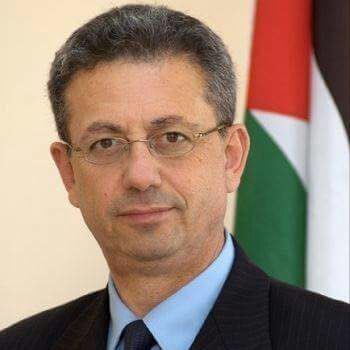
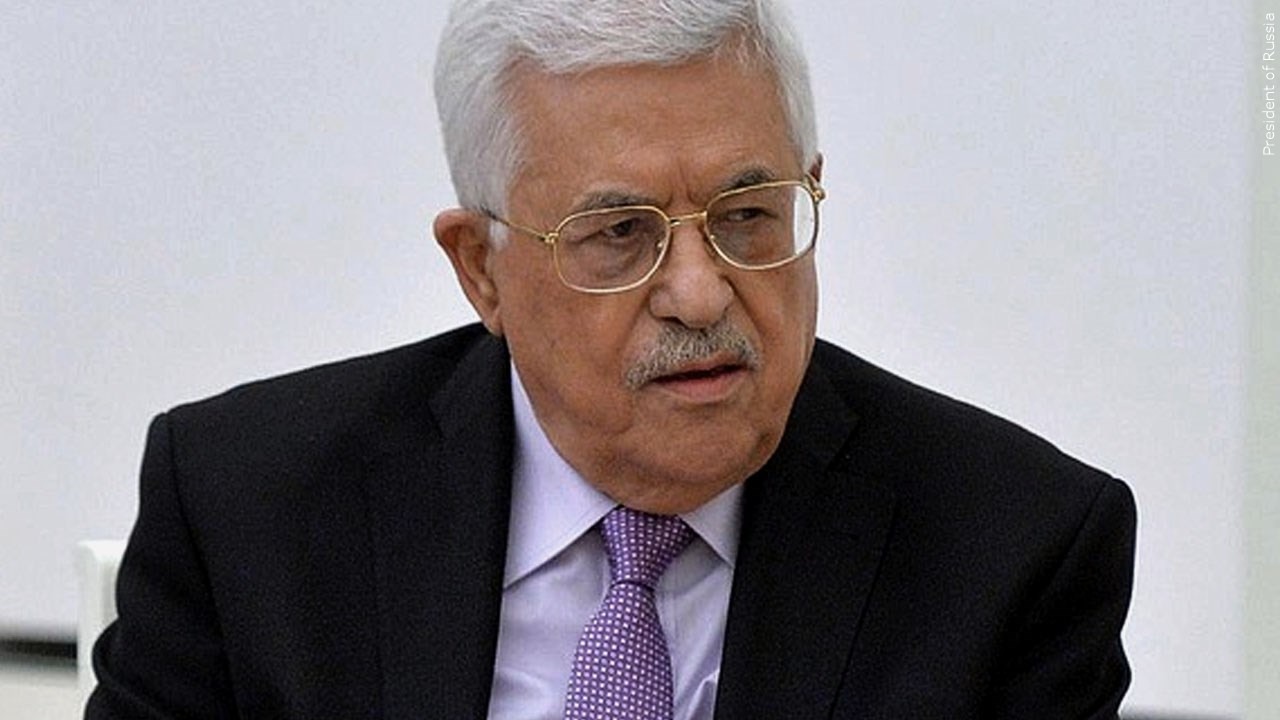
Photo: MGN Online
In addition, other Palestinian leaders denounced the Trump administration for targeting Palestinians rather than holding Israel accountable for its atrocities.
“Instead of punishing Israel, the criminal aggressor that is committing genocide and collective punishment and starvation of the Palestinian people, Trump’s administration is punishing the victims, the Palestinians,” Mustafa Barghouti, general secretary of the Palestinian National Initiative, told the Associated Press.
“Maybe it is also time for the Palestinian Authority to realize that it is an illusion to think that the United States could be a mediator between Palestinians and Israelis,” he added.
Mr. Barghouti reasoned that the U.S. is also reacting to the growing global recognition of Palestine and Israel’s increasing isolation due to its war crimes.
Condemnation also came from around the world. The Ministerial Committee formed by the Joint Arab-Islamic Extraordinary Summit on Gaza urged Washington to “reconsider and reverse” its decision, reported Xinhua News Agency.
In an Aug. 30 statement following a meeting in Amman, Jordan, the committee voiced “deep regret” over the decision and stressed that the move contradicts obligations under the UN Headquarters Agreement. Which guarantees the rights of Palestine, a UN permanent observer state, to participate in UN activities.
The committee, established in November 2023, includes the foreign ministers of Saudi Arabia, Egypt, Qatar, Jordan, Bahrain, Türkiye, Indonesia, Nigeria, and Palestine, along with the heads of the Arab League and the Organization of Islamic Cooperation.
Qatar News Agency reported that foreign ministers of the 27-member European Union also called on Washington to “reconsider” the move. The bullish move toward the Palestinian leadership reflects a pattern of U.S. antagonism toward any party not totally compliant with U.S. foreign policy objectives.
In past actions, the U.S. House of Representatives passed legislation to place sanctions on the International Criminal Court (ICC), over an ongoing investigation of U.S. military and intelligence personnel for alleged war crimes, committed during the decades-long war in Afghanistan that ended in 2021.
In addition, there is Washington’s angst over ICC arrest warrants for Israeli Prime Minister Benjamin Netanyahu and former Defense Minister Yoav Gallant. Neither the U.S. nor Israel are signatories to the ICC.
Critics argue that both countries are settler-colonial states with a track record of rights violations and blocking accountability on the world stage. Slapping such sanctions and threats waxes against international protections against tactics of intimidation and reprisal.
Human Rights Council Resolution 36/21(2017) and the UN Declaration on Human Rights Defenders reaffirm the right of everyone, individually and in association with others, to unhindered access to and communication with international bodies.
Notwithstanding the visa revocation comes while the 80th session of the United Nations General Assembly (UNGA 80) was going to be used as the forum that several nations, namely Australia, Canada, France, and the United Kingdom pledged to recognize Palestine as a state.
As of mid-2025, 147 UN member states already officially recognize the State of Palestine. In contrast, the U.S. does not recognize the State of Palestine, although a Reuters/Ipsos poll conducted Aug. 13-18 showed that 58% of Americans polled said Palestine should be recognized as a country by all UN members.
