

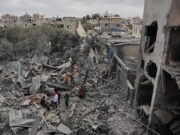



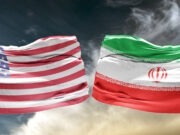

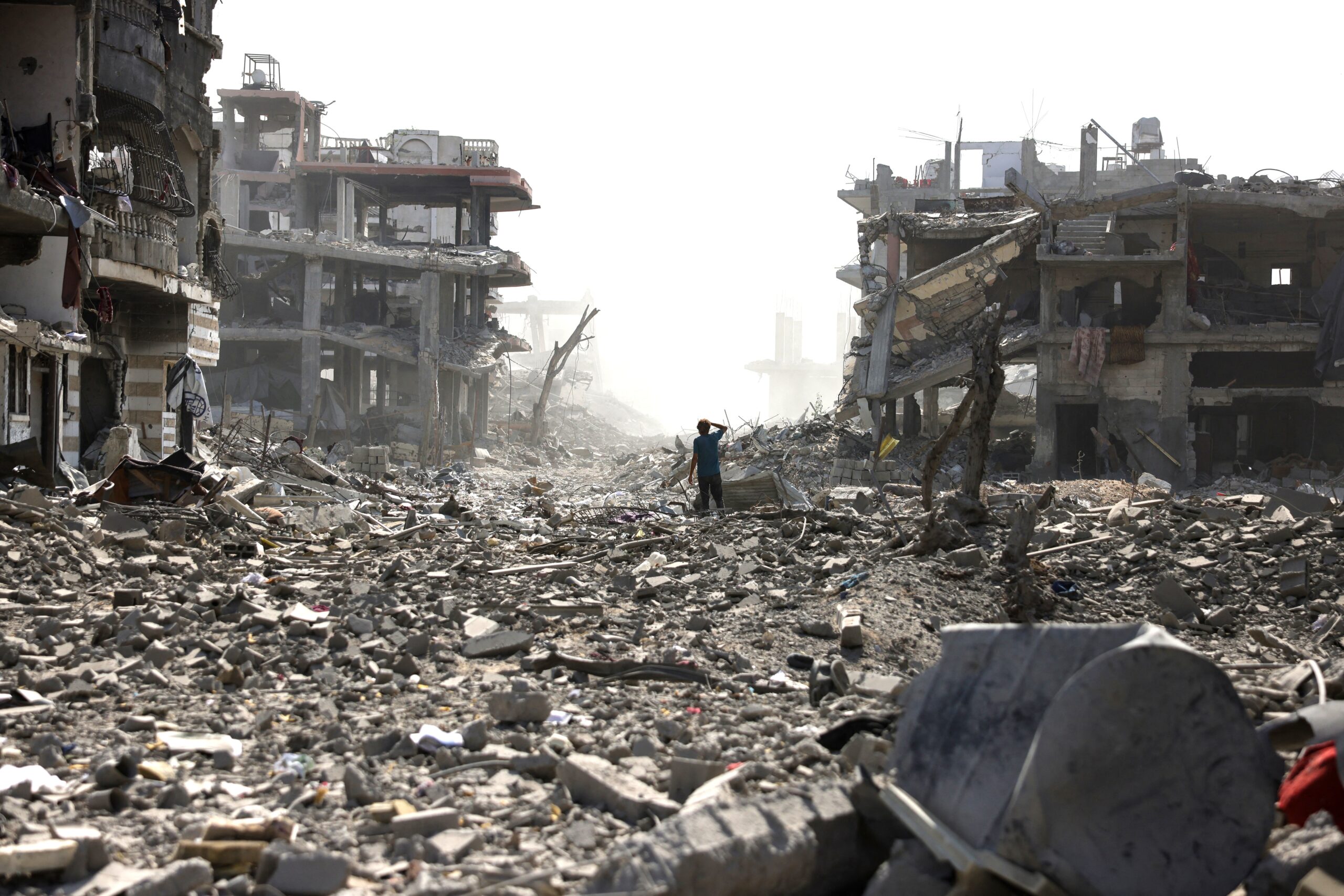

International anger at Israel’s unprecedented atrocities in its war on the Palestinian people is mounting, with growing calls to end the conflict as it nears two years this October 7.
At the anger of Israel and its chief backer, the United States, several Western nations, including France, Australia, Canada, Portugal, the United Kingdom, and Belgium, are set to join more than 140 countries in recognizing Palestinian statehood. A formal announcement is expected during September’s annual United Nations General Assembly in New York.
However, despite verbal condemnation, mounting demonstrations, even within Israel, and capitals worldwide, Israel has doubled-down on its extreme behavior—amplifying carnage in Gaza, intensifying repression across the occupied West Bank and East Jerusalem, and widening the warfront to include Yemen.
For some observers and organizers, Israel’s reaction is unsurprising to what they say is only a symbolic recognition of statehood.
“They could be doing more … words are cheap,” said Muhammad Sankari, spokesman for the U.S. Palestinian Community Network-Chicago (US PCN), referring to nations that decry Israel’s war conduct on one side but maintain relations with the occupier on the other side.
“Recognizing the state of Palestine that doesn’t even exist in any real material way does nothing for the Palestinian people,” he told The Final Call. “If these countries wanted to make a real impact, they could level sanctions against the State of Israel,” he added.
While the wave of recognition marks a diplomatic shift, some see the gesture as hollow without real impact on the suffering among Palestinians.
He argues that Israel’s actions, including annexation and ethnic cleansing, are supported by the U.S. and Europe, aiming to remake the Middle East. Mr. Sankari said Israel cannot survive without being propped up by America, Europe and “reactionary Arab” regimes.
Other activists like Manla Mandela, the grandson of Nelson and Winnie Mandela, agreed, telling Reuters that is what worked against White minority rule in apartheid in South Africa.
“Many of us that have visited the occupied territories in Palestine have only come back with one conclusion—that the Palestinians are experiencing a far worse form of apartheid than we ever experienced, said Mr. Mandela. “We believe that the global community has to continue supporting the Palestinians, just as they stood side by side with us,” he said.
After an intense struggle, including sanctions by other nations, apartheid in South Africa ended in 1994. “They isolated apartheid South Africa and finally collapsed it,” Mr. Mandela told Reuters. “We believe that the time has come for that to be done for the Palestinians.”
Israel accustomed to acting with impunity, responded to the nations’ recognition of Palestinian statehood by furthering its expansionist agenda of illegal settlements in the occupied West Bank and complete take-over of the Gaza Strip.
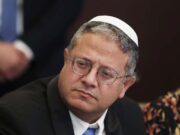
In a news conference on Sept. 3, Israel’s far-right Finance Minister Bezalel Smotrich said annexation maps were being drawn up under the slogan, “maximum territory and minimum population” in the occupied West Bank, reported Al Jazeera.
In translated video remarks referring to the territory by their Biblical names, Mr. Smotrich, an exponent for Palestinian expulsion, openly called for full Israeli sovereignty over “Judea” and “Samaria,” vowing to remove any prospect of dividing the land.
The plan calls for 82% of the West Bank to be taken, leaving 18% for the Palestinians, ruled by the Palestinian Authority. “The goal is to remove the Palestinian State from the agenda,” said Mr. Smotrich.
The notion of more land grabbing goes against international law that deemed the Israeli settlements and occupation illegal.
Mr. Sankari reasoned such a plan is why hard sanctions on Israel is required as opposed to a “pseudo ethereal recognition” of a Palestinian State where the Palestinian Authority has no authority. The international community bears the burden by law to intervene to end genocide.
“So, intervene and end the genocide,” said Mr. Sankari.
UN General Assembly resolution or not, “all of it is nothing if the Israelis move forward with annexing 82% of the West Bank and reoccupying the Gaza Strip and successfully carrying out their plan for total ethnic cleansing,” he added.
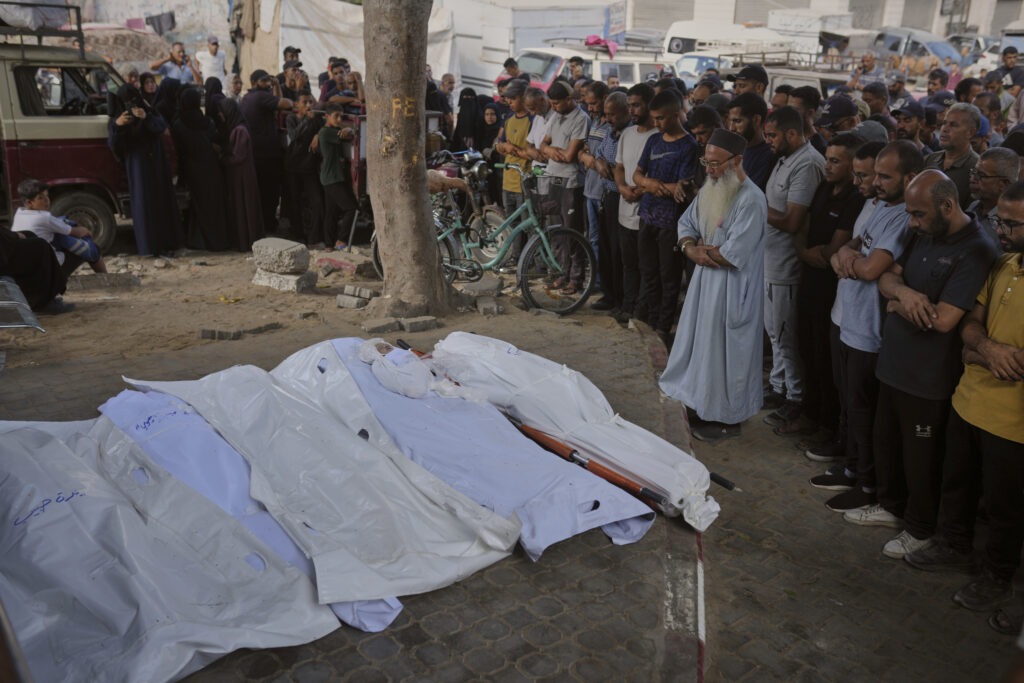
Meanwhile, as world leaders are preparing to gather at the 80th UN General Assembly to speak on development goals and the state of global affairs, at the UN, more than 63,000 Palestinians have been slaughtered, and the tens of thousands more were injured by American made arsenal and Israeli engineered starvation, forced displacement, genocide and war.
Although this year’s UNGA-80 theme is “Better together: 80 years and more for peace, development and human rights,” for the Palestinians the last 80 years were decades of misery, suffering and injustice.
“Eighty years ago, from the ashes of war, the world planted a seed of hope. One Charter, one vision, one promise: that peace is possible when humanity stands together,” said UN Secretary General António Guterres in June remarks, posted on the UN General Assembly 2025 website.
However, irrespective of the “hope,” the “Charter,” the “vision” and the “promise” for the possibility of peace, in 80 years of conferencing, warmongers and peace-breakers perpetuated war.
The expansion of Israel’s Gaza war has now reached Yemen, where targeted airstrikes assassinated the Prime Minister, Defense Minister, and other top officials of the Ansar-Allah (Houthi) authorities based in Yemen’s capitol Saana.
Meanwhile, Israel’s onslaught also grinds on in Lebanon and Syria, painting a picture of unrelenting aggression in the region. For the Middle East, Israel, backed primarily by America, has been a trouble source and disagreeable to live with in peace.
Israel’s penchant for war across the region is part of a broader agenda for “Greater Israel,” backed and protected by the U.S. and Europe—to remake the Middle East through force, displacement, and domination.
In words delivered on October 16, 2000, on the occasion of the Million Family March, the Honorable Minister Louis Farrakhan, National Representative of the Most Honorable Elijah Muhammad and the Nation of Islam, placed in perspective the question of justice and the Middle East.
“There can be no peace in that troubled area that is a lasting peace unless that peace is structured on the principle of justice. Justice for the Palestinians, justice for those who suffer in the world, justice for the poor and the weak, justice for the sick and the imprisoned, justice for those who have been locked out of society,” said Minister Farrakhan.
“Unless justice comes, there can be no peace. Even in this great nation, we will be at each other’s throats as long as the principle of justice and equity are denied,” he continued, speaking about America.
Both Minister Farrakhan and his teacher, the Honorable Elijah Muhammad, warned about the consequences of persistent injustice. These times were foretold in the scriptures, which say there is no peace for the wicked and the world is in a time of reaping what it has sown. Israel and America have sown trouble and are reaping the bitter fruit of trouble.
Oblivious to the laws of justice, the proponents of war have rejected sound reason and the principles of what is right. On page 209 of His illuminating book “The Fall of America,” the Most Honorable Elijah Muhammad explains this wicked mindset.
This insight resonates today as Israel’s regional onslaught—from Gaza and the West Bank to Lebanon, Syria, and Yemen— unfolds under the protection of powerful allies.
The same disregard for justice and reason that the Most Honorable Elijah Muhammad described continues to enable unrelenting aggression, displacement, and the erosion of human rights across the Middle East. “We do not hope for peace as long as we add to the war that which serves as fuel to a fire,” He wrote in the chapter, “Fire Fed With Fuel.”
“The fire cannot go out as long as we keep it burning by adding more fuel. A dying, burning fire is increased when more fuel is thrown into it.” In the same chapter, He writes: “How can we expect peace where the method used to bring about peace is the same method that started the war—instead of finding a right solution and then practicing the right solution?”
—Brian E. Muhammad, Staff Writer
