


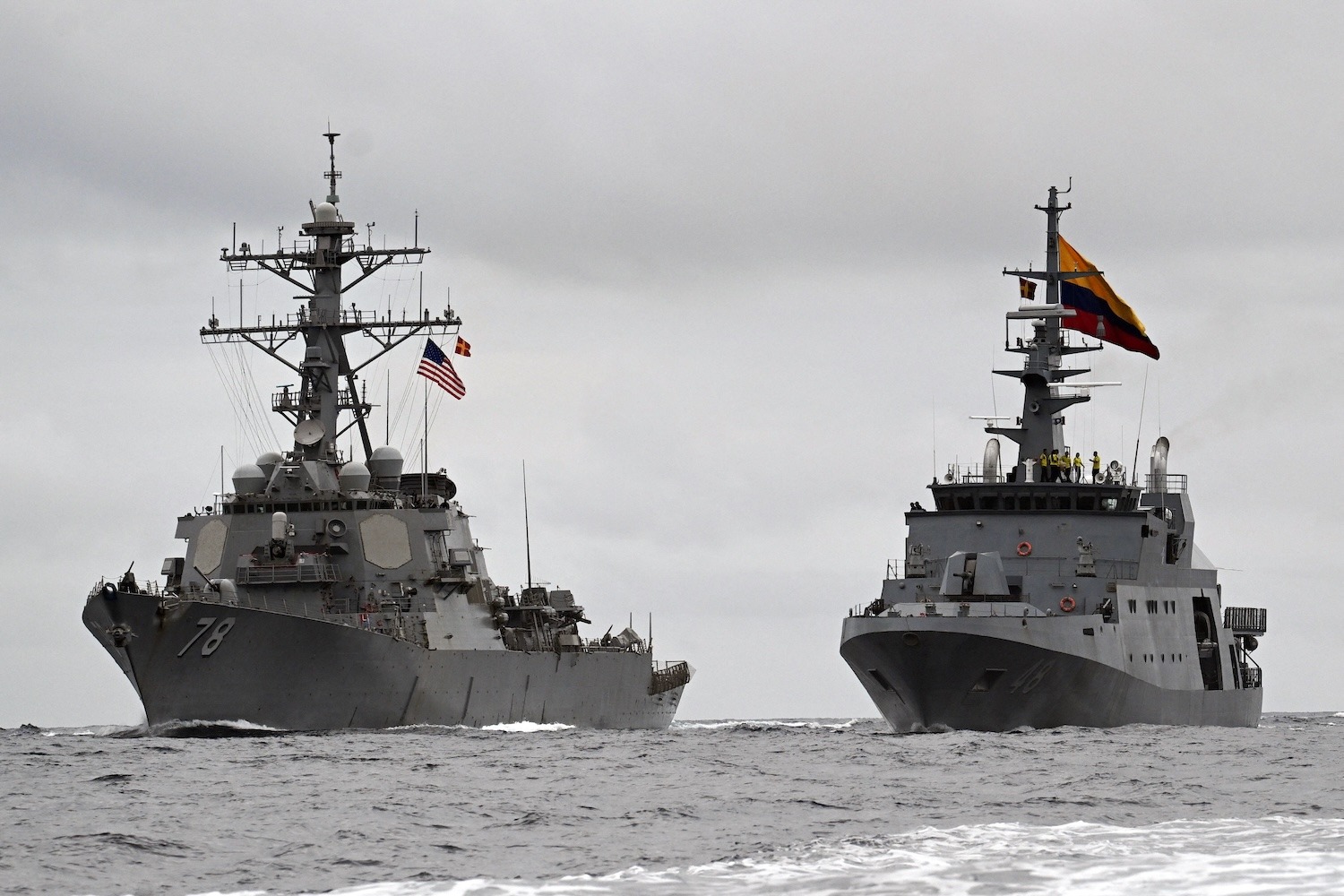

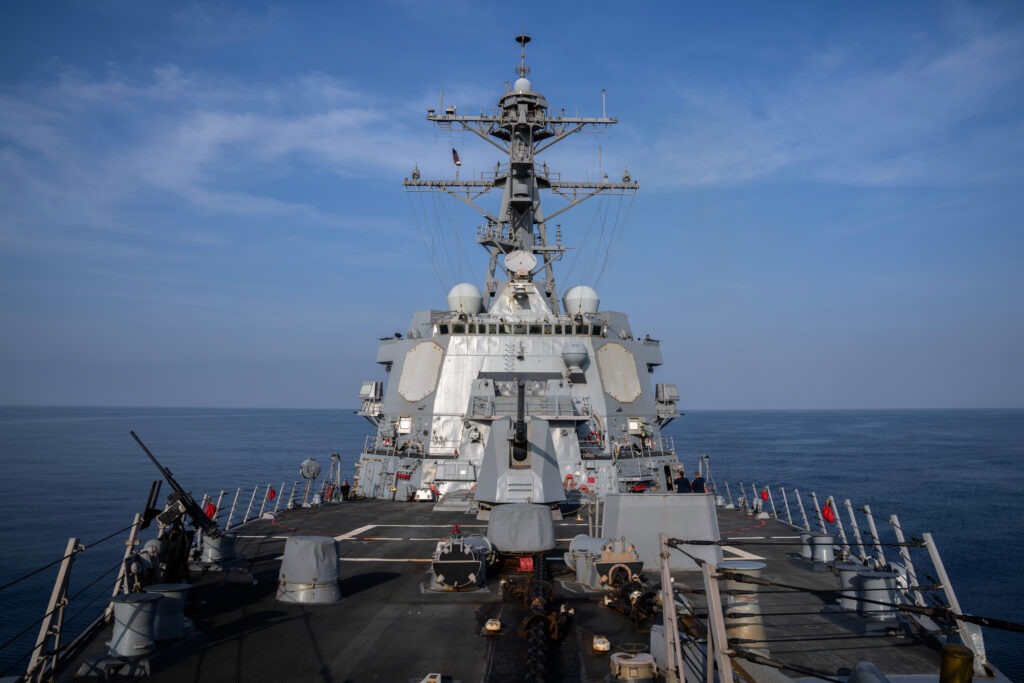
Concerns of a possible attack on Venezuela are mounting across the Americas as the United States ramps up its military footprint in the southern Caribbean seas with more than 4,000 troops and multiple naval ships—including a nuclear-powered fast attack submarine.
While U.S. officials insist the buildup is to confront drug cartels, regional governments and anti-imperialist groups counter that the show of force is directed at Venezuela and its president, Nicolás Maduro.
Among the growing rejection of the U.S. escalation, leaders of Latin America and the Caribbean convened to reassert collective strength, and unified support of Venezuelan sovereignty and government of President Maduro—long a U.S. target for destabilization and regime change.
The leaders met virtually on August 20 at the XIII Extraordinary Summit of Heads of State and Government of the Bolivarian Alliance for the Peoples of Our America—Peoples’ Trade Treaty (ALBA-TCP).
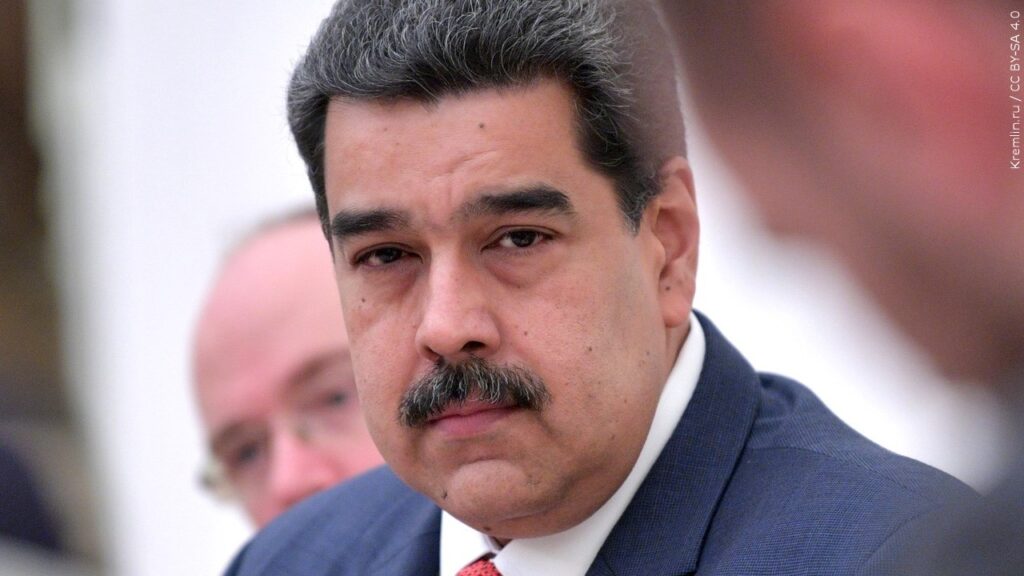
“We express our firmest and absolute support for the constitutional President of the Bolivarian Republic of Venezuela, Nicolás Maduro Moros, who is once again facing a disastrous offensive of political and judicial persecution promoted by the United States,” said the ALBA-TCP statement.
“In the face of imperialism that threatens with wars and blockades, Latin America and the Caribbean reaffirm that they will follow the path of (Simón) Bolívar, (Jose) Martí, (Hugo) Chávez, and Fidel (Castro), and ratify their irrevocable commitment to protect the region so that we may continue to be a Zone of Peace,” the statement continued.
Member states of ALBA-TCP are: Antigua and Barbuda, Bolivia, Cuba, Dominica, Grenada, Nicaragua, Saint Kitts and Nevis, Saint Vincent and the Grenadines, Saint Lucia, and Venezuela. In addition, Haiti and Iran are observer members.
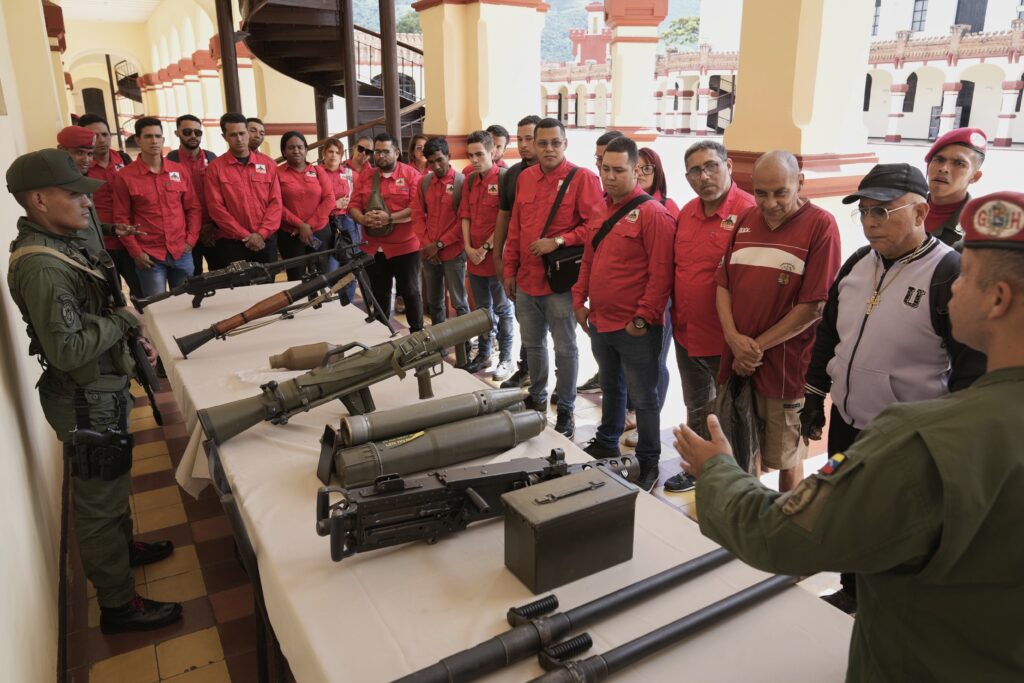
Tensions escalated when the United States announced the deployment of warships to the shores of oil-rich Venezuela under the guise of combating drug cartels in early August. The Aegis guided-missile destroyers are designed for multi-mission capabilities, including air defense, anti-submarine warfare, and land attacks.
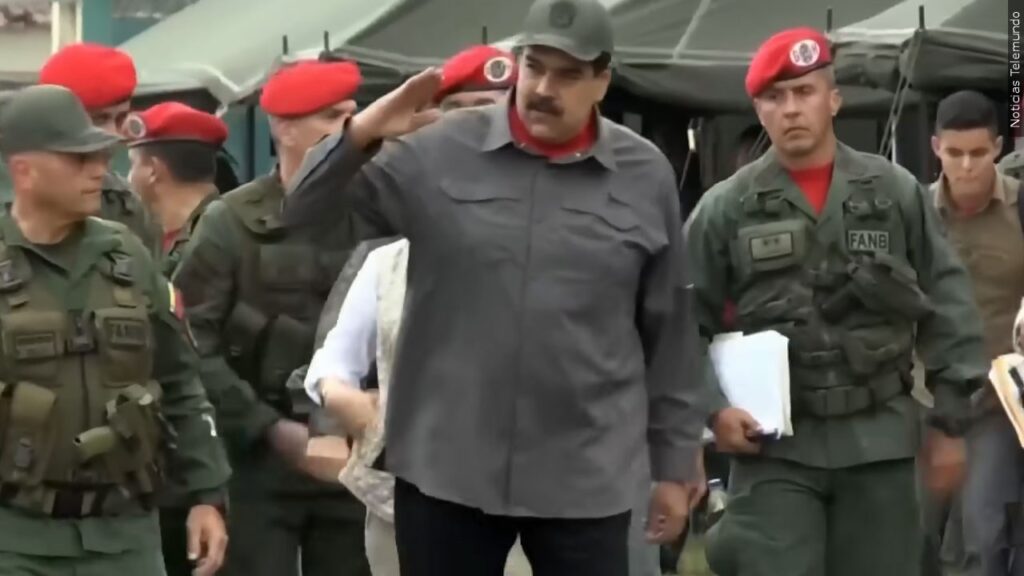
The announcement came days after the U.S. issued a $50 million bounty for the arrest of President Maduro, accusing him of being one of the world’s largest narco-traffickers and a collaborator with drug cartels flooding the U.S. with fentanyl-laced cocaine. President Maduro rejects the allegations.
In response, President Maduro has called on more than 4.5 million reservists throughout Venezuela and for the unification of the region against what he calls a threat from the U.S. empire.
“I dare, brothers of Latin America and the Caribbean, to call for the union of all rebel people, social movements, to defend Venezuela’s right to sovereignty, peace, self-determination and its own development,” Mr. Maduro told the ALBA-TCP, reported Latin Times.
The leaders denounced what they categorized as “unfounded, mythomaniac accusations” from Washington, without any legal basis.
Observers and anti-imperialist voices told The Final Call that Washington’s move is part of a broader strategy to delegitimize sovereign governments and clear the way for foreign intervention.
The aggression not only constitutes a threat to Venezuela’s independence, but also to the stability and self-determination of the entire Latin American and Caribbean region.
“What we’re looking at is another attempt to intimidate a sovereign nation that’s committed to building a society in which all of the people are recognized as having fundamental human rights and dignity,” said Ajamu Baraka, director of the North-South Project for People(s) Centered Human Rights of Black Alliance for Peace.
“Venezuela, left to its own devices, has the resources and the political connections to be able to build a new society that is not exploitive, that centers the dignity of people,” he stated. “So, the U.S. does not want to see a Venezuela becoming successful,” reasoned Mr. Baraka.
For more than two decades, successive U.S. administrations sought to undermine Venezuela’s political leadership by backing coup attempts, imposing far-reaching sanctions, and supporting assassination plots against Mr. Maduro and his predecessor, Hugo Chavez. However, despite the meddling, the Venezuelan people stood firm, refusing to yield to Washington’s interference.
“So, this latest adventure is just another attempt to try to put psychological pressure on Venezuela, but it is bound to fail,” explained Mr. Baraka, adding, “the Venezuelan people are not going to surrender their dignity and national sovereignty to the U.S.”
The heightened tension comes at a time when U.S. influence is fading, Mr. Baraka further stated. While the U.S. was able to impose its will on nations 15 or 20 years ago, today, the tide has shifted.
Nations like Venezuela are resisting, and their defiance reflects a broader wave across the Global South where nations are no longer willing to bend to outside dictates.
Some question whether the heightened militarization is really about oil under the pretext of fighting narcotic trafficking. Venezuela is a significant oil country. According to 2024 World Atlas figures, Venezuela holds the largest oil reserves worldwide, possessing 303 billion barrels. Second is Saudi Arabia, with 267 billion barrels, and third is Iran, with 208 billion barrels.
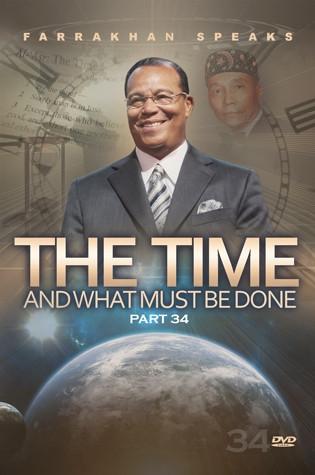
During Part 34 of his 58-week year-long lecture series called, “The Time and What Must Be Done” delivered in 2013, the Honorable Minister Louis Farrakhan, National Representative of the Most Honorable Elijah Muhammad and the Nation of Islam, cautioned about the duplicitous framework guiding U.S. foreign policy toward Venezuela.
Minister Farrakhan warned that Washington’s strategy was not about democracy or human rights, but about domination: the same playbook that fueled coups, assassinations, and economic warfare throughout Latin America. More than a decade later, Minister Farrakhan’s words ring prophetic.
“America is not interested in a democratically elected government that produces a government that she is not in control of and cannot have free access to the natural resources of that nation,” said Minister Farrakhan.
He said at the time, the ideas of Hugo Chavez—coming from the masses of the Venezuelan people—were not in harmony with America’s foreign policy objectives for Venezuela or Central and South America.
“His influence with the oil money that he had, as the eighth largest exporter of oil in the world—with the largest oil reserves on the planet—would give him the power to influence the political and social dynamic and direction of Central and South America. So, in the eyes of America, he ‘had to be overthrown’ although he was democratically elected,” said Minister Farrakhan, referring to Mr. Chavez.
Mr. Chavez, who led Venezuela from 1999 until his death in 2013, was briefly overthrown in a U.S.-backed coup on April 11, 2002, but was restored to power 48 hours later by loyal military officers and a mass uprising of Venezuelans.
Minister Farrakhan’s analysis came at a time of heightened tension between Washington and Caracas, as the U.S. intensified sanctions and overtly backed opposition groups challenging the late President Chávez. Their posture continued against Mr. Maduro.
Critics argue that sending a nuclear-armed submarine into the region is illegal based on a 2014 declaration proclaiming the region a “Zone of Peace” signed by the “Community of Latin American and Caribbean States” (CELAC). The declaration recognized by the United Nations prohibits nuclear warheads in the Latin American and Caribbean region.
Analysts told the Financial Times the scale of the deployment suggested the U.S. operation may go beyond its stated focus on alleged drug trafficking.
“This is a force whose nature and size is not consistent with counter-drug operations,” said Evan Ellis, a member of former Secretary of State Mike Pompeo’s staff in President Donald Trump’s first administration, reported FT.com.
“The logical mission would be a snatch-and-grab operation to bring Maduro to justice,” he added, though he cautioned that he was not convinced President Trump was “committed to pulling the trigger on it yet.”
Meanwhile, several nations issued verbal condemnations against the recent escalation by the U.S.
Addressing the ALBA-TCP session of heads of state, Cuban President Miguel Diaz-Canel Bermúdez called the U.S. move a “vile” scheme. “The serious threats coming from that turbulent and brutal North that despises us, as José Martí called it, are part of a vile domination scheme aimed at reactivating the Monroe Doctrine, the cornerstone of U.S. interventionism in our hemisphere,” said the Cuban president.
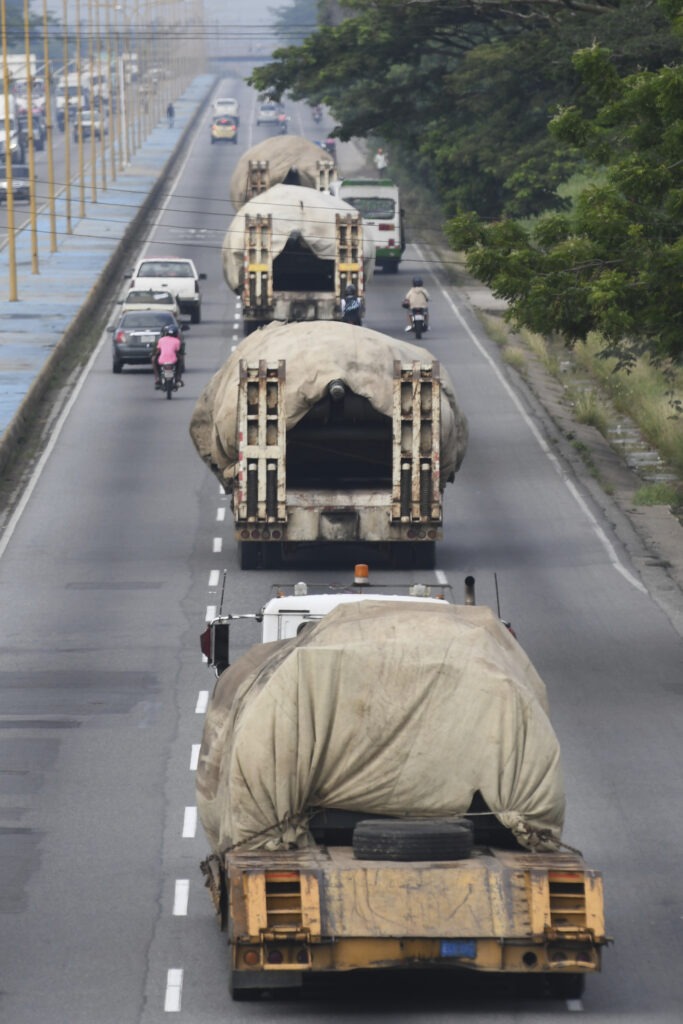
“Therefore, we have no choice but to confront the empire that seeks to subordinate us to its interests, and we must do so firmly united in conviction and action. With that spirit of historical commitment to the unwavering defense of our common destiny,” he stated.
In a Aug. 20 statement via Telegram, Iran’s foreign ministry rebuked the action as “U.S. adventurism” and a disregard for international norms.
“These actions of the United States, which are a continuation of the interventionist and illegal policies of this country towards the Venezuelan people, are a flagrant violation of the UN Charter,” said the ministry.
In a statement issued on Aug. 21, Chinese Foreign Ministry spokesperson Mao Ning said that Washington should refrain from such action. “China opposes any move that violates the purposes and principles of the UN Charter and a country’s sovereignty and security,” said Ms. Mao.
“We oppose the use or threat of force in international relations and the interference of external forces in Venezuela’s internal affairs under any pretext,” she stated.
According to Iranian state media, Press TV.ir, on Aug. 26 “Caracas petitioned the United Nations to intervene in the dispute by demanding ‘the immediate cessation of the U.S. military deployment in the Caribbean.’”
Manolo De Los Santos is the executive director of The People’s Forum and a researcher at Tricontinental: Institute for Social Research. He slammed the U.S. deployment as a “smokescreen.”
“The deployment of warships and troops, along with the Pentagon memo, serves as a stark reminder that the ‘narco-state’ accusation is a pretext for a hostile foreign policy driven by a desire to control a country with the world’s largest proven oil reserves,” he wrote in an article published on Truthout.org.
“For people of conscience around the world, the defense of Venezuelan sovereignty is a crucial front in the broader struggle against U.S.-led interventionism and for the self-determination of all nations,” he added.
