











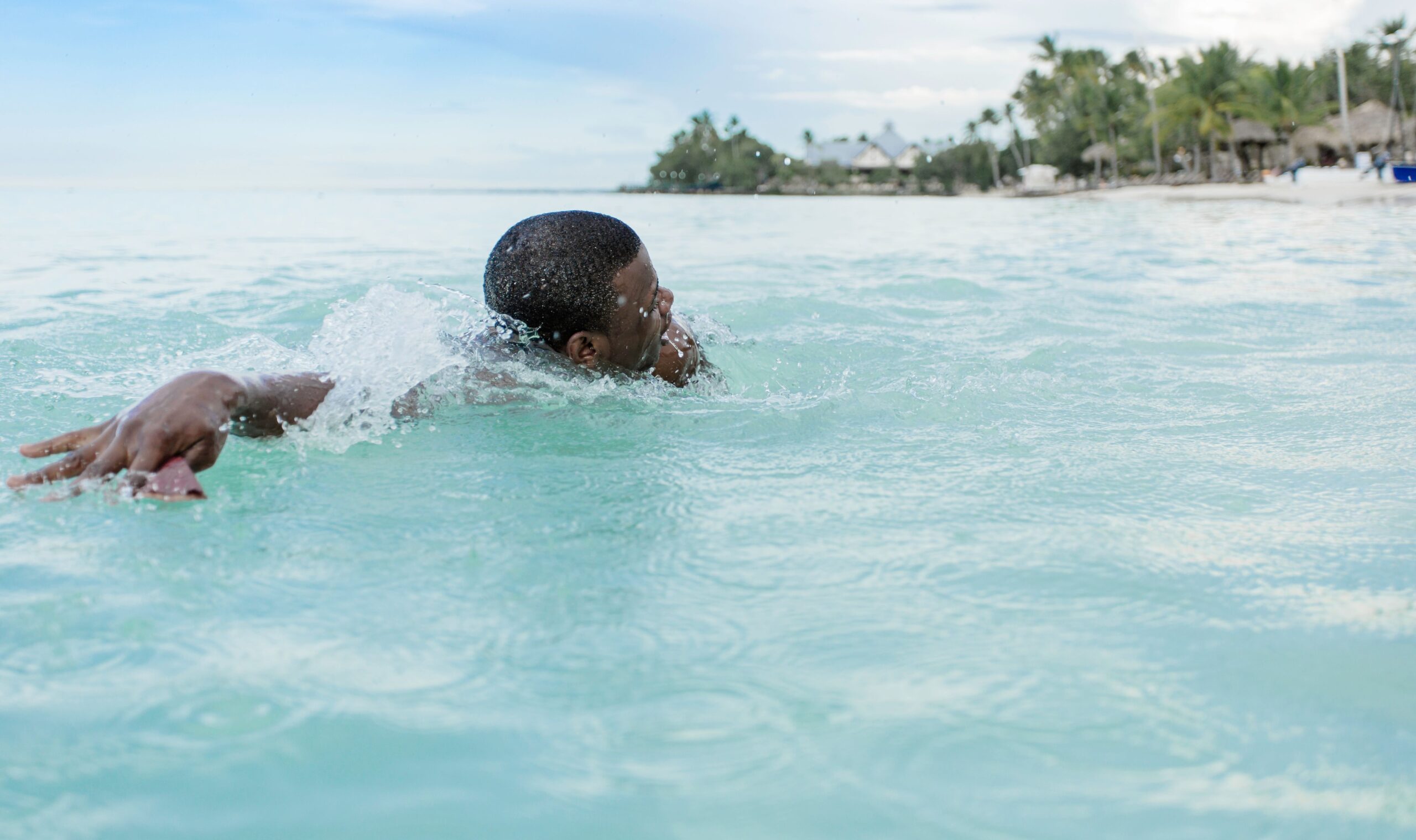

As the world continues to grapple with the shock of actor Malcolm-Jamal Warner’s recent death while swimming off the coast of Costa Rica during a family vacation, World Drowning Prevention Day, according to their website, is “a reminder that anyone can drown, but no one should.”
Mr. Warner’s tragic death highlights a long-standing public‑health and racial equity crisis of Black Americans drowning at significantly higher rates than their peers.
World Drowning Prevention Day, declared through a United Nations General Assembly Resolution, is held annually on July 25. Through this global event, lives lost due to drowning are remembered, and there is a focus on increasing water safety. Drowning occurs for a variety of reasons, and consequently, it requires several solutions. However, it can be prevented.
According to the Centers for Disease Control (CDC) data, Black American children ages 5 to 14 are 5.5 times more likely to drown in swimming pools than their White counterparts. Among adults, Black Americans drown at a rate approximately 1.5 times higher than non-Hispanic Whites.

The origins of these disparities can be traced to a history full of segregation, systemic racism, and neglect, which restricted Black families’ access to swimming pools and swim education.
Mr. Warner’s death is a painful reminder that drowning remains a leading and preventable cause of death—especially within Black communities. “As late as the 1970s, some municipalities drained pools rather than integrate them.
Others chose not to build pools in Black communities at all, leaving generations without access to safe, affordable places to swim. This wasn’t just social exclusion—it was infrastructural abandonment,” explained Edmond W. Davis in his article “Drowning in Silence” for EUR Web.
“We are not just talking about a lack of swimming skills—we are talking about the consistent denial of clean water, recreational access, and public investment in Black health. This crisis doesn’t belong solely to the Deep South. It’s national. It’s structural. And it’s deadly,” he wrote.
Rochelle Thompson has been a lifeguard in Washington, D.C., for 10 years. “I have very few Black children in my swimming classes. That’s a problem. The pool is full of Black children, but few are coming for classes. Access to pools is greater today, but there is hesitancy to learn water safety,” she told The Final Call.
“We teach the basics that can save lives but if children, youth, or adults aren’t coming to classes, they don’t know simple things to do that can save their lives in the pool.
They panic if they go out too far, and then I have to jump in the water to rescue them, which is my job. I always tell them, ‘we can avoid this if you come to class and learn how to swim.’”
Costs or fees for lessons can depend on the area or neighborhood where the facilities are located.
World Drowning Prevention Day is an opportunity to bring global awareness to this preventable problem. According to the World Health Organization, drowning has claimed over 3 million lives in the past decade—mostly children and youth.
World Drowning Prevention Day focuses on helping save lives and preventing lifelong disabilities caused by drowning. From teaching communities about water safety to developing national drowning prevention plans, these solutions have helped to keep people safe around water.
Last December, the World Health Organization (WHO) published its inaugural global report on drowning prevention, revealing a 38% reduction in worldwide drowning fatalities since 2000.
While this decline marks a notable success in global health efforts, drowning continues to pose a significant public health challenge, with estimates indicating that over 30 individuals lose their lives every hour, culminating in 300,000 drowning deaths in 2021 alone.
Speaking at the report launch, Dr. Tedros Adhanom Ghebreyesus, WHO Director-General, said, “The significant reduction in drowning deaths since 2000 is a positive sign, demonstrating the effectiveness of the simple and practical solutions proposed by WHO.
But every death is a tragic loss, and millions remain at risk. This report compiles vital data to shape policy and take urgent action to save more lives.”
Black communities can reduce drowning deaths by doing the following, according to the WHO Drowning Prevention Kit:
1. Expand access to swim lessons and water‑safety education
Starting as early as age 1 to 4 years old, formal lessons can significantly reduce drowning risks.
2. Rebuild infrastructure in underserved communities
Invest in public pools, waterfront safety infrastructure, and swim academies in under-resourced Black neighborhoods.
3. Boost community engagement
Faith organizations, nonprofits, and community centers can spearhead swim-inspired events and public awareness campaigns.
4. Promote “layers of protection” around water
Use pool fencing, alarms, attentive supervision (“water watchers”), and avoid distractions—especially when children are present. Water watchers must put their phones down.
