




by Student Minister Willie Muhammad
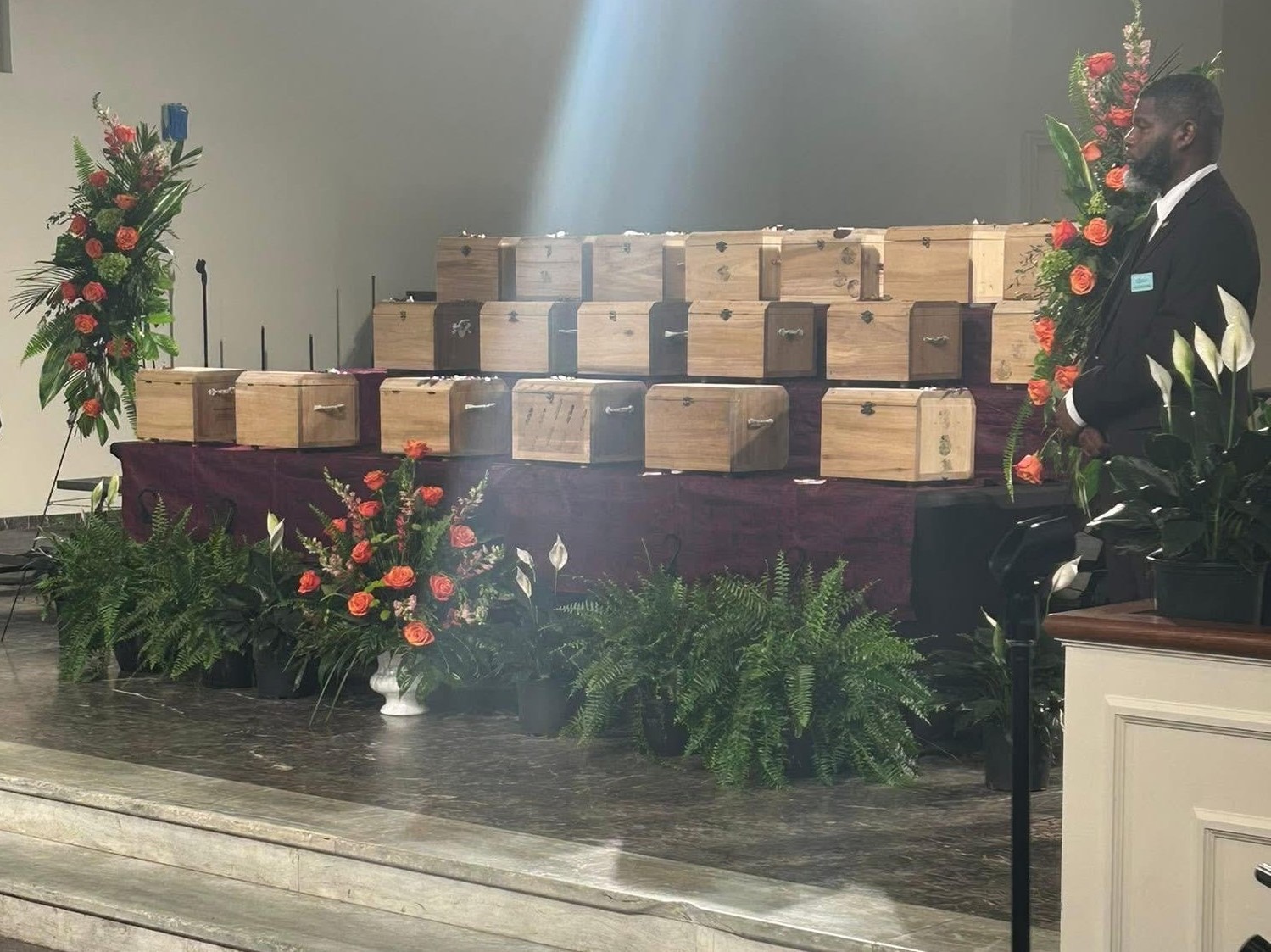
NEW ORLEANS—In a moving and historic tribute, Dillard University held a memorial service to honor 19 Black people whose remains were returned to New Orleans after being taken to Germany over a century ago for racially-biased scientific research.
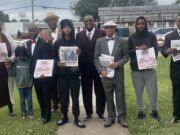
The service, held at Lawless Memorial Chapel on the campus of the historically Black university, began with a public viewing at 9:00 a.m. and a formal program at 11:00 a.m. The memorial held May 31, brought together a diverse coalition of clergy, cultural representatives, artists, community members, and city leaders to pay final respects and restore dignity to those whose humanity had once been denied.
Between 1871 and 1872, the individuals—ranging in age from 15 to 70—died at Charity Hospital in New Orleans. Their bodies were later taken without consent and sent across the Atlantic to Leipzig, Germany, where they were subjected to dehumanizing anthropological studies used to justify the falsehoods of White supremacy.
More than a century later, their remains have been brought home.
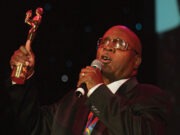
The memorial featured a traditional New Orleans jazz funeral procession, led by Dr. Michael White’s Original Liberty Jazz Band and the Black Men of Labor Social Aid and Pleasure Club. Prayers were offered by 10 religious leaders, including representatives of Christianity, Islam, Buddhism, Judaism, African traditional religions, and the Baha’i faith. The service also included a stirring original composition titled “Home at Last,” an African drum and dance performance, and a dramatic reading titled “Say Their Names” performed by the Dillard University Theatre Ensemble.
Mayor LaToya Cantrell, the first Black woman to lead the City of New Orleans, was present and participated in the memorial. Her attendance and remarks emphasized the city’s commitment to truth, historical justice, and reverence for Black lives, past and present.
The ceremony was organized in part by the Cultural Repatriation Committee, which included community historians, artists, and activists such as Freddi Williams Evans. She noted that while genealogical research could not identify the individuals’ descendants, the New Orleans community now stands as their family, welcoming them home with honor.
In a final act of reverence and responsibility, the remains will be permanently stored at the Hurricane Katrina Memorial, where they will rest in sacred ground among others who have been lost but not forgotten.
This moment of remembrance also served as an act of historical repair. Dillard University emphasized that the memorial is part of a broader institutional commitment to addressing the ongoing legacy of racial injustice in scientific and academic communities.
In returning these 19 bodies to their ancestral soil, the city of New Orleans bore witness to a long-awaited homegoing—one that challenged the lies of the past and affirmed the dignity of Black life and in death. Brother Minister Willie Muhammad is the student minister of Mosque No. 46 in New Orleans and a longtime educator.
