











The U.S. Department of Justice (DOJ) dismissed a lawsuit against Denka Performance Elastomer LLC (Denka), which produces neoprene. The petrochemical plant has been accused of disproportionately affecting Louisiana’s majority-Black St. John Parish with environmental hazards.
Children there suffer from significantly high rates of asthma and adults face alarming rates of cancer, 50 times higher than the national average (1,500 per million people), according to federal regulators.
The Justice Department dismissed the lawsuit on March 7 in fulfillment of President Donald Trump’s executive order, “Ending Radical and Wasteful Government DEI Programs and Preferencing.”
The suit was originally filed by the Biden Administration on Feb. 28, 2023. According to the DOJ, the previous administration overstepped its authority by filing the lawsuit.
And the Environmental Protection Agency (EPA) had not demonstrated that Denka violated any specific regulatory air quality standards, suggesting that the use of the Clean Air Act’s emergency powers was inappropriate in this context, reported The Guardian.
The UK-based news outlet also reported in 2023 that Denka “strongly” disagreed with the lawsuit and “urged the EPA to reevaluate its findings on chloroprene exposure.”
“DuPont sold the plant to Denka in 2015 in a secretive deal, which the Guardian later revealed was motivated by concerns from DuPont that it would face heavier regulation after the EPA’s decision to classify chloroprene as a likely human carcinogen,” reported the guardian.com.
DuPont still owns the land the plant is on. Dan Turner of DuPont’s Corporate Media Relations told The Final Call via email, “Yes, we are the landlord, however we will decline comment on the action.”
A March 7 statement emailed on behalf of Denka by George Felcyn, senior communications advisor for Bracewell LLP stated in part, “EPA and DPE reached an agreement for EPA to dismiss the agency’s ‘imminent and substantial endangerment’ case against our company, marking a long-overdue and appropriate end to a case lacking scientific and legal merit from the start.”
However, for those who have been impacted over the last several years, the dismissal of the lawsuit has wider implications.
“What is happening is the complete abandonment of the people in this area that they have deemed and call a ‘sacrifice zone,”’ said Robert Taylor II to The Final Call.
“The federal government has abandoned its responsibility to protect the people here, the citizens of the United States, in particular, those of us in this area called ‘Cancer Alley,’ added Mr. Taylor. The 83-year-old has lived in the area located between New Orleans and Baton Rouge along the Mississippi River all his life.
He expressed frustration over the dismissal of the lawsuit against the petrochemical plant and has fought against the environmental injustices in his community for nearly a decade. “The people feel overwhelmed. They don’t feel that they are able to fight these gigantic, super-rich corporations that’s coming in here, for the most part,” he continued.
The lawsuit alleged that the Denka Performance Elastomer plant posed an unacceptable cancer risk and demanded cuts in toxic emissions of cancer-causing chloroprene. Denka, based in Japan, bought the former DuPont plant in LaPlace, Louisiana, a decade ago.
It’s located near an elementary school in a community about 30 miles outside New Orleans, noted AP. The site produces neoprene, a synthetic rubber that is found in products such as wetsuits and laptop sleeves. A judge had scheduled a bench trial for April.
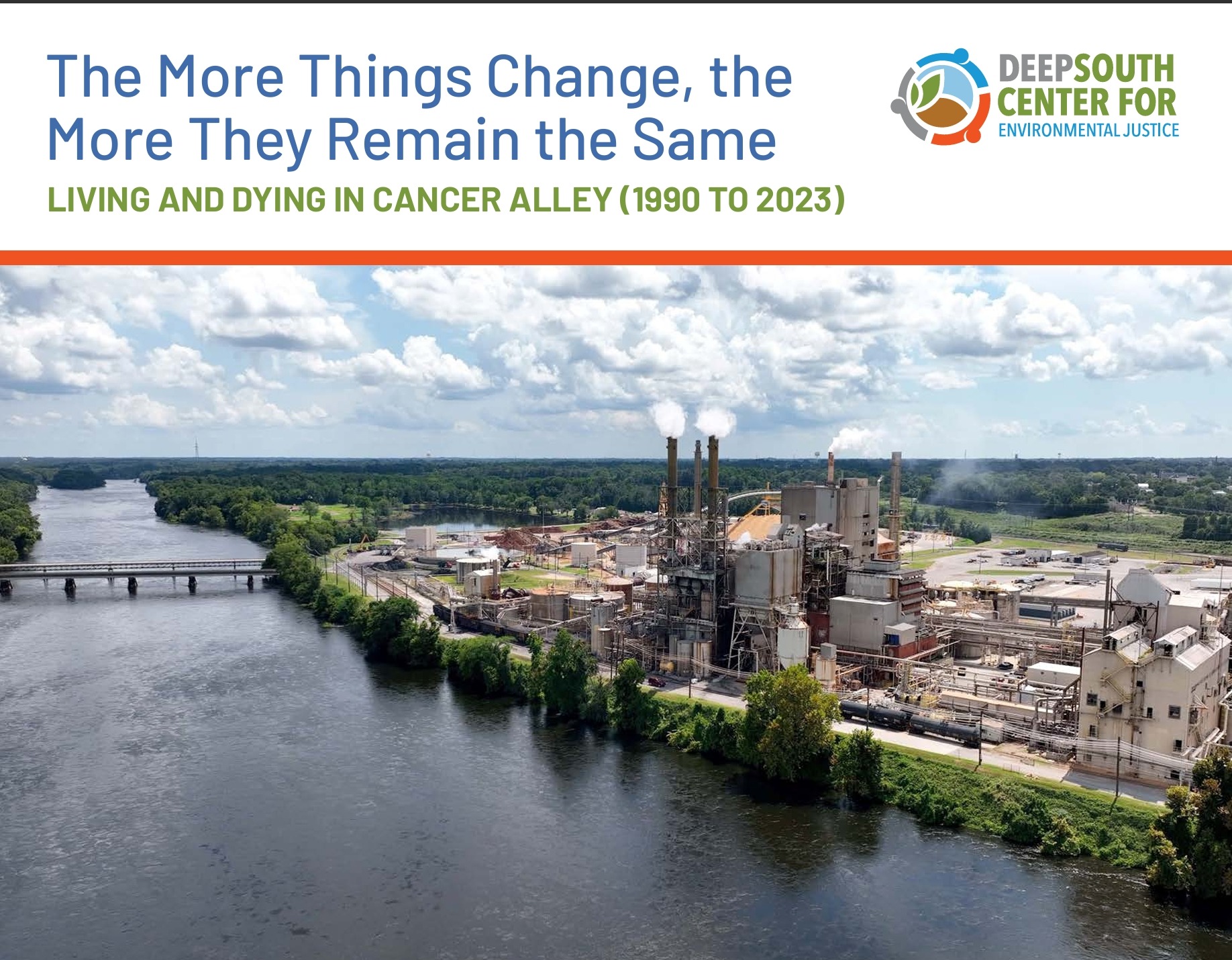
According to the Deep South Center For Environmental Justice, in its 2023 report, “The More Things Change, the More They Remain The Same: Living and Dying in Cancer Alley” the impacted corridor “produces one-fifth of the United States’ petrochemicals and has transformed the region’s working-class communities into some of the poorest and sickest communities in Louisiana.”
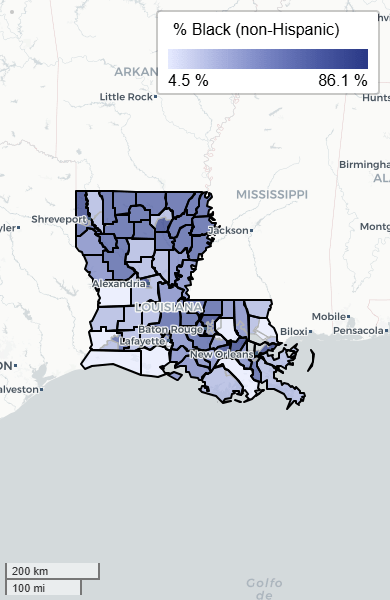
The environmental group also noted, “The new maps show that, while the area has technically seen a decrease in greenhouse gases and total air emissions, the risk has grown exponentially for Black communities.
The region’s polluting facilities are concentrated almost exclusively in their backyards and environmental justice experts are now calling the region a “massive human experiment.”
Mr. Taylor founded the Concerned Citizens of St. John Parish to advocate for their health and safety. “If there’s no government regulation, if there’s no way to regulate these plants, they are going to do what is most profitable to them. And it’s not profitable to them to try to operate with reduced emissions. It costs them to operate at a safe level,” he said.
Next steps such as individual lawsuits on residents’ behalf have been explored in ongoing community meetings, Mr. Taylor said. “We haven’t given up. I know I’m not going to give up,” he said.
Three parishes have joined together, and other people from across Louisiana are joining them, according to Mr. Taylor.
“We understand that if we do not join together, there is no hope for us. It’s that old thing about united we stand, otherwise we’re going to fall,” he said.
“I just would hope that people would be aware of us and lend their support to our movement here any way they can, by going to our websites, informing their friends and relatives about our plight. We’d like to just keep our plight in a view of the world, so that these people don’t just run over us down here in the South.”
Dr. Mustafa Santiago Ali, former senior advisor for environmental justice at the EPA, highlighted the dismissal’s disproportionate impact on poor, mostly Black communities.
“How could it possibly be that, whether it is the Department of Justice, EPA, this administration that is currently in power or assumed power, could not see the impacts that are happening inside of the communities there in Cancer Alley?” he questioned.
“No one should have to breathe poison air every day, and that is the situation that folks are dealing with there,” he told The Final Call.
After working in more than 1,000 locations within America and abroad, he concluded that Cancer Alley isn’t just a metaphor. “It’s a slow, brutal truth. The air tastes of sacrifice zones and the people, mostly poor, mostly Black, carry the legacy of generations of extraction on their lungs. The DOJ’s retreat isn’t just procedural, because there is a legal aspect to this, but it is quiet violence,” Dr. Ali said.
“It tells communities that the promise of justice can be revoked without notice. And the EPA, which I know intimately, was never perfect, but it was a lifeline. To pull back now is to say to these communities: ‘You are on your own,’” he continued.
The chemical plants sprawled across the River Parishes resulted from policymaking and didn’t just happen to land in Black neighborhoods, especially there in Louisiana, critics and observers have argued.
“They were placed there through generations after generations after generations, through redlining, zoning and political neglect, because politicians get to make choices in how they move and the pieces of legislation that should actually be protecting our community.
So, when I look at this particular case, by dropping this case, the federal government is tacitly, let me say that again, is tacitly affirming that some lives are worth less than economic convenience,” Dr. Ali said.
People are actually locked into their communities, but there is love and beauty and culture that exists inside of them, “even when we’re living in dumping grounds,” he said.
“But the other side of the coin is that even with everything that we pour into our spaces that is positive and is uplifting, then we still have the other side of this unbearable burden of death and sickness that comes with living in these communities where people have made sure that people are unseen and unheard. So, we’ve got this duality that’s going on that we have to be able to address,” he added.
Some ways are continued legal action, community engagement, and strategic voting to address these issues, said Dr. Ali. He also stressed the importance of reclaiming the narrative, documenting community experiences, and advocating for environmental justice laws and technologies to mitigate pollution.
“We’ve got to build that legal pressure on the state and local level. States can still pass environmental justice laws that they choose to, ordinances on the local level and parishes and other places,” Dr. Ali said. Some solutions include focusing on zoning boards, parish-level regulations, and partnering with environmental law clinics and civil rights organizations.
“The wealth they’ve received in return is sickness. The wealth that they’ve returned has been displacement and has been silence about the issues that are impacting their communities,” he said.
The Honorable Minister Louis Farrakhan has consistently warned of the poisonous chemicals that are in the air, water and food of the American people as a result of U.S. government actions.
In his 2007 message titled, “Justifiable Homicide: Black Youth In Peril, An Executive Decision,” he warned, “The U.S. government is killing people by toxic food, water, air and medicine.”
A number of residents in this community believe their health has been negatively affected by chemical plants in or near their neighborhoods.
Roxanne Keller and her dad have experienced several generations of illnesses, she told MSNBC’s reporter Alex Wagner in a recent interview. Her mother and grandmother died of breast cancer. Her paternal grandmother died of pulmonary disease, and so on, such as other family members with ovarian cancer, she continued.
“So, we are directly affected in this community. I’ve also had genetic testing for breast cancer, my mother, my sister and myself, and all of them came back negative, meaning it’s not DNA, it’s environmental,” Ms. Keller said.
“I have several family members that have died and passed away of cancer. Some of them are still living. One of my family members, she’s on the list for a heart transplant—two of them,” Larry Sorapuru, Jr. also told Ms. Wagner. His mother passed away, and another relative on the west bank of the Mississippi just had a lung transplant a year ago, he said.
“A lot of people are going to dialysis centers. A lot of people have brain cancer … prostate cancer is high throughout the parish, not just on the west bank of the river. Chloroprene is in the whole parish,” he said.
“I’ve lost everyone in my family because of it,” Rhonda Cox stated in that same interview. “I’m the oldest living relative on my father’s side at the age of 67 due to Dupont-Denka,” Ms. Cox said.
Gone are childhood days of being able to sleep with windows open, she continued. “A lot of mornings we woke up with this awful smell in our house. We didn’t know what it was. ‘Oh, it’s just a release from DuPont.’ We didn’t know what chemical we were breathing while we were sleeping.
It was in the bed sheets, it was in your closet, in the clothes, in the closet. My mom couldn’t get it out the house, and she aired the house out all day long. We smelled that all day long. We went to school with it on our uniforms,” she said. Final Call staff contributed to this report.
